Black spot on roses: how to keep the leaves on
Black spot on roses is a fungal disease that marks the leaves with black or purple spots, turns them yellow and makes them fall early. It is the most serious leaf disease of garden roses. A badly hit rose can lose most of its leaves by late summer, which leaves it weaker going into winter.
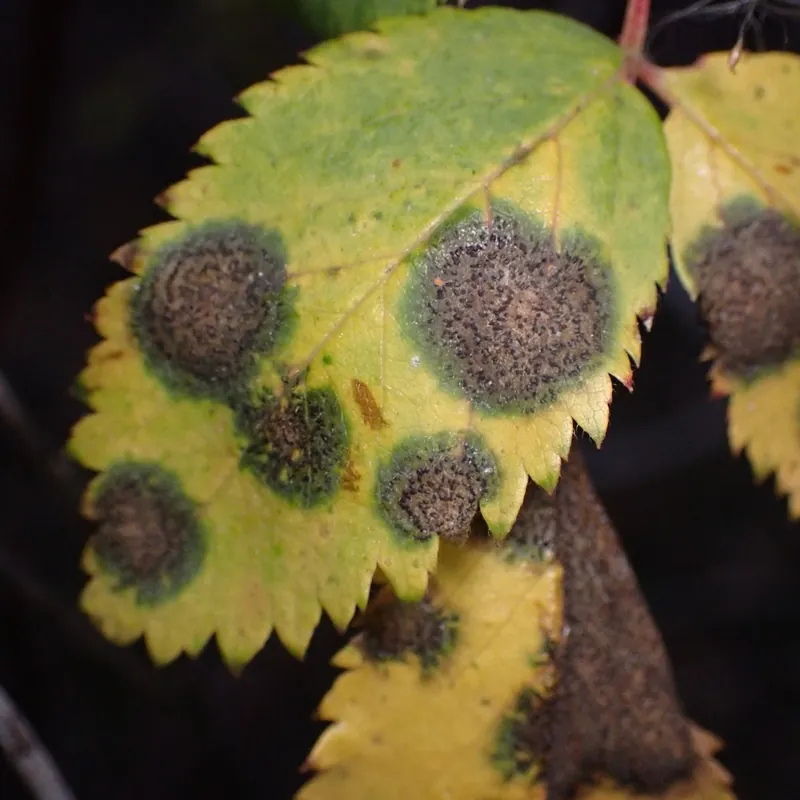
Short answer: Black spot is a fungal disease of roses, caused by Diplocarpon rosae, that makes round black or purple spots with feathery, fringed edges on the upper side of the leaves. Spotted leaves yellow and drop. Pick off spotted leaves, clear every fallen leaf from under the rose, and water the soil in the morning so the leaves stay dry.
What it looks like
- Round black or dark purple spots on the upper side of leaves, with feathery or fringed edges
- Yellow leaf around the spots, spreading until the whole leaf turns yellow
- Leaves dropping early, starting with the lower leaves and working up the plant
- Small black or purple raised patches on young green canes
- A rose that is half bare by late summer, with spotted leaves on top and few below
- Occasionally small red spots on the petals
Is it black spot on roses or something else?
| Could also be | How to tell |
|---|---|
| Downy mildew | Downy mildew on roses gives purplish, angular blotches limited by the veins and gray fuzz underneath in damp weather, and leaves can drop very fast. Black spot has round spots with fringed edges and no fuzz. |
| Rust | Rose rust shows as orange powdery bumps on the undersides of the leaves, with yellow spots on top. Black spot stays on the upper side and has no powder. |
| Old leaves yellowing | A few old leaves low on the plant turning evenly yellow and falling is normal. Black spot leaves have dark spots before they yellow, and the drop keeps climbing the plant. |
Why it happens
The black spot fungus survives the winter on fallen leaves and in small infections on young canes and buds. In spring, rain and watering splash its spores up onto the new leaves. Each new spot then makes more spores, and repeated cycles through the summer build the disease up, often peaking in late summer.
It needs wet leaves to infect, so it thrives in wet summers, under sprinklers and in crowded beds where leaves stay damp. Warm, humid weather speeds it up. Wind-blown rain can also bring spores in from other gardens.
Roses differ a lot in how prone they are. Hybrid teas, floribundas, climbers and patio roses are often hit hard, while many older species roses are little affected. Resistant new varieties help, but the fungus changes quickly and resistance often fades after a few years.
How to fix it
- Pick off spotted leaves and throw them out. Remove leaves with spots as soon as you see them and put them in the trash, not the compost. Leave clean leaves in place, since the rose needs them to grow.
- Clear fallen leaves from under the rose. Rake up every leaf that has dropped under and around the plant, and keep doing it through the season. These are where next year's spores come from.
- Water the soil in the morning. Water at the base of the rose early in the day and never over the leaves. Leaves that dry fast give the fungus less time to infect.
- Prune for an open center in late winter. Before the leaves come out, cut out crossing and crowded canes so air moves through the middle of the bush. Remove canes with black lesions at the same time, cutting well below them.
- Mulch in winter. After the fall cleanup, spread a layer of mulch about 2 inches thick under the rose. It covers any leaves you missed and stops spores splashing up in spring.
Watch out: Spores overwinter on fallen leaves and old stems. Clearing them up in fall prevents more spotting than anything you do in summer.
How to prevent it
- Clear every fallen leaf in fall, and strip any leaves left on the bush over winter where practical
- Choose varieties sold as disease resistant, and replace roses that get black spot badly every year
- Plant roses in full sun with space between them for air to move
- Water the soil, not the leaves, and avoid evening watering
- Check new leaves from spring onward and remove the first spotted ones you find
Plants it often affects
- Hybrid tea rose among the most prone; can lose most of its leaves by late summer
- Floribunda rose often spotted badly in wet summers and crowded beds
- Climbing rose dense growth against walls stays damp, so lower leaves spot and drop
- Patio rose small, closely planted roses that are often affected
- Rugosa rose a species rose that is usually little affected, a good choice where black spot is bad
Questions people ask
Will leaves with black spot recover?
No, the spots stay and most spotted leaves turn yellow and fall. Remove them and judge the rose by its new leaves. If new growth comes out clean, your cleanup is working.
Can black spot kill a rose?
Rarely on its own, but losing most of its leaves year after year weakens a rose, so it flowers less and copes worse with cold and other problems. Keeping the leaves on through summer is what keeps the plant strong.
Should I cut my rose back hard to get rid of black spot?
There's no need. A normal prune in late winter, taking out crowded canes and any with black lesions, is enough. The fallen leaves on the ground matter more than the canes, so clear those thoroughly.

Not sure it's black spot on roses?
Take a photo in Liana and the health check names the problem and tells you what to do first. Liana also reminds you to check the soil, so watering mistakes don't start. Get Liana for iPhone.
Sources
- Royal Horticultural Society, Rose black spot
- University of Illinois Extension, Black Spot