Late blight on tomatoes and potatoes: how to spot it and save your crop
Late blight is a fast-moving disease of tomatoes and potatoes, known in Britain as tomato blight or potato blight. Brown patches race across the leaves and stems, then the fruit and tubers rot. It strikes in mild, wet weather, and acting the day you see it saves more of the harvest.
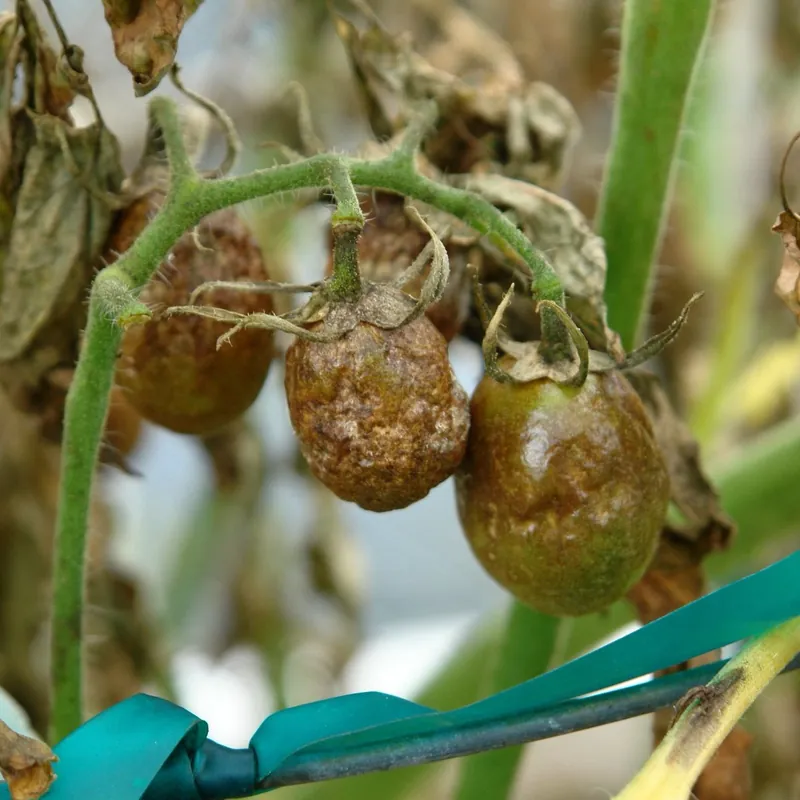
Short answer: Late blight causes brown patches that spread quickly over tomato and potato leaves and stems, with a white fuzz under the leaves in damp weather. Tomato fruit then turns brown and rots, and potato tubers decay under the skin. Remove infected leaves and stems today, pick healthy tomatoes to ripen indoors, and pull up plants if it keeps spreading.
What it looks like
- Brown or dark patches on the leaves, often with pale or water-soaked edges, that spread fast
- White, fuzzy growth on the underside of the patches in humid or wet weather
- Dark brown to almost black patches on the stems, with the part above them drying and collapsing
- Firm, greasy-looking brown patches on tomatoes, green or ripe, that later rot
- Reddish brown decay just under the skin of potato tubers, which often turns into a soft rot
- Whole plants that brown and collapse within a couple of weeks in wet weather
Is it late blight or something else?
| Could also be | How to tell |
|---|---|
| Early blight | Early blight makes brown spots with rings like a target, mostly on the lowest leaves, and it moves slowly up the plant. Late blight patches have no rings and can cover a plant in days. |
| Gray mold | Gray mold covers rotting fruit and stems in a fuzzy gray coat. Late blight's fuzz is white, thin and sits under the leaf patches, and the fruit stays firm at first. |
| Blossom-end rot | Blossom-end rot is a dark, sunken patch only at the bottom of the tomato, while the leaves stay healthy. Late blight marks the fruit anywhere and always shows on leaves and stems too. |
Why it happens
Late blight is caused by a fungus-like organism, Phytophthora infestans, that attacks tomatoes, potatoes and a few relatives such as petunia. Its spores are made on infected leaves and blow long distances on the wind, so most garden outbreaks start from spores that arrive from other gardens and farms.
Spores need a film of water on the leaf for several hours to infect, which is why it spreads in mild, humid weather with rain or heavy dew. Hot, dry weather stops it. Rain also washes spores from the leaves into the soil, where they reach the potato tubers.
It survives the winter in living tissue: potatoes left in the ground, on the compost pile or in storage. Those tubers sprout as volunteer plants in spring and start the disease early. Infected tomato transplants can bring it in too.
How to fix it
- Remove infected leaves and stems today. Cut off every leaf and stem with brown patches, put them straight into a bag and throw it in the trash. Wash your hands and tools before you touch healthy plants.
- Pick healthy tomatoes now. Harvest all fruit without spots, green ones included, and let them ripen indoors at room temperature. Throw away any that develop brown patches.
- Pull up plants if it keeps spreading. If new patches keep appearing, pull the whole plant, bag it and put it in the trash. Keep it off the compost pile.
- Cut down potato foliage and wait two weeks. Once blight shows on many potato leaves or on the stems, cut all the foliage off at soil level and rake up the debris. Leave the tubers in the ground about two weeks so their skins harden, then dig them up and eat them soon instead of storing them.
- Dig up every tuber. When you harvest, go through the bed carefully and remove even the smallest potatoes. Next spring, pull any potato or tomato seedlings that sprout where blighted plants grew.
Watch out: Potatoes left in the ground or thrown on the compost pile sprout the next year and carry blight to the new crop. Dig up every tuber.
How to prevent it
- Plant certified seed potatoes and healthy tomato transplants with no spots
- Choose blight-resistant varieties, such as Defiant PhR, Mountain Magic and Plum Regal tomatoes or Defender potatoes
- Space and stake tomatoes, and water the soil early in the day so leaves dry quickly
- Hill soil up around potato stems to protect the tubers
- Grow tomatoes and potatoes in a different spot each year, and pull volunteer plants in spring
Plants it often affects
- Tomato brown patches on leaves and stems, then firm brown rot on the fruit
- Potato leaves and stems brown and collapse, and tubers rot under the skin
- Cherry tomato gets it too, though small-fruited types such as Juliet hold up better than most
- Petunia a relative of tomato that the same disease can infect
Questions people ask
Can you eat tomatoes from a plant with late blight?
Fruit with no spots can be picked and ripened indoors, and is fine to eat. Throw away any tomatoes with brown patches, since they will rot. Check the ripening fruit every day or two.
Does late blight stay in the soil?
Mostly it survives the winter only in living tissue, such as potatoes left in the ground or on a compost pile. Some newer strains can form tough resting spores that last in soil, so it is wise to grow tomatoes and potatoes somewhere else for a few years after a bad outbreak.
Can I compost plants with late blight?
No. Put blighted plants in the trash. Home compost piles rarely get hot enough to be sure of killing the disease, and a single tuber in the pile can sprout and carry blight into next year's garden.

Not sure it's late blight?
Take a photo in Liana and the health check names the problem and tells you what to do first. Liana also reminds you to check the soil, so watering mistakes don't start. Get Liana for iPhone.
Sources
- UConn Home & Garden Education Center, Late Blight of Tomato and Potato
- Royal Horticultural Society, Potato blight