Fruit cracking: why tomatoes and cherries split
Fruit cracking, also called fruit splitting, opens the skin of tomatoes, cherries and plums, usually just as they ripen. It happens when heavy rain or a big watering follows a dry spell, and the fruit swells faster than its skin can stretch. Split fruit soon rots or draws wasps, so pick it quickly.
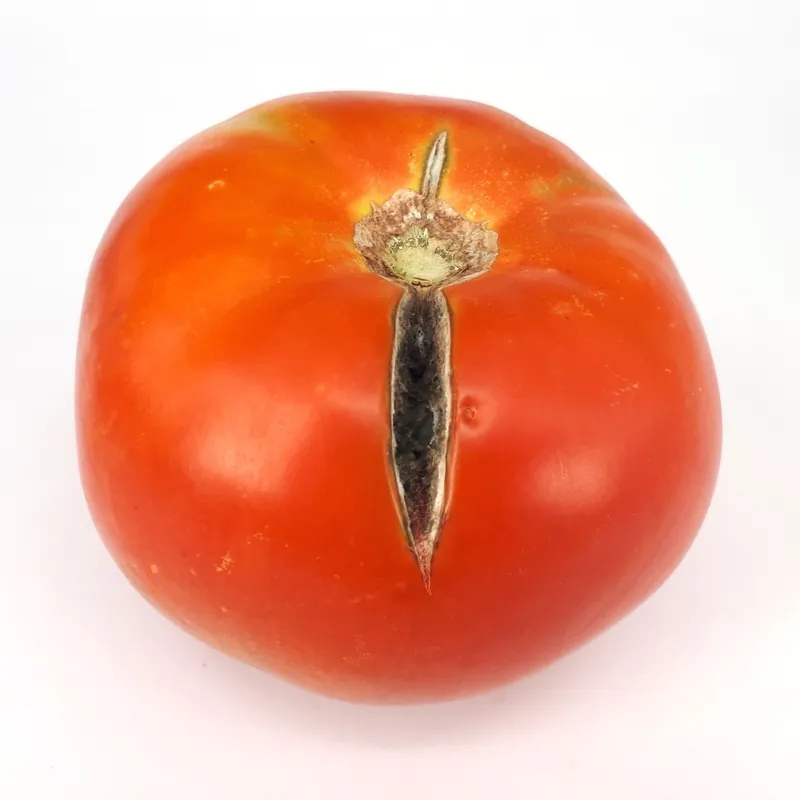
Short answer: Cracks in ripening tomatoes, cherries or plums mean the fruit took up a lot of water at once, usually after rain following dry weather. Pick split fruit today and eat it soon, or throw it out if it has gone moldy. Keep soil moisture even by watering deeply when the soil is dry and mulching, and pick ripening fruit before heavy rain.
What it looks like
- Splits in the skin of ripening or ripe fruit
- Tomato cracks running out from the stem end, or in rings around the top
- Cracks appearing a day or two after heavy rain or a big watering
- Cherries splitting on the tree after rain on ripe fruit
- Split fruit going moldy, souring or drawing wasps
- Fine, healed cracks that leave a rough, corky ring on tomatoes
Is it fruit cracking or something else?
| Could also be | How to tell |
|---|---|
| Blossom end rot | Blossom end rot makes a dark, sunken, leathery patch on the bottom of the fruit. Cracks from splitting usually start at the stem end on top. |
| Sunscald | Sunscald leaves a pale, papery patch on the side of the fruit that faces the sun. The skin is damaged but not split open. |
| Animal damage | Birds, squirrels and slugs leave holes, pecks or chewed patches, often on several fruit at once. Splitting opens the skin in clean lines with no flesh missing. |
Why it happens
Fruit keeps taking up water as it ripens. After a dry spell, a heavy rain or a long soak lets the roots draw in water fast, the flesh swells, and the skin, already firm with ripening, can't stretch to match. Iowa State University Extension notes that cracks usually appear at the stem end and are most common on large beefsteak tomatoes.
Cherries can also split when rain sits on ripe fruit, since the sugary fruit soaks water in through its skin. UC IPM adds that waterlogged soil makes it worse and that some varieties, such as Bing, split more easily. Pots that dry out completely and then get soaked are a common cause in small gardens.
How to fix it
- Pick split fruit today. Cracked fruit spoils fast once fungi and insects get in. Eat or cook it soon, and throw it out if it is moldy or smells sour.
- Keep moisture even: water deeply when the soil is dry, then mulch. Check the soil a few inches down before watering, and when it is dry, give a long, slow soak. Then spread straw, dry grass clippings or shredded leaves over the soil so it dries out more slowly.
- Pick ripening fruit before heavy rain. When a downpour is forecast, harvest tomatoes that have started to color and cherries that are nearly ripe. Tomatoes finish ripening indoors at room temperature.
- Grow tomatoes in big pots or beds. Small pots swing between bone dry and soaked. Large containers and garden beds hold moisture far more evenly, which keeps the fruit growing at a steady pace.
Watch out: Letting pots dry right out and then soaking them causes most splitting. Steady moisture matters more than the amount.
How to prevent it
- Mulch tomato beds and pots early in summer
- Choose larger containers for tomatoes
- Grow crack-resistant tomato varieties if splitting is a regular problem
- Pick fruit promptly as it ripens, especially before rain
- Avoid waterlogging the soil around fruit trees
Plants it often affects
- Tomato beefsteak types crack most, in lines from the stem or rings around it
- Sweet cherry ripe fruit splits when rain sits on it
- Plum ripening fruit splits after heavy rain follows dry weather
- Cabbage firm heads split open when heavy rain follows a dry spell
Questions people ask
Are split tomatoes safe to eat?
Freshly split tomatoes are fine to eat once you cut away the cracked part. Use them soon. Throw out fruit that is moldy, oozing or smells sour.
Why do my tomatoes crack after rain?
After dry weather, rain lets the roots take up a lot of water quickly. The fruit swells faster than its skin can stretch, and it splits. Keeping the soil evenly moist with deep watering when it is dry and a good mulch makes this much less likely.
Can I stop cherries splitting on the tree?
It is hard to prevent completely. Pick fruit as soon as it ripens, harvest early when heavy rain is forecast, and avoid waterlogging the soil. Some varieties split less than others.

Not sure it's fruit cracking?
Take a photo in Liana and the health check names the problem and tells you what to do first. Liana also reminds you to check the soil, so watering mistakes don't start. Get Liana for iPhone.
Sources
- Iowa State University Extension and Outreach, Why are my tomatoes cracking?
- University of California Statewide IPM Program, Fruit Cracking of Cherries