Boxwood blight: brown patches and bare stems on boxwood
Boxwood blight is a fungal disease that browns boxwood leaves and strips them from the stems, sometimes within days. In Britain it is called box blight. It spreads fastest in warm, wet, humid weather, and its spores hide in fallen leaves, so cleanup is most of the fix.
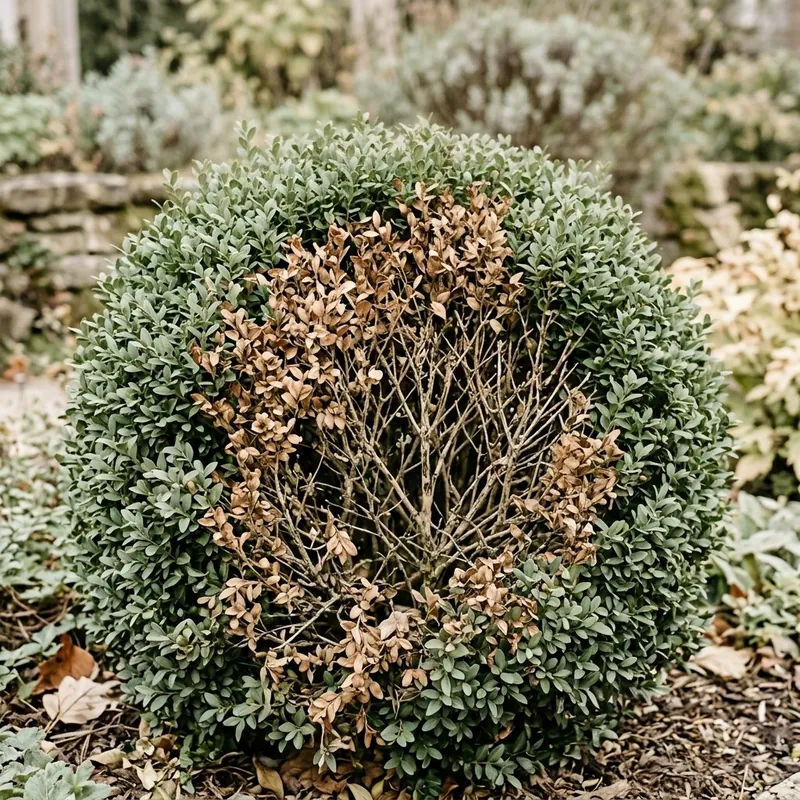
Short answer: Boxwood blight is a fungal disease that causes brown spots on boxwood leaves, black streaks on young stems and fast, heavy leaf drop that leaves bare patches. In damp weather you may see white fuzzy spores under the leaves. On a dry day, cut out the affected growth, bag it, and clear every fallen leaf from under and inside the plant.
What it looks like
- Dark or light brown spots on the leaves, often with a darker edge, that grow and merge until the whole leaf is brown
- Leaves dropping fast, leaving bare patches or whole bare sections, often starting low on the plant
- Narrow black streaks or dark lesions on young green stems
- White, fuzzy spore masses on the undersides of brown leaves in wet or humid weather
- Whole sides or tops of a hedge browning, especially in shady, damp spots
- New shoots that grow back from bare stems, then brown again when the weather turns wet
Is it boxwood blight or something else?
| Could also be | How to tell |
|---|---|
| Volutella blight | Volutella usually follows winter injury and kills whole branches, which turn straw colored. Its spore masses are pink, not white, and it doesn't make black streaks on the stems. |
| Winter damage | Cold, drying winter wind turns leaves bronze or straw colored, mostly on the exposed side of the plant, and the leaves tend to stay on. There are no black stem streaks and no white fuzz. |
| Box tree moth caterpillars | The caterpillars eat the leaves, leaving chewed edges, webbing and green and black caterpillars inside the plant. Blight leaves no webbing and no chewing, just brown, spotted leaves. |
Why it happens
Boxwood blight is caused by Calonectria fungi that infect boxwood and a few close relatives such as pachysandra and sweet box. The spores are sticky and move in splashing water from rain or sprinklers, on tools, gloves and clothing, and on infected nursery plants that may not show symptoms yet.
It is active whenever the leaves stay wet, and it spreads fastest in warm, humid, rainy weather. Dense hedges and clipped balls that stay damp inside, shady spots and overhead watering all help it along.
The fungus survives in fallen leaves and infected stems for at least five years. That is why a hedge that seemed to recover can blight again the next wet summer when the leaf litter underneath was never cleared.
How to fix it
- Cut out affected growth on a dry day. Wait for dry weather, then cut out brown, spotted and bare stems back into healthy growth. Put the clippings straight into a bag and into the trash. Badly affected plants may need to come out completely.
- Clear every fallen leaf. Rake, sweep or vacuum up the leaves under the plant, and shake or pick out the dead leaves caught inside it. Bag them for the trash. Don't compost them.
- Disinfect shears and stop clipping in wet weather. Wipe blades with rubbing alcohol between plants and after you finish, and clean gloves and shoes too. Only clip when the plants are dry, and clip less often while the blight is active.
- Water the soil and thin dense growth. Switch from sprinklers to a soaker hose or watering can aimed at the base. Thin a few stems from the inside so air reaches the center and the leaves dry faster after rain.
- Mulch under the plants. Once the ground is clean, spread a fresh layer of mulch under the plants. It covers any leaves you missed and stops rain splashing spores back up onto the foliage.
Watch out: Fallen leaves can carry spores for five years. Clear them thoroughly, or the blight comes back as soon as the weather turns damp.
How to prevent it
- Keep new boxwood apart from your other plants for a few weeks before planting and check them for spots and black stem streaks
- Choose blight-tolerant boxwood varieties, or alternatives such as Japanese holly or dwarf yaupon holly
- Clip only in dry weather, not too often, and clean your shears between plants and gardens
- Water with a soaker hose instead of sprinklers and give plants room for air to move
- Check boxwood holiday wreaths and garlands, and bag their fallen leaves instead of dropping them in the garden
Plants it often affects
- Common boxwood hedges and topiary brown and drop leaves fast, especially the classic English types
- Littleleaf boxwood brown spots and leaf drop, though some selections hold up better
- Korean boxwood gets spots and bare patches; a few selections are more tolerant
- Pachysandra a relative of boxwood that can carry the fungus and develop leaf spots
- Sweet box another close relative that can host the disease
Questions people ask
Can boxwood recover from blight?
Plants with only some brown patches often regrow once infected stems and fallen leaves are cleared and the weather dries out. Leaves that have dropped don't come back on old stems, so recovery is slow. Plants that are mostly bare are usually better removed.
Should I compost boxwood blight clippings?
No. Bag the clippings and fallen leaves for the trash, or burn them where that is allowed. The fungus survives for years in dead leaves, and compost made from them would carry it to new places.
Are there boxwoods that resist blight?
No boxwood is fully resistant, but some are more tolerant than others, such as certain Korean and Japanese boxwood selections. Where blight keeps returning, evergreen shrubs like Japanese holly or dwarf yaupon holly can give a similar look.

Not sure it's boxwood blight?
Take a photo in Liana and the health check names the problem and tells you what to do first. Liana also reminds you to check the soil, so watering mistakes don't start. Get Liana for iPhone.
Sources
- Royal Horticultural Society, Box blight
- Clemson Cooperative Extension, Home & Garden Information Center, Boxwood Diseases & Insect Pests