Brown rot on fruit trees: how to stop it spreading
Brown rot on fruit trees is a fungal disease that turns apples, pears, plums, cherries and peaches soft and brown. Rings of buff, cushion-like spores cover the rotting fruit, which then shrivels into a hard mummy that hangs on the tree. Those mummies carry the disease into next year, so clearing them away does the most good.
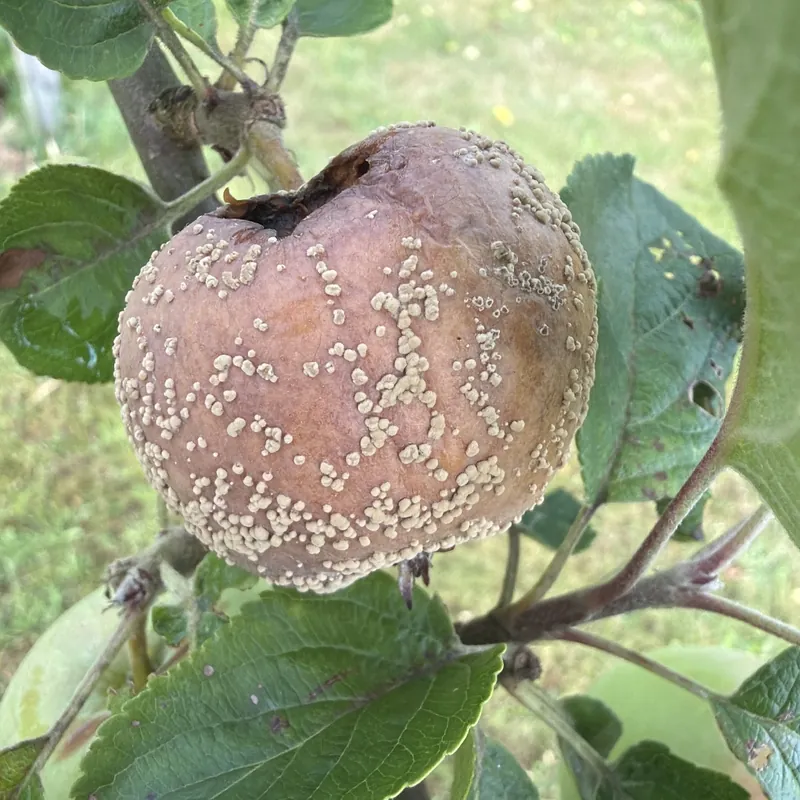
Short answer: Brown rot is caused by Monilinia fungi. Look for a soft brown rot spreading over the fruit, rings of pale, cushion-like spore pads on the skin, and shriveled mummies left hanging on the tree. Pick off rotting fruit today, gather fallen fruit, and in winter remove every mummy and the dead spur it hangs on.
What it looks like
- A soft brown patch on the fruit that spreads quickly over the whole fruit
- Buff, tan or gray cushion-like spore pads, often in rings, on the rotting skin
- Fruit that dries, shrivels and stays on the tree as a hard mummy
- Rot passing from one fruit to the next where they touch in a cluster
- Rot that starts at a wound, such as a peck mark or an insect hole
- In spring, blossoms and leaves on fruiting spurs that turn brown and wither
Is it brown rot or something else?
| Could also be | How to tell |
|---|---|
| Codling moth | Codling moth leaves a hole with brown, crumbly droppings and a tunnel to the core. Brown rot often gets in through those holes, so you may see both on one apple. |
| Gray mold | Gray mold covers soft fruit such as strawberries and grapes in a gray, dusty fuzz. Brown rot on tree fruit makes neat rings of buff spore pads instead of fuzz. |
| Apple scab | Scab makes dark, corky spots on the skin that can crack, while the flesh stays firm. Brown rot turns the flesh soft and brown right through. |
Why it happens
Brown rot is caused by fungi in the genus Monilinia. They infect fruit through wounds, so fruit damaged by birds, wasps, codling moth or scab rots first. On plums, cherries, peaches, apricots and pears, the fungus can also infect blossoms in spring, causing blossom wilt and twig dieback.
Warm, wet weather lets it spread fast. Spores travel on wind and rain, insects carry them to damaged fruit, and a rotting fruit infects the ones it touches. Wild or neglected plums and cherries nearby can bring it into the garden.
The fungus survives winter in mummified fruit on the tree and on the ground, and in small cankers on spurs where a mummy touched the bark. In spring these release fresh spores just as the blossoms open.
How to fix it
- Pick off rotting fruit today. Remove every soft, brown fruit from the tree and put it in the trash, or bury it at least a foot deep. Keep it off the compost pile.
- Gather up fallen fruit. Collect fruit from the ground too, every few days while the tree is fruiting. Rotting fruit on the ground keeps making spores that reach the tree.
- Remove mummies and their spurs in winter. When the tree is bare, look it over and pull off every shriveled mummy. Cut out the short spur or twig it hangs on as well, since the fungus spreads into it.
- Store only unblemished fruit. Pick gently to avoid bruises and store only fruit with no marks at all. Lay it out so no two fruits touch, keep it cool and dry, and check it often.
- Protect fruit from damage. Net trees against birds and deal with codling moth and other fruit pests. Fewer wounds means fewer ways in for the fungus.
Watch out: The fungus gets in through wounds. Fruit pecked by birds or holed by wasps and codling moth rots first, so protecting the fruit helps most.
How to prevent it
- Net trees to keep birds off ripening fruit
- Thin heavy crops so fruits don't touch each other
- Prune to open up the tree so it dries faster after rain
- Clear every mummy from the tree and the ground before spring
Plants it often affects
- Apple rot spreads from peck marks and moth holes, and mummies hang on into winter
- Pear fruit rots on the tree, and blossom wilt can show in spring
- Plum fruit in tight clusters rots from one plum to the next
- Cherry withered blossoms in spring and rotting fruit in wet summers
- Peach can lose a large part of the crop in warm, wet weather
- Apricot blossom blight in spring and soft, brown fruit near harvest
Questions people ask
Can you eat fruit from a tree with brown rot?
Throw away any fruit that is soft or brown. Fruit from the same tree with no marks is fine to eat. Use it soon and check stored fruit often.
Why do rotten fruits stay on the tree?
Fruit killed by brown rot dries into a hard mummy that often hangs on all winter. The fungus survives inside and makes spores in spring, which is why removing mummies matters so much.
Can I compost fruit with brown rot?
It's safer not to. Put it in the trash or yard waste collection, or bury it at least a foot deep. A home pile that never heats up can pass the fungus back to your trees.

Not sure it's brown rot?
Take a photo in Liana and the health check names the problem and tells you what to do first. Liana also reminds you to check the soil, so watering mistakes don't start. Get Liana for iPhone.