Codling moth: worms in apples and pears and what to do
Codling moth is the classic worm in the apple: a pale pink caterpillar that bores into apples and pears and tunnels to the core. A small hole with crumbly brown droppings is the sign, and infested fruit often drops early. Careful cleanup comes first, and you can protect next year's fruit before the moths reach it.
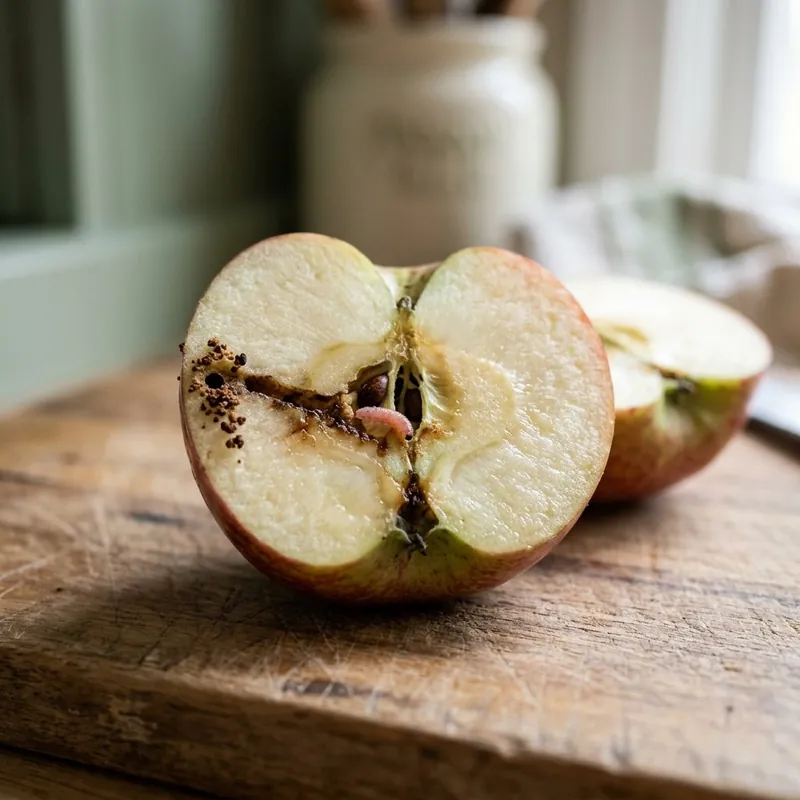
Short answer: Codling moth larvae are white to pale pink caterpillars with dark brown heads that feed inside apples and pears. Look for a small hole in the side or the blossom end of the fruit with reddish-brown, crumbly droppings around it, and a tunnel to the core when you cut it open. Pick up fallen fruit and remove holed fruit from the tree.
What it looks like
- A small hole in the side or the blossom end of an apple or pear
- Reddish-brown, crumbly droppings around the hole
- A tunnel to the core, with droppings inside, when you cut the fruit open
- A white to pale pink caterpillar with a dark brown head near the core
- Fruit that ripens early and drops from the tree
- Holed fruit rotting in storage
Is it codling moth or something else?
| Could also be | How to tell |
|---|---|
| Apple scab | Scab leaves dark, rough, corky spots on the skin, but no holes, droppings or tunnels inside. |
| Apple maggot | Apple maggot leaves tiny pinprick dimples on the skin and thin brown trails winding through the flesh, with no droppings at the surface. Codling moth makes one larger hole with crumbly droppings and a tunnel to the core. |
| Wasp or bird damage | Wasps and birds hollow out ripe fruit from the outside through an open wound. Codling moth damage starts as a small hole and goes deep to the core. |
Why it happens
The moths fly from late spring and lay eggs on or near young fruit. The tiny larvae bore in and feed their way to the core, then leave the fruit and drop to the ground to find a place to spin a cocoon. Some climb back up the trunk to shelter in cracks in the bark.
Full-grown larvae spend the winter in cocoons under loose bark, in the soil or in debris under the tree. In warm areas there are two to four generations a year, so later broods attack fruit right up to harvest.
Fallen fruit left lying under the tree can still hold larvae, which then grow into next season's moths.
How to fix it
- Pick up and throw away fallen and holed fruit. Gather dropped fruit often, especially early in the season, and pick holed fruit off the tree. Put it in the trash rather than the compost so the larvae inside don't survive.
- Hang pheromone traps in late spring. Pheromone traps attract male moths. They show you when the moths are flying, and on an isolated tree they may catch enough males to cut down mating. On their own they rarely prevent damage, so use them alongside cleanup.
- Tie corrugated cardboard around the trunk in summer. Larvae leaving the fruit look for a sheltered crevice to spin a cocoon. A band of corrugated cardboard tied around the trunk gives them one you can remove. It won't save this year's crop, but it takes out some of the larvae that would become next year's moths.
- Remove and throw away the cardboard in winter. Take the band off over winter, cocoons and all, and put it in the trash.
- Thin and bag young fruit next season. Thin clusters to one fruit, removing any with holes. On small trees, slip paper lunch bags with a small slit in the bottom over young fruit once it's about 1/2 to 1 inch across, so the moths can't reach it.
Watch out: Holed apples rot in storage and spoil the fruit around them. Cut a few open before storing, and keep only sound fruit.
How to prevent it
- Clear fallen fruit and debris from under the tree throughout the season.
- Thin fruit to one per cluster while it's small.
- Bag young fruit on small trees.
- Hang a pheromone trap to learn when the moths are flying in your yard.
Plants it often affects
- Apple the main host; holes with crumbly droppings and tunnels to the core
- Pear larvae tunnel to the core just as in apples
- Asian pear a pear like any other to the larvae
- Crabapple small fruit holed and dropping early
- Walnut English walnuts damaged early drop from the tree soon after
Questions people ask
Can you eat an apple with codling moth damage?
Yes, once you cut away the tunnel and the damaged flesh around it. Use these apples soon, since they rot quickly and won't keep in storage.
Do pheromone traps get rid of codling moth?
Not on their own. They catch male moths and show you when the moths are flying, which helps time other steps. On a single isolated tree they may catch enough to reduce mating, but cleanup and protecting the fruit matter more.
Why are my apples falling off early?
Codling moth is a common reason. Infested fruit often ripens early and drops, so check fallen apples for a small hole with brown droppings. Trees also shed some young fruit naturally in early summer, and those apples have no holes.

Not sure it's codling moth?
Take a photo in Liana and the health check names the problem and tells you what to do first. Liana also reminds you to check the soil, so watering mistakes don't start. Get Liana for iPhone.
Sources
- UC Statewide IPM Program, Codling Moth
- Royal Horticultural Society, Codling moth