Cactus corking: brown bark that's natural, not rot
Cactus corking is hard, dry, tan or brown skin that spreads slowly up from the base of older cacti, much like bark on a tree. It is a natural part of ageing and does the plant no harm. The worry is mixing it up with rot, and the difference is easy to feel: corking is firm, while rot is soft.
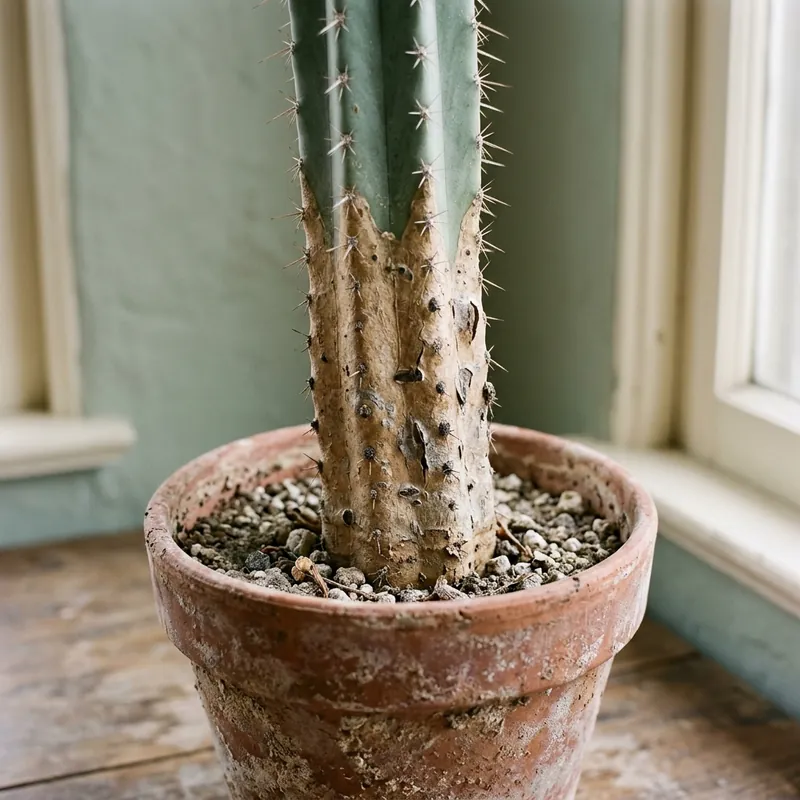
Short answer: Press the brown area gently with a finger. If it is firm, dry and rough like bark, it is corking, and you can leave it alone. If it is soft, dark, wet or sunken, especially at the base, it is rot and needs cutting out quickly. Check the base of older cacti each season so you catch any change early.
What it looks like
- Tan to brown, rough skin starting at the base of the stem
- Brown areas that feel hard and dry, like bark or cork
- Corking that creeps slowly upward over months or years
- Mostly on older, taller cacti, especially columnar kinds
- Green, healthy growth above the corked part
- No smell, no oozing and no soft spots
Is it cactus corking or something else?
| Could also be | How to tell |
|---|---|
| Crown rot | Rot makes the base soft, mushy, dark or sunken, often with a bad smell, and it can spread fast. Corking stays hard and dry and moves very slowly. |
| Too much sun | Sunburn leaves pale, bleached or tan patches high up or on the side facing the sun, often after a move into a brighter spot. Corking starts at the base and works up evenly. |
| Scale insects | Scale are small brown or white bumps you can lift off with a fingernail. Corking is part of the skin itself and doesn't come away. |
Why it happens
As columnar and other long-lived cacti grow tall and heavy, the oldest skin near the base toughens into a woody layer that helps hold the plant up and protects it. The New York Botanical Garden describes this brown corking as a natural ageing change that some cacti develop over the years.
Corking is permanent, and the brown skin won't turn green again. It worries owners mostly because rot also starts at the base. The New York Botanical Garden notes that a dry kind of rot can form where the stem meets soil that stays damp, which is why a gritty, fast-draining mix matters so much.
How to fix it
- Press the brown area gently. Use a fingertip or the back of a pencil. Firm, dry and rough like bark means corking. Soft, spongy or wet means rot.
- Leave corking alone. Corked skin stays brown but does no harm. Don't scrape, cut or treat it, since any wound can let rot in.
- Check the base each season. Look at and feel the base of older cacti a few times a year for soft, dark or wet patches. Catching rot early makes it much easier to save the plant.
- Look at where the brown is. Brown patches high up on the stem, or only on one side, point to sunburn or pests rather than corking. Check for scale insects, and think about whether the plant was recently moved into stronger sun.
Watch out: Soft, dark or sunken patches at the base mean rot. Cut it out quickly and keep the plant dry.
How to prevent it
- Grow cacti in a gritty, fast-draining mix in a pot with a drainage hole
- Water only when the soil is completely dry
- Top the soil with grit or small stones so the base of the stem stays dry
- Water much less in autumn and winter, when most desert cacti rest
Plants it often affects
- Peruvian apple cactus tall columns cork from the base as they age
- San Pedro cactus older columns turn tan and woody at the bottom
- Peanut cactus older stems cork at the base of the clump
- Bolivian torch cactus the base of mature columns becomes rough and brown
- Easter lily cactus older plants get a corky, brown base
Questions people ask
Is corking bad for my cactus?
No. It is the plant ageing, much like a tree forming bark. Corked skin is firm and dry and causes no harm, though it will stay brown.
How do I tell corking from rot?
Feel it. Corking is hard, dry and rough. Rot is soft, dark, often wet or sunken, and can smell bad. Rot also tends to spread quickly from the base, while corking creeps up slowly.
Can I stop or reverse corking?
No. Corking is permanent and part of normal ageing. What you can do is keep the plant healthy with a gritty mix, good drainage and watering only when the soil is completely dry.

Not sure it's cactus corking?
Take a photo in Liana and the health check names the problem and tells you what to do first. Liana also reminds you to check the soil, so watering mistakes don't start. Get Liana for iPhone.
Sources
- New York Botanical Garden, Plant Information, Why is the bottom of my cactus turning brown?