Carrot rust fly: rusty tunnels in carrots and how to stop them
Carrot rust fly, called carrot fly in Britain, lays its eggs in the soil beside carrots, and the maggots tunnel into the roots. The tunnels turn rusty brown, and the carrots often rot. Parsnips, parsley and celery are hit too, and a fine mesh cover from sowing day keeps the flies out.
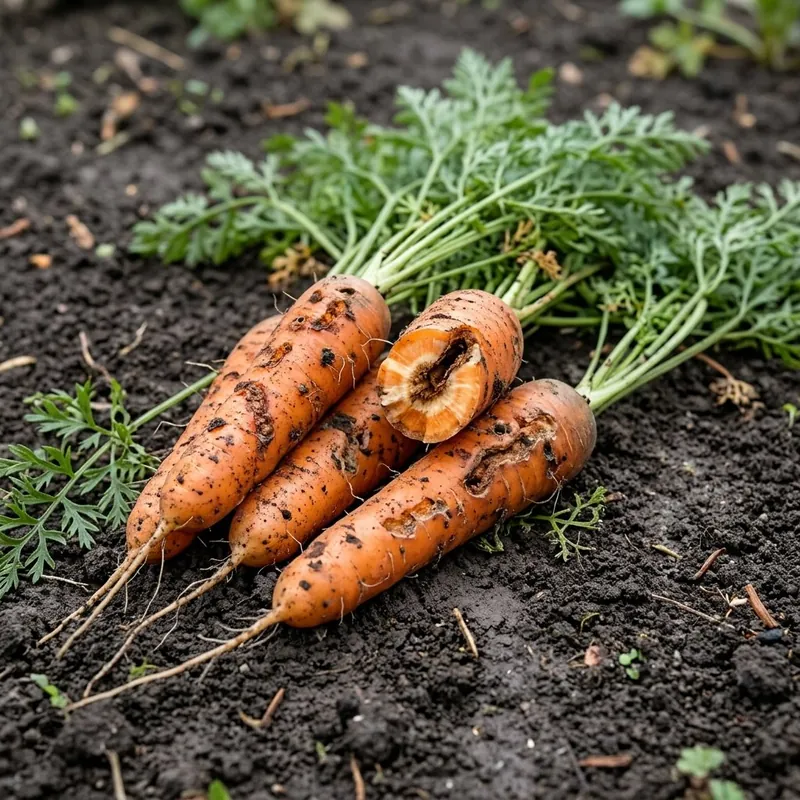
Short answer: Carrot rust fly is a small black fly whose cream-colored maggots tunnel through carrot roots, leaving rusty brown scars. Plants may wilt, turn reddish and stay small. Cover carrots with fine insect mesh or row cover from the day you sow, and lift damaged carrots soon.
What it looks like
- Rusty brown tunnels and scars in the roots, mostly in the lower part of carrots
- Slender, creamy yellow maggots, up to about 1/3 inch long, inside the tunnels
- Leaves turning reddish or yellow
- Plants that wilt in warm weather and stay small
- Young seedlings that die
- Roots that rot in the ground or in storage
Is it carrot rust fly or something else?
| Could also be | How to tell |
|---|---|
| Slugs and snails | Slugs graze shallow, irregular holes in the root, usually near the top just below the soil, and leave slime behind. Carrot rust fly tunnels are narrow, rusty brown and run into the root. |
| Wireworms | Wireworms are shiny, hard, yellowish-brown larvae that bore narrow, clean, round holes. Carrot rust fly maggots are soft and cream-colored, and their tunnels turn rusty brown. |
Why it happens
The adult is a small black fly, about 1/5 inch long, with an orange head and yellow legs. Females find carrots by smell and lay their eggs in the soil nearby. The maggots hatch, burrow into the roots and feed, and the tunnels turn rusty red and let rot in.
There are two or three generations between late spring and fall, so both early and late crops can be hit. The insects spend the winter as larvae or pupae in the soil, which is why carrots grown in the same bed year after year often suffer more.
Thinning seedlings releases a carrot smell that draws egg-laying females to the bed.
How to fix it
- Cover carrots from the day you sow. Lay fine insect mesh or floating row cover over the bed right after sowing, before the seedlings come up. Bury or weigh down the edges so the flies can't crawl underneath.
- Sow thinly so you don't have to thin. Sow seed sparsely so the plants need little or no thinning. If you do thin, take the pulled seedlings away from the bed and firm the soil back around the rest.
- Or put up a barrier about 2 feet high. If you'd rather not cover the bed, surround it with a solid fence of fine mesh or clear plastic about 2 feet high. Egg-laying females fly low, so a barrier stops many of them, though a full cover works better.
- Lift damaged carrots soon. Pull and use damaged carrots soon, cutting away the tunnels, instead of leaving them in the ground to rot. Harvest the rest of the crop as soon as it's ready.
- Rotate beds and time your sowings. Grow carrots, parsnips and their relatives in a different bed each year. A sowing in late spring or early summer can miss the first wave of flies, and lifting early carrots before late summer avoids the next.
Watch out: Lifting the cover to weed, or tucking it in loosely, lets the flies straight in. Keep the edges buried all season.
How to prevent it
- Cover the bed with insect mesh on sowing day and leave it on until harvest.
- Move carrots and their relatives to a new bed each year.
- Sow thinly and handle the plants as little as you can.
- Harvest carrots as soon as they're ready, and clear old roots and crop debris at the end of the season.
- Keep wild carrot (Queen Anne's lace) away from the vegetable bed.
Plants it often affects
- Carrot the main host; rusty tunnels in the lower part of the root
- Parsnip tunnels mostly in the upper part of the root
- Celery maggots feed in the roots and plants stay small
- Parsley roots tunneled and leaves may turn reddish
- Celeriac rusty scars in the swollen root
- Queen Anne's lace a wild host that keeps the flies around the garden
Questions people ask
Can you eat carrots with carrot rust fly damage?
Lightly damaged carrots are fine once you cut away the tunnels and any brown flesh. Badly tunneled roots are best thrown out. Damaged carrots don't keep, so use them soon.
When is carrot rust fly most active?
The first flies lay eggs in late spring and early summer, and a second generation follows in late summer, with sometimes a third into fall. Covering the crop for the whole season is the simplest way to stay ahead of them.
Does crop rotation stop carrot rust fly?
It helps, because the insects spend the winter in the soil where last year's carrots grew. Flies can still arrive from other beds and gardens nearby, so combine rotation with a mesh cover.

Not sure it's carrot rust fly?
Take a photo in Liana and the health check names the problem and tells you what to do first. Liana also reminds you to check the soil, so watering mistakes don't start. Get Liana for iPhone.
Sources
- Utah State University Extension, Carrot Rust Fly
- Royal Horticultural Society, Carrot fly