Colorado potato beetle: how to spot and stop it
The Colorado potato beetle is a striped beetle whose plump red larvae can strip potato, eggplant and tomato plants down to bare stems. Bright orange egg clusters under the leaves are the first sign. It's common across North America and Europe, and rare in the UK.
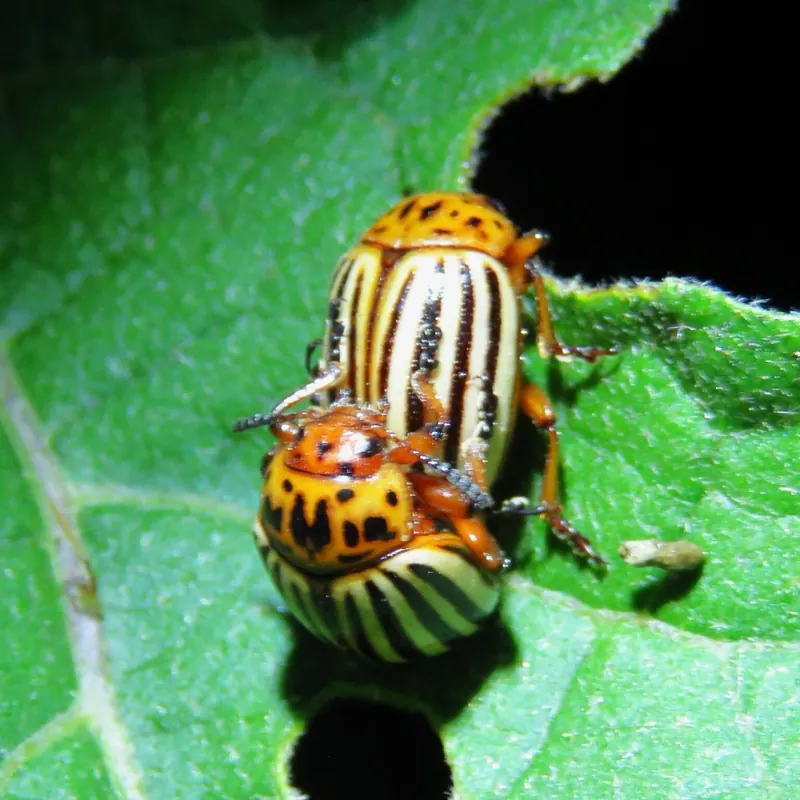
Short answer: Colorado potato beetles are about half an inch long, cream or yellow with dark stripes down their backs, and their larvae are humpbacked, reddish orange and spotted black. Look under the leaves for clusters of bright orange eggs. Pick off beetles and larvae into soapy water today and crush every egg cluster you find.
What it looks like
- Leaves chewed away, sometimes until only the stems are left
- Plump, humpbacked, reddish orange larvae with rows of black spots on the leaves
- Bright orange egg clusters on the undersides of leaves
- Rounded beetles, cream or yellow with dark stripes down the wing covers
- Damage worst on potatoes and eggplant, lighter on tomatoes
- Beetles on young potato shoots soon after they come up in spring
Is it colorado potato beetle or something else?
| Could also be | How to tell |
|---|---|
| Ladybug eggs and larvae | Ladybug eggs are smaller, paler yellow clusters, usually near aphids, and ladybug larvae are dark, spiny and fast-moving. Colorado potato beetle eggs are bright orange and the larvae are plump and red. Leave the ladybugs. |
| Flea beetles | Flea beetles are tiny dark beetles that jump and leave lots of small shot holes. Colorado potato beetles are much larger, don't jump, and eat whole sections of leaf. |
| Tomato hornworm | Hornworms also strip leaves, but you'll find one big green caterpillar and large dark droppings. Potato beetle damage comes with many red larvae and orange eggs. |
Why it happens
Adult beetles spend the winter in the soil, in and around last year's potato patch, and come out in spring just as potato shoots appear. They feed, mate and lay orange egg clusters under the leaves.
Eggs hatch in about a week, and the larvae feed for a couple of weeks before dropping into the soil to pupate. In many areas there are two generations a summer, so numbers build fast if the first wave is missed.
The beetle feeds only on the nightshade family. Potatoes and eggplant suffer most; tomatoes and peppers are eaten too, usually less.
How to fix it
- Pick off beetles and larvae today. Hold a container of soapy water under the leaves and knock the beetles and larvae into it, or pick them off by hand. Gloves help. Catching the overwintered adults on young spring plants stops many eggs being laid.
- Crush the orange egg clusters. Turn the leaves over and look for bright orange clusters of eggs. Squash them or pick off that piece of leaf and drop it in the soapy water.
- Check every few days. New larvae hatch quickly, so look over the plants every few days through the season. Small larvae are the easiest to deal with.
- Cover young plants in small plantings. In a small garden, row cover over potatoes and eggplant from planting time keeps beetles from reaching them. Seal the edges with soil.
- Rotate and mulch with straw. Next year, plant potatoes, eggplant and tomatoes as far as you can from this year's patch, so beetles coming out of the soil have farther to walk. Mulch the plants with a thick layer of straw, which has cut beetle numbers in trials.
Watch out: Adults spend the winter in the soil right where last year's potatoes, tomatoes or eggplants grew. Plant this year's crop as far from that spot as your garden allows, and pull up any volunteer potatoes.
How to prevent it
- Move potatoes and their relatives to a different part of the garden each year, as far away as you can.
- Mulch potatoes and eggplant with straw.
- Check young potato shoots in spring and pick off the first beetles.
Plants it often affects
- Potato the main host; leaves stripped by larvae and adults
- Eggplant heavily attacked, often worse than potato
- Tomato eaten too, usually more lightly
- Pepper occasional leaf feeding
Questions people ask
Why don't sprays get rid of Colorado potato beetles?
After decades of spraying, the beetles have become resistant to many common garden insecticides. That's why hand-picking, crushing eggs, row covers and crop rotation do more in a home garden. Young larvae are the easiest stage to control.
Do Colorado potato beetles eat tomatoes?
Yes, but they prefer potatoes and eggplant. Tomatoes usually get lighter damage, so check them if they grow near potatoes.
When do Colorado potato beetles appear?
Overwintered adults come out of the soil in spring, about when potato shoots break through. A second generation often follows in summer, so keep checking until harvest.

Not sure it's colorado potato beetle?
Take a photo in Liana and the health check names the problem and tells you what to do first. Liana also reminds you to check the soil, so watering mistakes don't start. Get Liana for iPhone.
Sources
- Penn State Extension, Colorado Potato Beetle
- Iowa State University Extension, How can I control Colorado potato beetles?