Flea beetles: tiny holes in leaves and what to do
Flea beetles are tiny shiny beetles that chew many small round holes in the leaves of cabbage-family plants, radishes, arugula, eggplant and other crops. They jump like fleas when disturbed. Older plants shrug off the damage, but seedlings can be badly set back or killed.
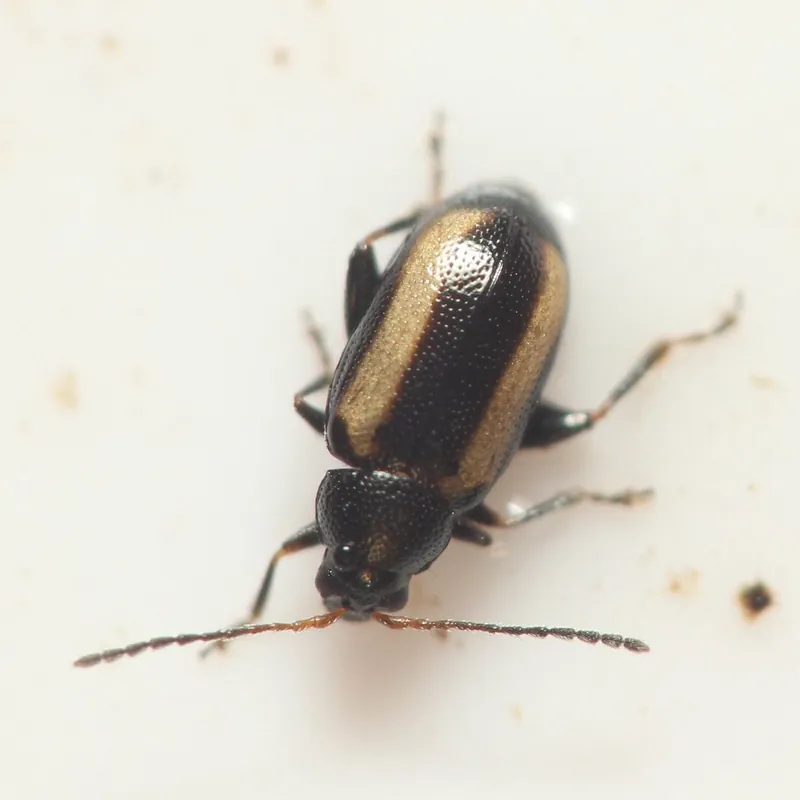
Short answer: Flea beetles are small black, brown or metallic blue-green beetles with strong back legs for jumping. The giveaway is leaves peppered with tiny round holes, like a shotgun blast, with beetles that leap away when you touch the plant. Cover seedlings with fine insect mesh or row cover today and keep it on until the plants are growing strongly.
What it looks like
- Many tiny round holes or pits in the leaves, as if hit by buckshot
- Tiny shiny beetles that jump away when you touch or water the plant
- Seedlings that stall, wilt or die after heavy feeding
- Damage that's worst in spring and early summer, especially in warm, dry weather
- Small pits scraped from the leaf surface that later dry out and turn brown
Is it flea beetles or something else?
| Could also be | How to tell |
|---|---|
| Slugs and snails | Slugs make larger, ragged holes and leave silvery slime trails. Flea beetle holes are small, round and many, and the beetles are on the plant by day. |
| Leaf spot | Some leaf spots dry out and drop from the leaf, leaving holes, but you'll see brown or ringed spots beside them first. Flea beetle holes appear with no spots, and the beetles jump when you touch the leaves. |
| Caterpillars | Caterpillars eat bigger, irregular holes and leave green or dark droppings on the leaves. Flea beetle holes are tiny and round, and you won't find droppings. |
Why it happens
Adult flea beetles spend the winter in leaf litter and plant debris around the garden. They come out in spring, just as seedlings are coming up, and feed on the young leaves. Their eggs go into the soil, where the larvae feed on roots but rarely do much harm in gardens.
Numbers tend to be high after mild winters and in hot, dry spring weather. Seedlings that grow slowly in those conditions stay at the vulnerable stage longer, while fast-growing, well-watered plants outgrow light feeding.
How to fix it
- Cover seedlings with fine mesh or row cover today. Lay fine insect mesh or lightweight row cover over the seedlings and bury or weigh down the edges so beetles can't crawl under. For eggplant, drape it over hoops so it doesn't rest on the plants. Keep it on until the plants are well grown.
- In dry spells, water deeply when the soil is dry. Push a finger into the soil, and when it's dry a couple of inches down, water slowly and deeply. Plants that aren't stressed by drought grow away from the damage faster.
- Sow a little later in spring. Seed sown into warm soil comes up and grows quickly, so it passes the vulnerable seedling stage sooner. Waiting a little after the first warm days, rather than sowing into cold soil, often means less damage.
- Clear plant debris in autumn. Adults spend the winter in leaf litter and old plant remains. Clear away spent crops and debris from vegetable beds after harvest to leave them fewer places to shelter.
Watch out: Older plants shrug off the holes. Protect seedlings until they have several true leaves, when the damage stops mattering.
How to prevent it
- Put mesh or row cover on right after sowing or planting, before the beetles find the crop.
- Raise cabbage-family plants in pots and plant them out once they're sturdy.
- Accept a few holes on larger plants, especially on outer cabbage leaves you would discard anyway.
- Check seedlings often in spring and early summer, when they are most at risk.
- Encourage birds, frogs and ground beetles, which eat flea beetles and their larvae.
Plants it often affects
- Cabbage young leaves riddled with holes; larger plants cope
- Radish seedlings can be stripped as they come up
- Arugula leaves peppered with tiny holes, a common sight in spring
- Turnip holes in the leaves of young plants
- Eggplant new transplants can be badly damaged
- Mustard greens a cabbage-family crop with tender leaves that beetles favor
Questions people ask
Do flea beetles kill plants?
They can kill seedlings or set them back badly, especially in hot, dry spring weather. Established plants usually lose only some leaf area and keep growing. Protecting young plants until they're well grown is what matters most.
Can you eat leaves with flea beetle holes?
Yes. The holes are only feeding damage, and arugula, cabbage and other greens with a few holes are fine to eat. On larger cabbages, the outer leaves often take most of the damage and can be thrown away.
When are flea beetles worst?
In spring and early summer, when adults come out of winter shelter and seedlings are young. In late summer, beetles moving off nearby crops can attack again, though bigger plants cope better.

Not sure it's flea beetles?
Take a photo in Liana and the health check names the problem and tells you what to do first. Liana also reminds you to check the soil, so watering mistakes don't start. Get Liana for iPhone.
Sources
- University of Maryland Extension, Flea Beetles on Vegetables
- Royal Horticultural Society, Flea beetles on brassicas