Coral spot fungus: how to cut it out and keep it away
Coral spot fungus shows up as tiny pink or coral orange cushions on dead twigs and branches. In the US it is often lumped in with Nectria canker, after the fungus that causes it. It mostly lives on dead wood, but it can spread into the live wood of stressed trees and shrubs and make branches die back.
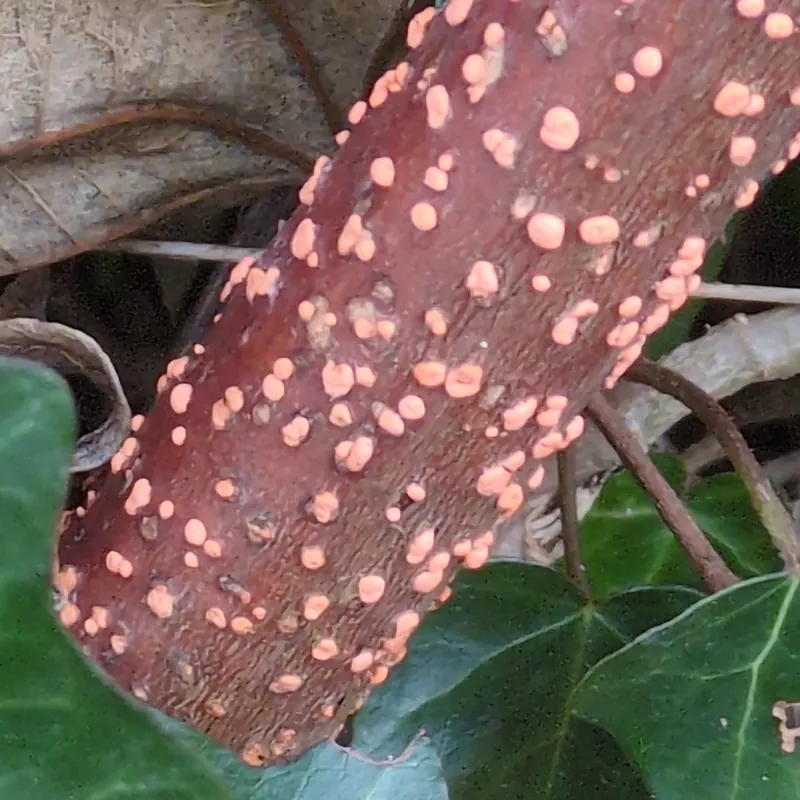
Short answer: Coral spot is a fungus that grows on dead wood and can invade weak trees and shrubs. The giveaway is pinhead-sized pink or coral orange bumps on the bark of dead or dying twigs. Cut affected branches back into healthy wood, at least 4 inches below the damage, on a dry day, and throw the prunings away.
What it looks like
- Tiny pink or coral orange cushions, about the size of a pinhead, on bark
- Dead twigs and branches, often above an old pruning cut, stub or break
- Clusters of small dark red bumps on the bark of older infections
- Branches whose leaves wilt and die back in spring or summer
- Dark brown dead wood under the bark next to cream-colored healthy wood
- Pink spots on old canes, pea sticks and woodpiles nearby
Is it coral spot or something else?
| Could also be | How to tell |
|---|---|
| Lichen and moss | Lichen forms flat gray, green or yellow crusts and leafy tufts on healthy bark, and the branch stays alive. Coral spot is raised pink or orange dots on dead or dying wood. |
| Frost damage | Frost kills soft new shoots overnight, and they blacken without any pink dots. Coral spot can move into those dead tips later, so look again in a few weeks. |
Why it happens
The fungus lives on dead wood: old stubs, broken branches, plant supports and woodpiles. Its spores spread in rain splash and wind-blown rain, and they get into trees and shrubs through dead branch stubs, dead bark, shoots killed by spring frost and small pores in the bark.
It is a weak attacker. Healthy plants usually fight it off, so an infection often points to stress from drought, waterlogging, poor pruning or root damage. Pruning in wet weather and leaving stubs give it an easy way in.
Maples, horse chestnut, hornbeam, beech, walnut and linden are among the more prone trees, along with many shrubs. Conifers are rarely affected.
How to fix it
- Cut affected branches back into healthy wood. Cut at least 4 inches below the pink spots and any dead wood, into bark that is green underneath. Bigger branches go back to a healthy side branch or to the trunk.
- Prune in dry weather, leaving no stubs. Cut just above a bud, or just outside the slightly swollen ring (the collar) where a branch meets a bigger one. Stubs die and become the next way in.
- Get rid of prunings and nearby dead wood. Put the cut wood in the trash or burn it where that's allowed. Clear old canes, pea sticks and dead branches from beds near the plant.
- Keep the plant growing strongly. Spread mulch over the root area and water deeply in long dry spells. A plant that isn't stressed can wall off the fungus by itself.
Watch out: Old pea sticks, canes and woodpiles near beds carry the spores. Keep dead wood away from shrubs that have had coral spot.
How to prevent it
- Prune on dry days and cut close to a bud or the branch collar
- Remove dead and broken branches promptly
- Store woodpiles and old plant supports away from shrub borders
- Mulch and water deeply in drought so plants stay strong
- If one plant keeps getting it, look for root, drainage or drought stress
Plants it often affects
- Maple among the most prone trees; twigs die back with pink dots
- Horse chestnut dead branches pick up the coral pink spots
- Beech a prone tree, especially after damage or drought
- Hornbeam often affected, including clipped hedges
- Walnut dead wood and pruning stubs get infected
- Linden prone to dieback from old wounds
Questions people ask
Is coral spot fungus harmful?
On dead wood it is harmless and only breaks the wood down. The trouble starts when it moves into the live wood of a stressed tree or shrub, where it can kill branches. Young plants infected early can be badly hurt, while older trees are rarely killed.
Is there a spray for coral spot?
No spray cures it. Cutting the infection out into healthy wood, clearing away dead wood and keeping the plant unstressed are what work.
When is the best time to prune out coral spot?
Prune as soon as you see it, on a dry day. Wet weather pruning raises the risk of new infections, so wait for a dry spell if you can.

Not sure it's coral spot?
Take a photo in Liana and the health check names the problem and tells you what to do first. Liana also reminds you to check the soil, so watering mistakes don't start. Get Liana for iPhone.
Sources
- Royal Horticultural Society, Coral spot
- University of California IPM, Nectria Canker