Lichen on trees and shrubs: harmless, but worth a look
Lichen on trees and shrubs shows up as gray, green or yellow crusts, leafy patches and hairy tufts on bark and branches, often with soft green moss nearby. Both only sit on the surface and take nothing from the plant. Lichen does grow best on slow, struggling plants, so a lot of it can be a hint to check the plant's health.
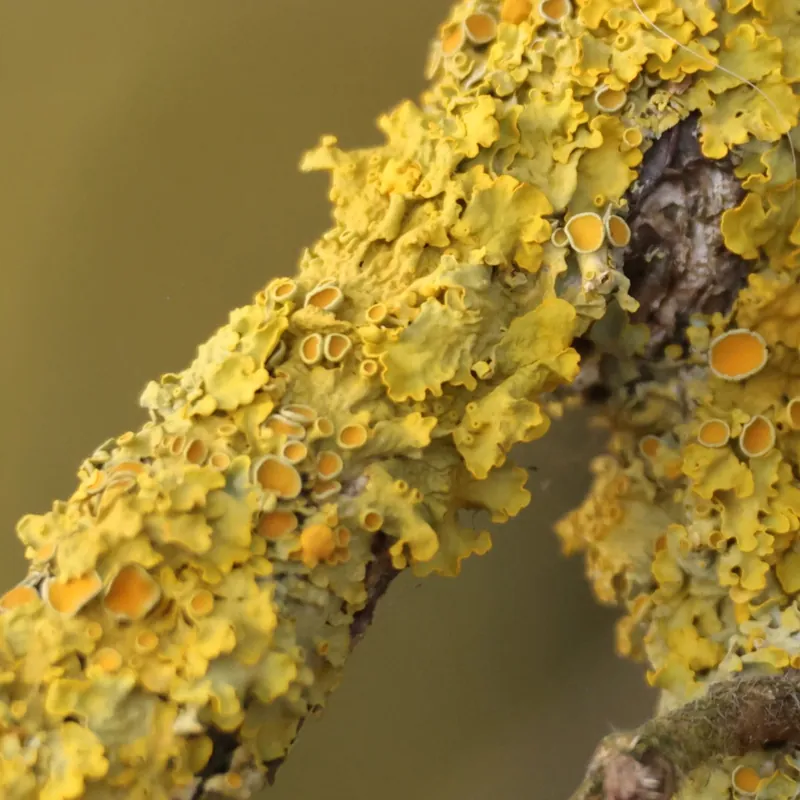
Short answer: Gray, green or yellow crusts and tufts on bark are lichens, and soft green cushions are moss. Neither feeds on the plant, so leave them in place and don't scrub or scrape the bark. If the plant is thinning or leafing out poorly, look for the real cause, such as root damage or poor drainage. Moss on the soil of a pot means the surface stays wet.
What it looks like
- Flat gray-green or yellow crusts on bark
- Leafy, frilly patches or hair-like tufts hanging from twigs
- Soft green moss on bark, branches, pots or the soil surface
- Most growth on old, slow-growing or dead branches
- Patches that stay put through the seasons and don't wipe off
- Healthy leaves and new growth on the rest of the plant
Is it lichen and moss or something else?
| Could also be | How to tell |
|---|---|
| Scale insects | Scale are small brown or white bumps along stems and leaf veins that you can lift off with a fingernail, often with sticky honeydew. Lichen forms flat crusts or frilly patches on bark and has no honeydew. |
| Sooty mold | Sooty mold is a black, sooty coating on leaves and stems that wipes off, and it grows on honeydew from insects. Lichen is gray, green or yellow and stays firmly attached to the bark. |
| Mold on the soil | Mold on potting soil is white and fluffy and comes and goes. Moss on the soil is green and low, and it means the surface stays damp for long periods. |
Why it happens
A lichen is a partnership between a fungus and an alga or cyanobacterium. The alga makes food from sunlight, and the fungus gathers water and minerals from the air and rain. Bark is simply a place to live. Iowa State University Extension states plainly that lichens don't harm trees, and they also grow on rocks, fences, roofs and gravestones.
Lichens settle where bark stays still. Fast-growing stems keep shedding and stretching their bark, which makes it hard for lichens to hold on. On slow, weak or dying plants they spread freely, especially on branches that lose their leaves and let in more light. NC State Extension calls lichens a sign of a plant's weak growth. Many lichens are also sensitive to air pollution, so plenty of them often means clean air. Moss settles in the same way on bark that stays damp and shaded.
How to fix it
- Leave lichen and moss in place. They don't feed on the plant or get under the bark. There is nothing to treat, and many people enjoy the look on old trees and shrubs.
- Check that the plant still leafs out well each spring. Healthy new leaves and shoots mean the plant is fine, however much lichen it carries. Thin growth, dead branches or small leaves point to a problem that needs a closer look.
- Read moss on potting soil as a drainage warning. Moss on the soil of a pot means the surface stays wet. Check that the pot drains freely, that it isn't sitting in a saucer of water, and that you water only when the soil is dry.
- Don't scrub or scrape the bark. Scraping wounds the bark and does the plant far more harm than the lichen ever could. Cut out dead branches instead, which removes much of the lichen with them.
Watch out: Lichen spreads fastest on slow, struggling plants, so it gets blamed for dieback. If a plant is thinning, look for the real cause, such as root damage or poor drainage.
How to prevent it
- Keep trees and shrubs growing well with mulch and deep watering in dry spells
- Protect roots from digging, paving and soil compaction
- Prune out dead and dying branches
- Use pots with drainage holes and a free-draining mix
- Let the soil surface dry between waterings to keep moss off pots
Plants it often affects
- Azalea old, thin shrubs often carry gray lichen on bare stems
- Camellia lichen moves into open, older growth in long-established gardens
- Crape myrtle gray-green crusts on the smooth bark are lichen and harmless
- Maple lichen patches on trunks and branches, more on slow or declining trees
Questions people ask
Is lichen killing my tree?
No. Lichens take no water or food from the tree. They are often noticed on trees that are already in decline, because weak growth and dead branches give them room to spread. If your tree is struggling, look at its roots, soil and water supply.
Should I remove lichen from my shrubs?
There is no need, and scraping or scrubbing damages the bark. If a shrub is covered and growing poorly, improve its growing conditions and cut out dead branches. Lichen tends to thin out as the plant grows more strongly.
Is moss on my houseplant soil a problem?
The moss itself is harmless, but it shows the surface stays wet for long periods. Check the drainage, empty saucers after watering, and let the top of the soil dry before you water again.

Not sure it's lichen and moss?
Take a photo in Liana and the health check names the problem and tells you what to do first. Liana also reminds you to check the soil, so watering mistakes don't start. Get Liana for iPhone.
Sources
- Iowa State University Extension and Outreach, There are gray-green patches on the trunk of my tree. What are they? Are they harming the tree?
- NC State Extension, Henderson County Center, Lichens Are Harmless to Trees