Frost damage on plants: what to do after a cold night
Frost damage on plants turns soft shoots and new leaves black, brown or limp after a frosty night, and it can split the bark of young trees. Tender plants and fresh spring growth outdoors suffer most. The damaged parts won't recover, but many plants regrow from buds lower down or from the base.
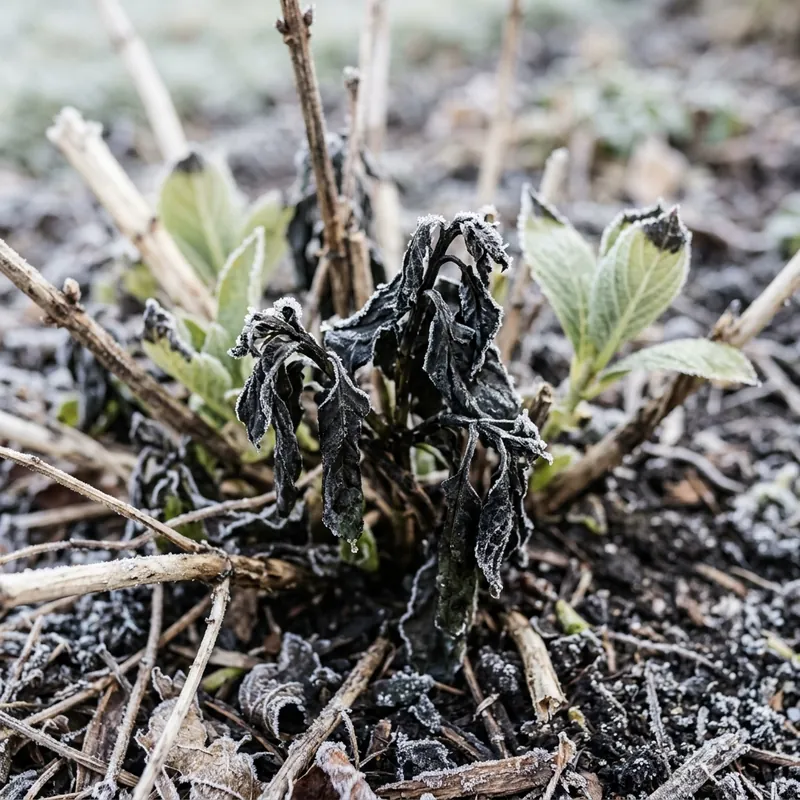
Short answer: If soft shoots look water-soaked, then blacken or go limp the day after a frost, the cold has killed that tissue. Leave the damaged growth on for now, since it shields the buds below. Cover tender plants on frosty nights, move pots to shelter, and wait until spring to cut back, when new buds show what is still alive.
What it looks like
- Soft shoots and new leaves turning black or brown after a frosty night
- Leaves that look dark green and water-soaked at first, then blacken
- Stems of tender plants collapsing and going limp
- Pale brown patches between the veins on young leaves, mostly on exposed upper growth
- Blossoms turning brown and young fruit dropping
- Bark cracking or splitting on young trees
- Damage appearing a day or more after the cold, once temperatures rise
Is it frost damage or something else?
| Could also be | How to tell |
|---|---|
| Cold damage | Houseplants chilled by a drafty window or a night outside get mushy, translucent patches without any frost. Frost damage happens outdoors on a frosty night and hits the newest, softest growth. |
| Fire blight | Fire blight also blackens spring shoots and blossoms on apples and pears, but the shoot tips bend into a shepherd's crook and the damage keeps spreading down the branch in warm, wet weather. |
| Leaf scorch | Leaf scorch browns leaf edges in summer heat, wind or drought. Frost damage shows overnight in cold weather, usually on the youngest leaves. |
Why it happens
Frost forms ice in and between the cells of soft plant tissue, which ruptures them and dries the tissue out. Tender perennials such as dahlias and cannas blacken at the first autumn frost, and hardy plants lose their new spring shoots and blossoms to a late frost. Plants that aren't dormant, and broadleaf evergreens, are the most sensitive.
Clear, still nights let the most heat escape, and cold air settles in low spots, so plants there are hit harder. UC IPM notes that injury often doesn't show until days after a freeze, and some damage on woody plants may take months to appear.
How to fix it
- Leave the damaged growth on. Blackened shoots and leaves look bad, but they shield the buds and stems below from the next cold night. Leave them on the plant through the cold season.
- Cover tender plants on frosty nights. When frost is forecast, drape frost cloth, row cover fabric or an old sheet over the plant in the evening, reaching to the ground so the soil's heat stays under it. Don't use plastic. Take the cover off in the morning.
- Move pots against a house wall or into a shed. Roots in pots freeze more easily than roots in the ground. Move containers into a shed, garage or porch on cold nights, or group them against a warm house wall.
- Give plants until late spring. Many plants that look dead regrow from the base or from buds lower on the stems. Once new buds show in spring, cut the dead growth back to just above healthy buds or side shoots.
Watch out: Pruning frosted shoots right away triggers soft new growth that the next frost kills. Wait until spring, when new buds show where to cut.
How to prevent it
- Choose plants that are hardy where you live, and keep tender ones in pots you can move
- Wait until the danger of frost has passed before planting out tender plants, and harden them off first
- Avoid high-nitrogen fertilizer late in the season, which pushes soft growth that frost kills
- Mulch the root area of tender shrubs and perennials before winter
- Keep frost cloth or old sheets handy for late spring frosts
Plants it often affects
- Dahlia leaves blacken and stems collapse at the first autumn frost
- Tomato blackens overnight if planted out before the last frost
- Potato early shoots blacken in a late spring frost and usually regrow
- Japanese maple new spring leaves brown and shrivel after a late frost
- Magnolia blossoms turn brown overnight after a frost
- Lemon leaves and young shoots scorch and drop when left out in a frost
Questions people ask
Should I cut off frost-damaged leaves?
Not yet. Damaged growth protects the healthy buds underneath from the next frost. Wait until spring, when new buds appear, then cut back to just above them.
Will a frost-damaged plant come back?
Many do. Hardy shrubs and perennials often regrow from lower buds or from the base. Give them until late spring, or even early summer, before deciding a plant is dead.
What can I cover plants with on a frosty night?
Frost cloth, row cover fabric or an old sheet all work. Let the cover reach the ground to trap the soil's warmth, avoid plastic touching the leaves, and remove it in the morning.

Not sure it's frost damage?
Take a photo in Liana and the health check names the problem and tells you what to do first. Liana also reminds you to check the soil, so watering mistakes don't start. Get Liana for iPhone.
Sources
- University of California Statewide IPM Program, Freezing and Frost
- Royal Horticultural Society, Frost damage