Cucumber beetles: how to protect your vines and stop wilt
Cucumber beetles are small yellow beetles, striped or spotted with black, that chew holes in cucumber, melon and squash plants and scar the fruit. The worse problem is the bacterial wilt they spread, which kills the vines and has no cure. Protecting young plants early matters most.
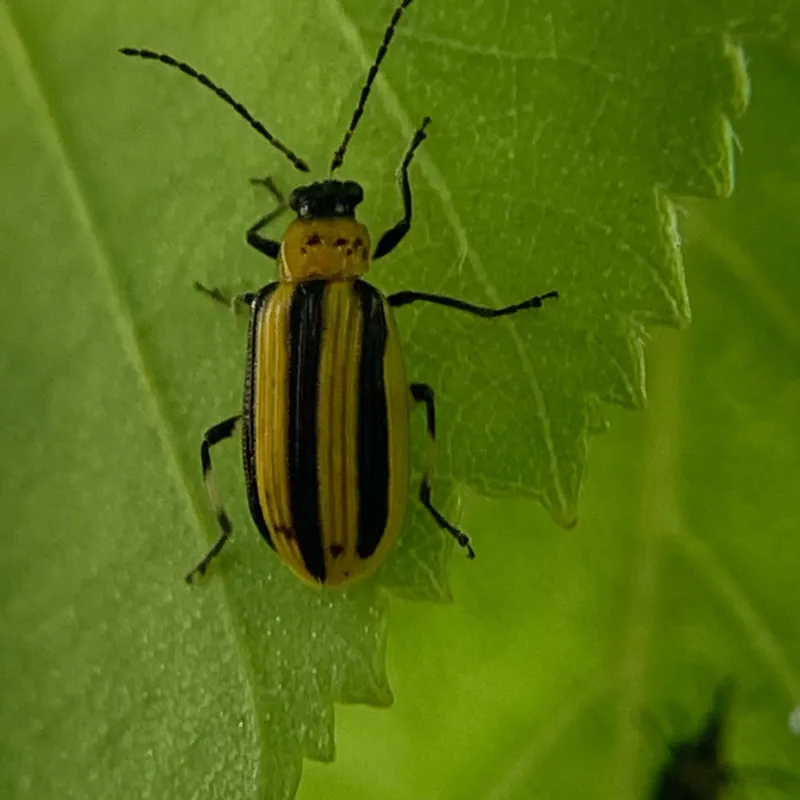
Short answer: Cucumber beetles are about a quarter inch long, yellow with three black stripes or with black spots. Look for chewed seedlings, holes in leaves and flowers, scarred fruit and, later, vines that wilt and don't recover. Cover young plants with insect mesh until they flower, and pull up any plant that wilts suddenly.
What it looks like
- Small yellow beetles with black stripes or black spots on leaves, stems and flowers
- Seedlings chewed down as they come up
- Holes chewed in leaves and flowers
- Scarred, scabby patches on the skin of cucumbers, melons and squash
- Leaves or whole vines that wilt on warm days and don't recover by evening
- Beetles gathered inside open flowers
Is it cucumber beetles or something else?
| Could also be | How to tell |
|---|---|
| Ladybugs | Spotted cucumber beetles are yellow-green with black spots, which can look like a ladybug. Ladybugs are round and domed, usually red or orange, while cucumber beetles are longer and flatter with long antennae. Leave the ladybugs. |
| Flea beetles | Flea beetles are tiny, dark and jump away, leaving lots of small shot holes. Cucumber beetles are larger, yellow and black, and fly off rather than jump. |
Why it happens
Adult beetles spend the winter in soil and ground litter, and arrive on cucumber, melon and squash plants as soon as they come up. They feed on seedlings, leaves, flowers and fruit, and lay eggs in the soil near the plants, where the larvae feed on roots.
Their biggest harm comes from the bacteria behind bacterial wilt, which live in the beetles and get into the plant through feeding wounds. Once inside, the bacteria block the stems, and the plant wilts and dies, often within a week or two.
Feeding wounds on the fruit can also let rot in, so damaged melons and squash keep less well.
How to fix it
- Cover young plants with insect mesh. Put insect mesh or row cover over seedlings and transplants as soon as they're in, with the edges sealed. Take it off when the plants flower so bees can pollinate. Even a few weeks of cover protects plants at their most vulnerable.
- Shake beetles into soapy water early in the morning. Hold a container of soapy water under the leaves and flowers and tap the plant so the beetles drop in. Check inside open flowers, where they often gather.
- Hang yellow sticky traps near the plants. Set yellow sticky traps on stakes a little above the plants. They catch some beetles and show you when they've arrived and whether numbers are rising.
- Pull up plants that wilt suddenly. A plant with bacterial wilt won't recover. Pull it up and put it in the trash, not the compost pile, so beetles can't pick up the bacteria from it.
- Clean up in autumn. After the harvest, clear away old vines and plant debris, where beetles shelter. Mulch new plantings next year, which makes it harder for the beetles to lay eggs in the soil.
Watch out: Once a plant has bacterial wilt, nothing saves it. Protecting seedlings from the beetles early does far more than treating damage later.
How to prevent it
- Cover seedlings with insect mesh from planting until they flower.
- Plant a few more cucumbers and melons than you need, to make up for any losses.
- Mulch around plants to make egg laying in the soil harder.
- Clear old vines and debris after the harvest.
- Keep a yellow sticky trap up near the plants to spot the first beetles.
Plants it often affects
- Cucumber very prone to bacterial wilt after beetle feeding
- Cantaloupe chewed leaves, scarred fruit and wilting vines
- Squash seedlings chewed and flowers full of beetles
- Pumpkin scars on the fruit, especially late in the season
- Watermelon gets chewed but resists bacterial wilt
Questions people ask
How do I know if my cucumber has bacterial wilt?
Leaves wilt on warm days and stay limp into the evening even though the soil is moist. Cut a wilted stem near the base, press your finger on the cut end and pull it away slowly: fine, shiny threads of ooze point to bacterial wilt. The test doesn't always work, so your local extension office can confirm it.
Are striped and spotted cucumber beetles the same pest?
They're two different beetles that do similar damage. The striped one has three black stripes and feeds mainly on cucumbers, melons and squash. The spotted one has black spots and feeds on many other plants too. Both spread bacterial wilt.
When should I take the row cover off?
When the plants start to flower, so bees can reach them. If you keep the cover on longer, you'll need to pollinate the flowers by hand.

Not sure it's cucumber beetles?
Take a photo in Liana and the health check names the problem and tells you what to do first. Liana also reminds you to check the soil, so watering mistakes don't start. Get Liana for iPhone.
Sources
- University of Nebraska-Lincoln Extension, Bacterial Wilt of Cucurbits
- South Dakota State University Extension, What's Bugging Your Garden? Cucumber Beetles