Early blight on tomatoes: how to spot it and slow it down
Early blight on tomatoes starts as dark brown spots with rings like a target on the oldest, lowest leaves. Over the weeks it climbs the plant, the leaves yellow and drop, and the fruit can be marked too. Potatoes and eggplants get it as well, and catching it early keeps plants cropping for longer.
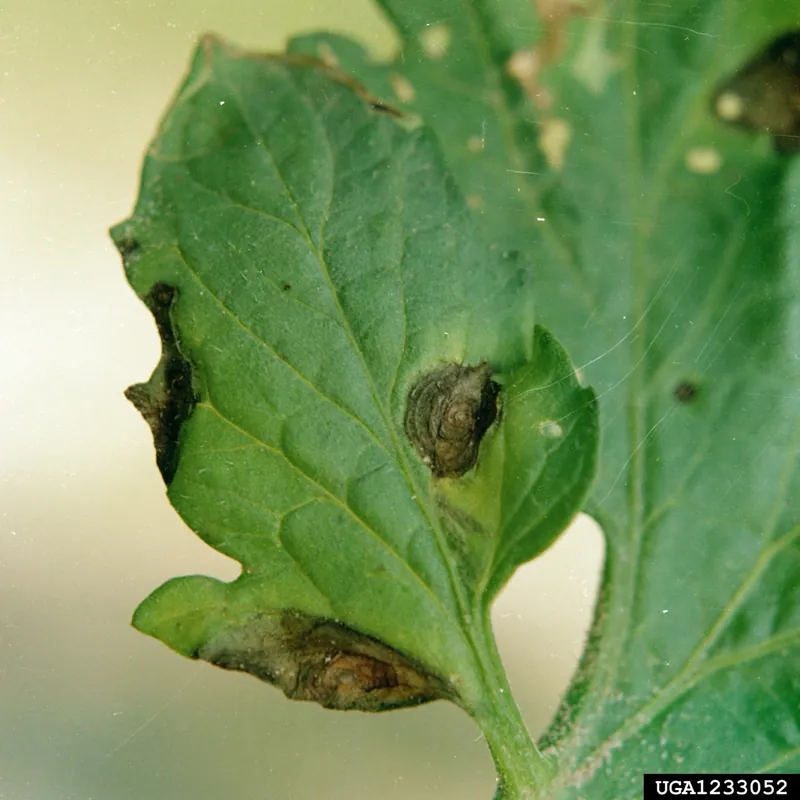
Short answer: Early blight is a fungal disease caused by Alternaria. The giveaway is brown spots with rings like a bull's-eye, often with a yellow halo, on the lowest leaves first. Pick off spotted lower leaves today, mulch the soil so rain can't splash spores up, and water at the base of the plant.
What it looks like
- Brown to black spots with rings inside them, like a target, on the oldest lower leaves
- A yellow halo around the spots, and whole leaves turning yellow and dropping
- Spots that climb slowly from the bottom of the plant upward over weeks
- Dark, sunken patches on stems, which can ring the stem at soil level on young plants
- Dark, sunken patches with rings on the fruit, which may drop early
- Bare lower stems by late summer
Is it early blight or something else?
| Could also be | How to tell |
|---|---|
| Late blight | Late blight browns whole plants within days, with greasy-looking patches that have no rings and white fuzz under the leaves in damp weather. Early blight creeps up from the oldest leaves over weeks. |
| Septoria leaf spot | Septoria makes many smaller spots with pale gray centers and tiny black dots in them, and no target rings. |
| Natural aging | Old lower leaves can yellow evenly and drop late in the season with no spots at all, while new growth stays healthy. Early blight leaves show ringed brown spots before they yellow. |
Why it happens
Early blight is caused by the fungus Alternaria solani and its close relatives. It attacks tomatoes, potatoes, eggplants and peppers, and weeds in the same family such as black nightshade. It survives the winter on infected plant debris, on seed and on volunteer tomato plants.
Rain and watering splash spores from the soil onto the lowest leaves, and wind carries them further. The fungus needs a wet leaf to infect, so warm, humid weather, heavy dew and dense foliage that stays damp for hours let it build up. It often shows as the plants fill out and their leaves start to shade each other.
How to fix it
- Pick off spotted lower leaves today. Remove leaves with spots, starting at the bottom, and put them in the trash. Take off no more than about a fifth of the plant's leaves at a time so it can keep feeding the fruit, and clean your pruners between plants.
- Mulch the soil. Spread about an inch of straw, shredded leaves or similar mulch over the soil under the plants. It stops rain from splashing spores up onto the leaves.
- Water the soil and keep the leaves dry. Water at the base with a watering can or soaker hose, early in the day. Avoid sprinklers that wet the foliage.
- Clear debris and rotate crops for three years. After harvest, pull up the plants and fallen leaves and put them in the trash instead of the compost. Keep tomatoes, potatoes, peppers and eggplants out of that spot for three years.
Watch out: Early blight is often mistaken for late blight. Early blight creeps up from the oldest leaves over weeks, while late blight browns whole plants within days.
How to prevent it
- Choose tomato varieties sold as resistant or tolerant to early blight
- Space and stake plants so their leaves don't touch and dry quickly
- Pull weeds and volunteer tomato and potato plants
- Feed plants properly so they stay vigorous through the season
Plants it often affects
- Tomato ringed spots start low and climb, and heavy cases strip the lower plant
- Cherry tomato gets the same target spots on its lower leaves
- Potato ringed spots on the older leaves, spreading in warm, humid weather
- Eggplant a close relative that the same fungus attacks
- Pepper another host, with similar ringed spots
Questions people ask
Can you eat tomatoes from a plant with early blight?
Yes. Fruit without spots is fine to eat. Throw out any fruit with dark, sunken patches.
Is early blight the same as late blight?
They are different diseases. Early blight is a fungus that moves slowly up from the lowest leaves and makes ringed spots. Late blight is a water mold that can kill a whole plant within days in wet weather.
Does early blight stay in the soil?
It survives on old infected plant debris on and in the soil, which is why clearing debris and rotating crops for three years helps. Mulch keeps whatever is left from splashing onto new plants.

Not sure it's early blight?
Take a photo in Liana and the health check names the problem and tells you what to do first. Liana also reminds you to check the soil, so watering mistakes don't start. Get Liana for iPhone.
Sources
- University of Wisconsin-Madison Extension, Early Blight
- Penn State Extension, Tomato Diseases and Disorders in the Home Garden