Septoria leaf spot on tomatoes: how to spot it and slow it down
Septoria leaf spot is one of the most common tomato leaf diseases in home gardens. Dozens of small round spots with pale gray centers and dark edges appear on the lowest leaves, which then yellow and fall. The fruit itself is rarely touched, but losing leaves weakens the plant and leaves tomatoes open to sunscald.
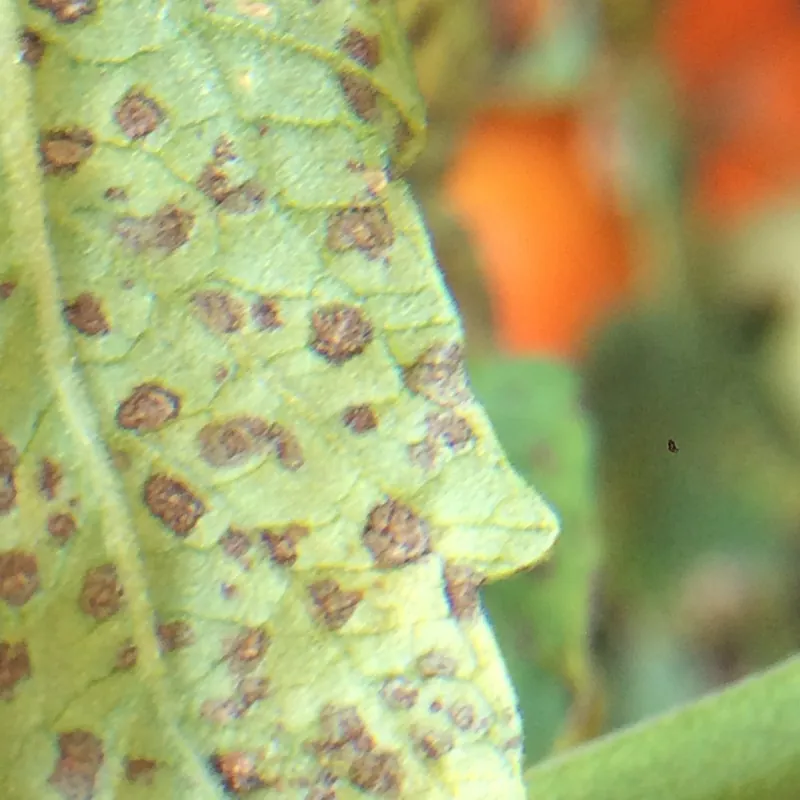
Short answer: Septoria leaf spot is a fungal disease of tomatoes that makes many small, round spots with grayish-white centers and dark borders, starting low on the plant. Look closely: tiny black dots in the pale centers confirm it. Remove spotted leaves today, starting at the bottom, then mulch the soil and water only at the base.
What it looks like
- Many small round spots, about 1/8 to 1/4 inch across, on the lowest leaves first
- Spots with a grayish-white or tan center and a dark brown edge
- Tiny black dots, like ground pepper, in the pale centers (a magnifying glass helps)
- Leaves that turn yellow, wither and drop, starting at the bottom
- Spots on leaf stalks and stems as well
- Fruit that stays clean, even on badly affected plants
Is it septoria leaf spot or something else?
| Could also be | How to tell |
|---|---|
| Early blight | Early blight spots are larger, with rings like a target and no black dots in the center. |
| Late blight | Late blight forms large, spreading brown patches instead of small round spots, and it rots the fruit as well. |
| Leaf spot | Other leaf spots on tomato, such as bacterial spot, are small and dark with no pale center and no black dots. Use a magnifying glass to check. |
Why it happens
Septoria leaf spot is caused by the fungus Septoria lycopersici. It survives the winter on old tomato debris and on some wild relatives of tomato. In spring, rain and watering splash spores from the debris onto the lowest leaves.
The fungus likes long spells of warm, wet weather and high humidity. Each spot makes new spores that splash and blow higher up the plant, so in a wet summer a plant can lose most of its lower leaves. Crowded plants and foliage wet from overhead watering keep it going. It usually appears once the first fruit has set.
How to fix it
- Remove spotted leaves today. Start at the bottom and take off leaves with spots, putting them straight into a bag for the trash. Don't strip the plant bare, since it needs its leaves to ripen fruit.
- Mulch around the plant. Spread a layer of straw or shredded leaves over the soil so rain can't splash spores up onto the leaves.
- Water the soil and stake for airflow. Water at the base, never over the leaves, ideally in the morning. Stake or cage plants and give them room so their leaves dry quickly after rain.
- Clear up and move tomatoes next year. After harvest, gather every leaf and stem and put them in the trash instead of the compost. Grow tomatoes in a different spot next year, and stay away from the old one for three years if you can.
Watch out: Look closely at a spot: tiny black dots in the pale center mean Septoria. Rings like a target without the dots point to early blight.
How to prevent it
- Choose varieties listed as resistant to Septoria leaf spot when you can find them
- Space plants so their leaves don't touch
- Mulch the soil at planting time
- Keep the bed weeded
- Check the lowest leaves every week once the first fruit sets
Plants it often affects
- Tomato small gray spots on the lower leaves, which yellow and drop while the fruit stays clean
- Cherry tomato gets the same spots, starting on the leaves nearest the ground
Questions people ask
Can you eat tomatoes from a plant with Septoria leaf spot?
Yes. The fungus doesn't infect the fruit. Fruit that loses its leaf cover can get sunscald, so watch for pale, papery patches on the side facing the sun.
Does Septoria leaf spot live in the soil?
It overwinters on old plant debris left on or in the soil and on some wild relatives of tomato. Clearing debris, mulching and moving tomatoes to a new spot each year keep it in check.
Will my plant recover from Septoria leaf spot?
Lost leaves won't come back, but the plant keeps growing new ones at the top. If you remove spotted leaves, mulch and keep the foliage dry, most plants go on to ripen a crop.

Not sure it's septoria leaf spot?
Take a photo in Liana and the health check names the problem and tells you what to do first. Liana also reminds you to check the soil, so watering mistakes don't start. Get Liana for iPhone.
Sources
- University of Illinois Extension, Septoria Leaf Spot of Tomato
- Penn State Extension, Tomato Diseases and Disorders in the Home Garden