Earwigs in the garden: how to confirm them and trap them
Earwigs in the garden feed at night, leaving ragged holes in petals and young leaves, and they're gone by morning. They also eat aphids and insect eggs, so they do some good. Trap them only where flowers are being damaged.
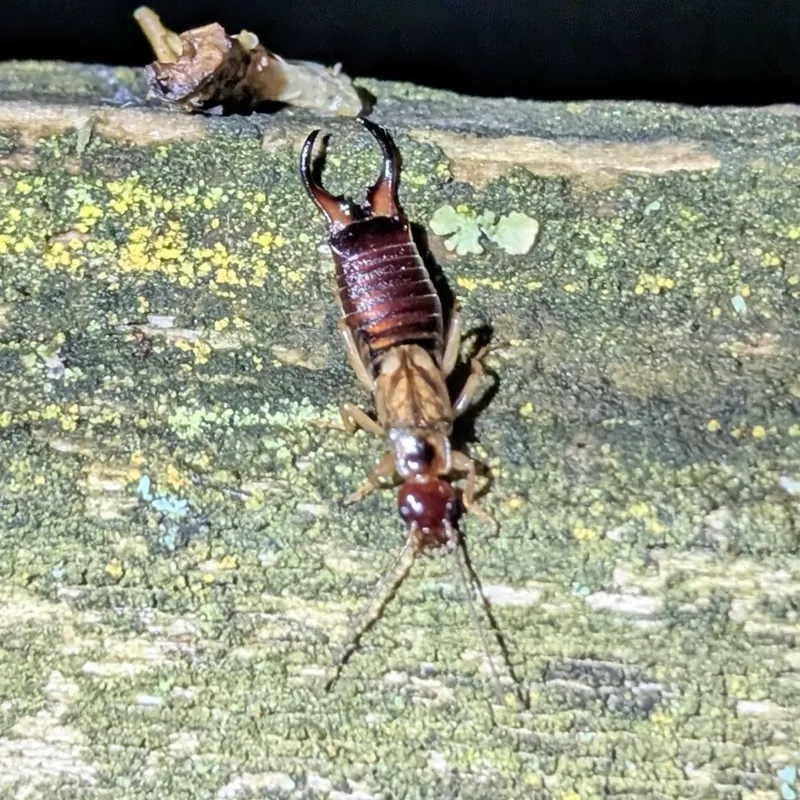
Short answer: Earwigs are reddish-brown insects about 3/4 inch long with pincers at the tail end. They chew ragged holes in flowers such as dahlias, mums and clematis, and in soft fruit. Go out after dark with a flashlight to confirm it's them, then set straw-filled pots upside down on stakes among the flowers and empty them each morning.
What it looks like
- Ragged holes and chewed edges on petals and young leaves
- Dahlias, mums or clematis flowers looking tattered overnight
- Older leaves chewed to a net of veins in bad cases
- Shallow, ragged holes in strawberries, raspberries and other soft fruit
- No slime trails and no caterpillars on the plants by day
- Reddish-brown insects with tail pincers on the flowers after dark, or hiding under mulch and boards by day
Is it earwigs or something else?
| Could also be | How to tell |
|---|---|
| Slugs and snails | Slugs and snails also feed at night and chew ragged holes, but they leave shiny slime trails on leaves and paths. Earwigs leave no slime. |
| Caterpillars | Caterpillar damage looks much the same, but caterpillars usually stay on the plant by day and leave small dark droppings. Earwigs hide away during the day and only show up after dark. |
Why it happens
Earwigs hide by day in dark, cool, damp places: under boards and mulch, in dense weeds and ground cover, and inside flowers and damaged fruit. They come out after dark to feed.
They eat both plant matter and small insects, including aphids and insect eggs. In many gardens they do more good than harm. Trouble starts when numbers are high, on seedlings, soft fruit and flowers such as dahlias, mums and clematis.
Moisture draws them in. Thick mulch and ground cover beside flower beds, and soil that stays wet on the surface, give them plenty of places to shelter.
How to fix it
- Check after dark with a flashlight. On a mild evening, go out after dark and look closely at the damaged flowers. Slugs and some caterpillars make similar holes, so seeing earwigs feeding is the only sure check.
- Set straw-filled pots upside down on stakes. Loosely stuff small flowerpots with straw or hay and turn them upside down on stakes among the plants. Earwigs crawl in to hide when daylight comes. Rolled-up newspaper or short pieces of garden hose laid near the plants work too.
- Empty the traps every morning. Shake the earwigs out well away from the flowers you're protecting, or into a bucket of soapy water. Keep trapping each night until you're catching only a few.
- Cut back their hiding places. Thin out dense ground cover, weeds and thick mulch right next to the bed, and move boards or pots lying on the ground nearby.
Watch out: In fruit trees, earwigs eat aphids and do more good than harm. Trap them only where flowers are being damaged.
How to prevent it
- Keep a strip around flower beds clear of thick mulch, boards and dense weeds.
- Water at the base of plants so the soil surface doesn't stay damp.
- Set a few traps among dahlias and mums early in the season to see whether numbers are building.
- Leave earwigs alone where they aren't damaging anything, since they eat aphids.
Plants it often affects
- Dahlia petals and young leaves chewed ragged overnight
- Mum flowers and young leaves eaten, with earwigs hiding among the petals
- Clematis holes in the flowers and young leaves
- Zinnia petals chewed at night
- Marigold flowers look tattered by morning
- Strawberry shallow, ragged holes in ripe berries
Questions people ask
Are earwigs harmful to people?
No. The pincers look fierce, but earwigs aren't harmful to people. Indoors they're only a nuisance, usually wandering in from damp spots outside.
Are earwigs good or bad for the garden?
Both. They eat aphids and insect eggs, which helps, especially in fruit trees. When numbers are high they also chew seedlings, soft fruit and flowers, so trap them only where you see damage.
How do you get rid of earwigs without spraying?
Trap them. Straw-filled pots upside down on stakes, rolled newspaper or short pieces of hose give them a place to hide by day, and you empty the traps each morning. Clearing thick mulch, weeds and boards near the bed cuts down where they can shelter.

Not sure it's earwigs?
Take a photo in Liana and the health check names the problem and tells you what to do first. Liana also reminds you to check the soil, so watering mistakes don't start. Get Liana for iPhone.