Edema in plants: why leaves get corky bumps underneath
Edema in plants is a water problem that raises small, watery blisters on the undersides of leaves, which later turn brown and corky. British gardeners spell it oedema. It is common on geraniums, peperomias and other plants with fleshy leaves, and it is neither a disease nor a pest.
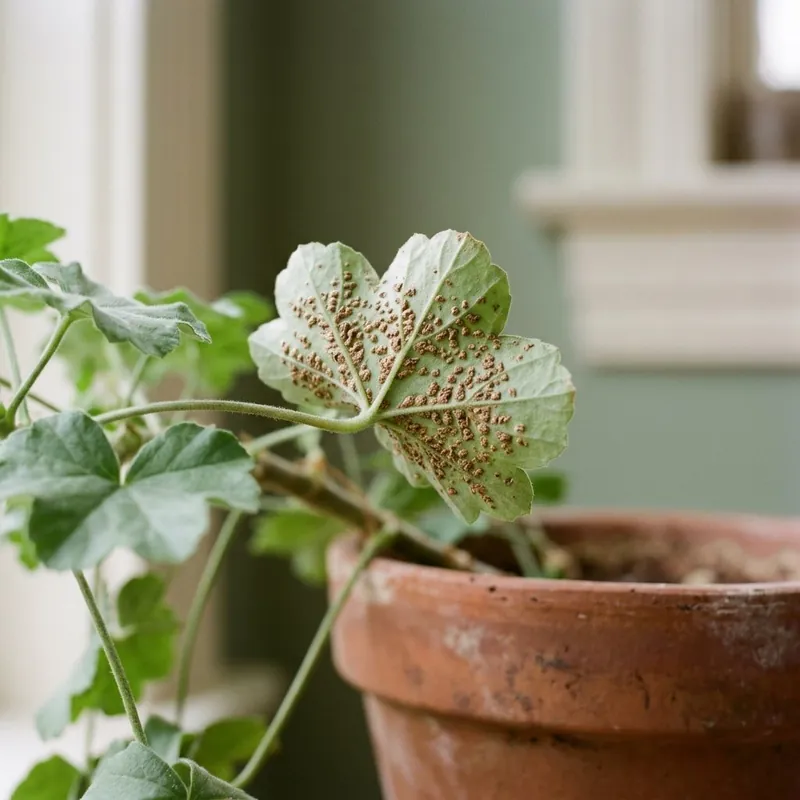
Short answer: Edema shows as tiny, water-soaked bumps on the undersides of older leaves that turn tan or brown and corky. It happens when the roots take up water faster than the leaves can give it off, usually in cool, humid, dull weather with wet soil. Let the top inch of soil dry before you water, water in the morning and give the plant more light and air. Nothing needs spraying.
What it looks like
- Small, blister-like bumps on the undersides of leaves, often near the edges
- Bumps that look lighter or watery when you hold the leaf up to the light
- The bumps turning tan, brown or rusty and corky with age
- Older leaves affected more than new ones
- Badly affected leaves yellowing and dropping
- Worse in late winter and early spring, or after a spell of cloudy, damp weather
Is it edema or something else?
| Could also be | How to tell |
|---|---|
| Spider mites | Mites leave fine pale speckles on the leaf, not raised bumps, and often fine webbing. Look under the leaves with a magnifying glass for tiny moving dots. |
| Scale insects | Scale insects are raised bumps too, but they sit on the surface of leaves and stems and you can scrape them off with a fingernail. Edema bumps are part of the leaf itself. |
| Thrips | Thrips leave silvery white scars and twisted leaves, mostly on the youngest growth. Edema starts on the older leaves and forms bumps rather than flat scars. |
Why it happens
Leaves give off water vapor through tiny pores, and that loss is what pulls water up from the roots. When the soil is warm and wet but the air is cool and humid and the light is dim, the leaves can't lose water fast enough. Water builds up in the leaf cells until they swell into blisters, which later scar into corky patches.
It is most common indoors and in greenhouses in late winter and early spring, after cloudy spells, and on plants watered while the soil is still damp. Plants with fleshy leaves, such as ivy geraniums, peperomias and jade plants, are especially prone.
How to fix it
- Let the top inch of soil dry before watering. Push a finger into the soil and water only when the top inch feels dry. In cool, cloudy weather that takes longer, so check rather than water out of habit. Empty any water left in the saucer after watering.
- Water in the morning on bright days. Morning watering gives the plant a full day of light and warmth to use the water. Avoid watering in the evening or just before a run of dull, damp days.
- Give more light and better airflow. Move the plant to a brighter window, space plants farther apart and let air move around them. More light and moving air help the leaves give off water.
- Leave marked leaves on the plant. The corky spots won't heal, but they do no harm and the leaf still feeds the plant. Remove only leaves that turn yellow and fall. New leaves come in clean once conditions improve.
Watch out: The corky bumps look like a disease or pest, so people reach for a spray. Nothing is infected, and drier soil and more light stop new ones.
How to prevent it
- Water by soil feel, and expect plants to need less in cool, cloudy weather
- Use a well-draining potting mix and pots with drainage holes
- Give fleshy-leaved plants your brightest spot in winter
- Keep air moving around plants that are grouped closely together
Plants it often affects
- Geranium the classic case; corky spots under older leaves
- Ivy geranium very prone, with blisters that can make leaves yellow and drop
- Peperomia fleshy leaves get raised, scab-like bumps underneath
- Jade plant corky patches on the thick leaves when the soil stays wet
- Begonia watery bumps under the leaves in cool, humid conditions
- Schefflera brown, corky dots under the leaves in dim, damp spells
Questions people ask
Is plant edema contagious?
No. It is a reaction to water and growing conditions, so it can't spread from plant to plant. Several plants in the same room may show it at once because they share the same conditions.
Will edema go away?
The marks already on the leaves stay, but mildly affected plants recover once the soil is allowed to dry more and they get more light. Judge it by the new leaves, which should come in clean.
Why does my peperomia have bumps under its leaves?
Peperomias hold water in fleshy leaves, so they are prone to edema when the soil stays wet in dim, cool conditions. Let the soil dry further between waterings and move the plant closer to a bright window. If the bumps scrape off with a fingernail, check for scale insects instead.

Not sure it's edema?
Take a photo in Liana and the health check names the problem and tells you what to do first. Liana also reminds you to check the soil, so watering mistakes don't start. Get Liana for iPhone.
Sources
- University of Wisconsin-Madison Extension, Edema
- UConn Extension, Non-Infectious Plant Disorders: Oedema and Intumescences