Thrips on plants: how to spot and treat them
Thrips on plants are tiny, slender insects that scrape at the surface of leaves and petals and suck up the sap. The damage shows as silvery streaks with black dots of droppings, and flowers can open marked or twisted. They're easy to miss and easy to blame on something else.
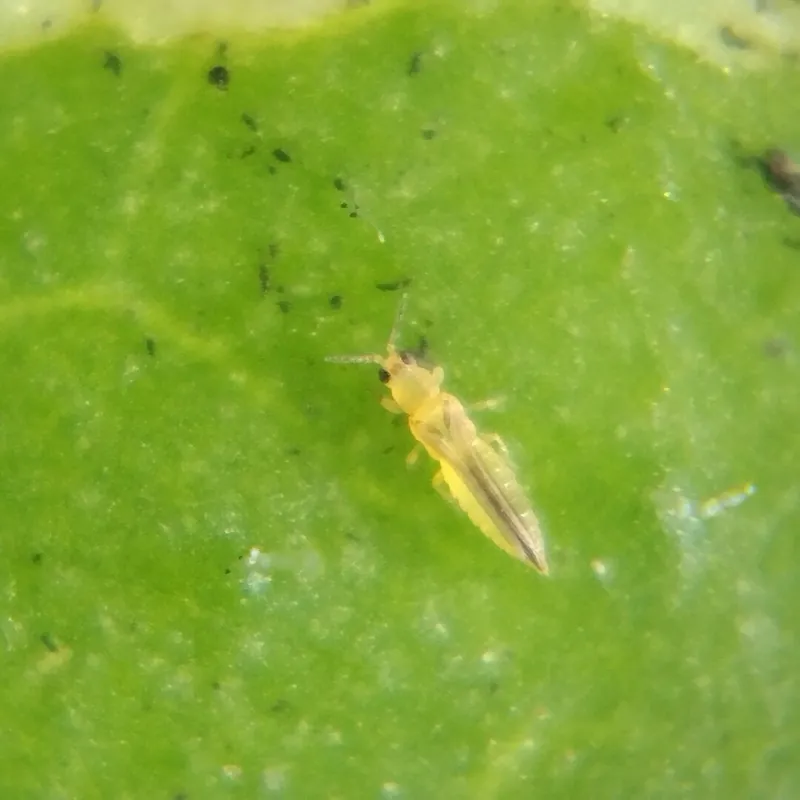
Short answer: Thrips are slender insects under 1/20 inch long that feed on leaves, buds and flowers. The giveaway is silvery or pale streaks on the leaves, dotted with tiny black specks of droppings. Move the plant away from others, tap a leaf over white paper to check, then rinse every leaf, tops and undersides.
What it looks like
- Silvery or pale streaks and flecks on the leaves
- Tiny black, shiny dots of droppings scattered among the silver patches
- Flowers that open streaked, spotted or misshapen, or buds that never open
- Curled or distorted shoot tips and new leaves
- Slender, fast-moving specks that run across white paper when you tap a leaf over it
- Brown, papery patches where old damage has dried out
Is it thrips or something else?
| Could also be | How to tell |
|---|---|
| Spider mites | Mites leave fine pale speckling and often silky webbing, with no black droppings. Thrips make silvery streaks with scattered black dots, and you'll see slender insects on the paper test, not round mites. |
| Too much light | Sun scorch bleaches whole patches on the side facing the light, and the patches are clean. Thrips damage comes in streaks with tiny black specks, and it can show on any side of the plant. |
| Lace bugs | Lace bugs also leave pale stippling and dark spots, but the spots sit on the undersides of the leaves, along with flat bugs with lacy wings. Thrips are thin, cigar-shaped and much smaller. |
Why it happens
Female thrips lay their eggs inside leaves, buds and other soft tissue. The young feed for a while, then most drop into the soil or hide in crevices to change into adults. In warm weather the whole cycle can take about two weeks, so numbers climb quickly in summer and in heated rooms.
Thrips fly well and drift in from weeds, flowers and nearby crops. Indoors they usually arrive on a new plant or on cut flowers. Plants that are dry and stressed, or pushed with a lot of high-nitrogen fertilizer, tend to suffer more.
Some thrips also spread plant viruses, such as tomato spotted wilt virus, which can be far more damaging than the feeding itself.
How to fix it
- Isolate the plant and do the paper test. Move the plant away from your other plants. Hold a sheet of white paper under a leaf or flower and tap it. Thrips show up as tiny slender specks that run, and you may see the black dots of droppings too.
- Rinse the leaves thoroughly. Spray the leaves in the shower or with a hose, tops and undersides, and rinse into the flowers if they can take it. Cover the soil of a potted plant first so it doesn't wash out. Cut off badly marked flowers and shoots.
- Hang blue sticky traps. Hang blue or yellow sticky traps just above the plant to catch the adults. The traps also show you whether numbers are going down.
- Repeat every few days for three weeks. Young thrips keep hatching from eggs inside the leaves and from the soil, where they finish growing. Rinse and check every few days for three weeks to catch each new batch.
- Try insecticidal soap if rinsing isn't enough. Spray insecticidal soap or horticultural oil onto the leaves and buds, covering them well, since these only work on the thrips they touch. Never spray a dry, wilting plant. Damaged leaves won't turn green again, so judge progress by new growth.
Watch out: Silver patches are often blamed on sun or spider mites. Look for tiny black dots of droppings among the silvery streaks.
How to prevent it
- Check new plants and cut flowers for silvery streaks and black specks before they go near your other plants.
- Shake a few flowers or leaves over white paper now and then, especially in warm weather.
- Water thoroughly when the soil is dry so plants aren't stressed, and go easy on high-nitrogen fertilizer.
- Cover young vegetable plants with fine row covers, which also keeps out thrips that spread viruses.
Plants it often affects
- Onion onion thrips leave silvery streaks along the leaves
- Gladiolus flowers open streaked, spotted or fail to open
- Chrysanthemum marked petals and silvery leaves, indoors and out
- Rose buds can open deformed, with streaks of odd color in the petals
- Pepper curled new leaves and silvery patches
- Ficus ginseng Ficus microcarpa has its own kind of thrips, which distorts the new leaves
Questions people ask
What do thrips look like?
Adults are slender, cigar-shaped insects under 1/20 inch long, with fringed wings, in colors from pale yellow to dark brown. The young have no wings. They're easiest to see as moving specks on white paper after you tap a leaf over it.
Can thrips live in the soil?
Many thrips drop into the soil or leaf litter to change into adults, then climb or fly back onto the plant. That's one reason a single rinse rarely ends the problem, and why you keep checking for three weeks.
Will the silver streaks go away?
No. Leaf tissue that thrips have emptied stays silver or turns brown. Once the thrips are gone, new leaves and flowers come in clean, and you can cut off the worst marked ones.

Not sure it's thrips?
Take a photo in Liana and the health check names the problem and tells you what to do first. Liana also reminds you to check the soil, so watering mistakes don't start. Get Liana for iPhone.
Sources
- UC Statewide IPM Program, Thrips