Iron deficiency in plants: yellow new leaves with green veins
Iron deficiency in plants turns the youngest leaves pale yellow while their veins stay sharply green, a pattern often called iron chlorosis. Acid-loving plants such as blueberries, azaleas, gardenias and citrus get it most. The soil usually holds plenty of iron, but alkaline soil or hard tap water locks it away from the roots.
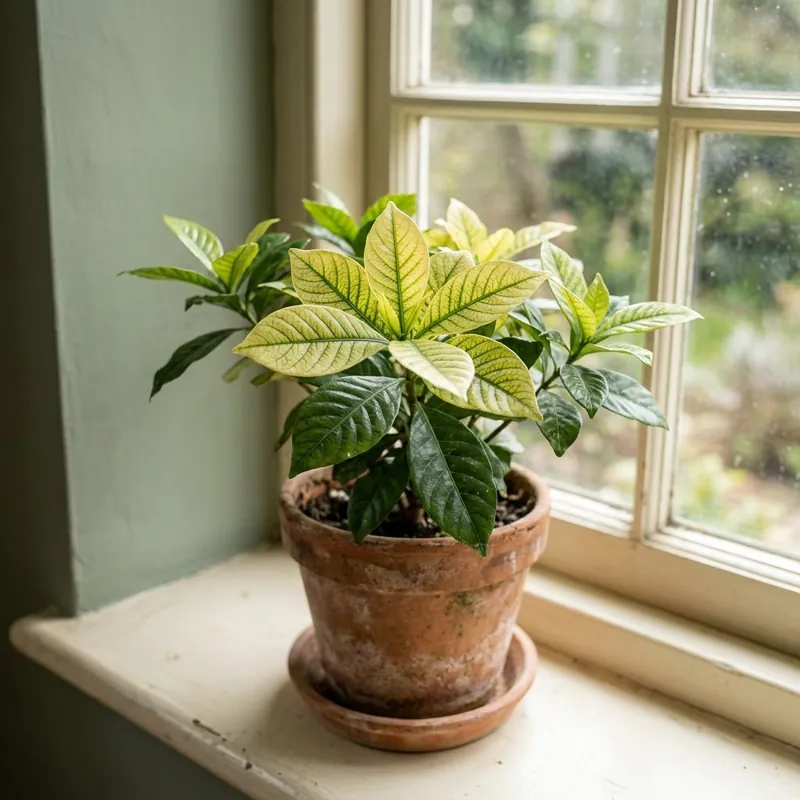
Short answer: If the newest leaves at the shoot tips are yellow with crisp green veins and the older leaves look fine, suspect iron. It usually means the soil or water is too alkaline for the plant to take up the iron that is there. Feed with a chelated iron fertilizer, water acid lovers with rainwater, and grow them in acidic potting mix in pots if your garden soil is alkaline.
What it looks like
- The youngest leaves at the shoot tips turning pale yellow
- Veins staying sharply green against the yellow
- Older, lower leaves staying greener than the new growth
- In bad cases, new leaves almost white, with brown edges or patches
- Slow, stunted growth and smaller new leaves
- Acid-loving plants growing in alkaline soil or watered with hard tap water
Is it iron deficiency or something else?
| Could also be | How to tell |
|---|---|
| Magnesium deficiency | Magnesium shortage also yellows the leaf between green veins, but it starts on the oldest, lowest leaves. Iron starts on the newest leaves at the top. |
| Nutrient deficiency | A general lack of food, nitrogen above all, turns older leaves pale yellow all over, veins included, and slows the whole plant. |
| Overwatering | Waterlogged roots yellow the leaves too, and they can bring on iron deficiency themselves. If the soil stays soggy, fix the watering and drainage before you feed. |
Why it happens
Most soils contain plenty of iron, but plants can only take it up in certain forms. In alkaline soil, iron gets bound up chemically so roots can't absorb it. Acid lovers such as blueberries, azaleas and rhododendrons need acidic soil, below neutral, to take it up properly.
In pots, regular potting mix and years of watering with hard tap water have the same effect, which is why potted gardenias and citrus often yellow over time. In the garden, chalky or limy soil is the usual cause.
Roots also need to be healthy to take up iron. Waterlogged, compacted soil and damaged roots can cause the same yellowing even where the pH is right.
How to fix it
- Feed with a chelated iron fertilizer. Chelated iron stays in a form plants can absorb, even in alkaline soil. Apply it to the soil around the plant or spray it on the leaves, following the label. Leaf sprays work faster but wear off, and they work best on young leaves that are still growing.
- Water acid lovers with rainwater. Hard tap water carries lime that slowly raises the pH. Collect rainwater for potted blueberries, azaleas, gardenias and citrus, and let it warm to room temperature before you water indoor plants in winter.
- Grow them in acidic potting mix, in pots if your soil is chalky. Changing alkaline or chalky garden soil is slow and rarely lasts. Grow acid lovers in containers of potting mix made for acid-loving plants, and when you repot, shake off as much of the old mix as you can.
- Check the drainage. Waterlogged roots can't take up iron. Make sure pots have drainage holes and don't sit in water, and don't plant acid lovers in soggy ground.
Watch out: Yellow young leaves with green veins point to iron. If the oldest leaves yellow first, the cause is something else, such as a shortage of magnesium or nitrogen.
How to prevent it
- Test your soil pH before planting blueberries, azaleas or rhododendrons, and choose other plants if it is alkaline
- Use acidic potting mix for potted acid lovers, and use it again when you repot
- Water acid lovers with rainwater where your tap water is hard
- Keep lime and wood ash away from acid-loving plants
- Plant in well-drained soil and use pots with drainage holes
Plants it often affects
- Blueberry new leaves yellow fast in soil that isn't acidic enough
- Azalea young leaves go pale yellow with green veins in alkaline soil
- Rhododendron yellow new growth, with brown leaf edges in bad cases
- Gardenia new leaves yellow in pots watered with hard tap water
- Lemon new leaves pale with green veins, often in pots or alkaline soil
- Orange yellow young leaves with a green network of veins
Questions people ask
Does iron deficiency mean my soil has no iron?
Rarely. Most soils have plenty, but in alkaline soil the iron is locked in a form roots can't use. That is why adding ordinary iron to the soil often fails, and why chelated iron, rainwater and acidic potting mix work better.
How fast does chelated iron work?
Leaf sprays green up young leaves fastest, but the effect fades and needs repeating. Soil treatments are slower and last longer. Leaves that were badly yellowed may stay pale, so judge the result by the new growth.
Why are my gardenia's new leaves yellow?
Gardenias are acid lovers. Yellow new leaves with green veins usually mean iron is being locked up by hard tap water or a potting mix that isn't acidic. If the older leaves yellow first and the soil stays wet, overwatering is more likely.

Not sure it's iron deficiency?
Take a photo in Liana and the health check names the problem and tells you what to do first. Liana also reminds you to check the soil, so watering mistakes don't start. Get Liana for iPhone.
Sources
- Royal Horticultural Society, Nutrient deficiencies
- Purdue University Horticulture and Landscape Architecture, Interveinal Chlorosis on Azaleas and Rhododendron