Magnesium deficiency in plants: yellow between the veins on older leaves
Magnesium deficiency in plants turns the older, lower leaves yellow between the veins while the veins stay green, sometimes with reddish purple or brown blotches. Tomatoes get it most often, especially when they are fed a lot of high-potassium tomato fertilizer. Apples, grapes, roses and raspberries are prone too.
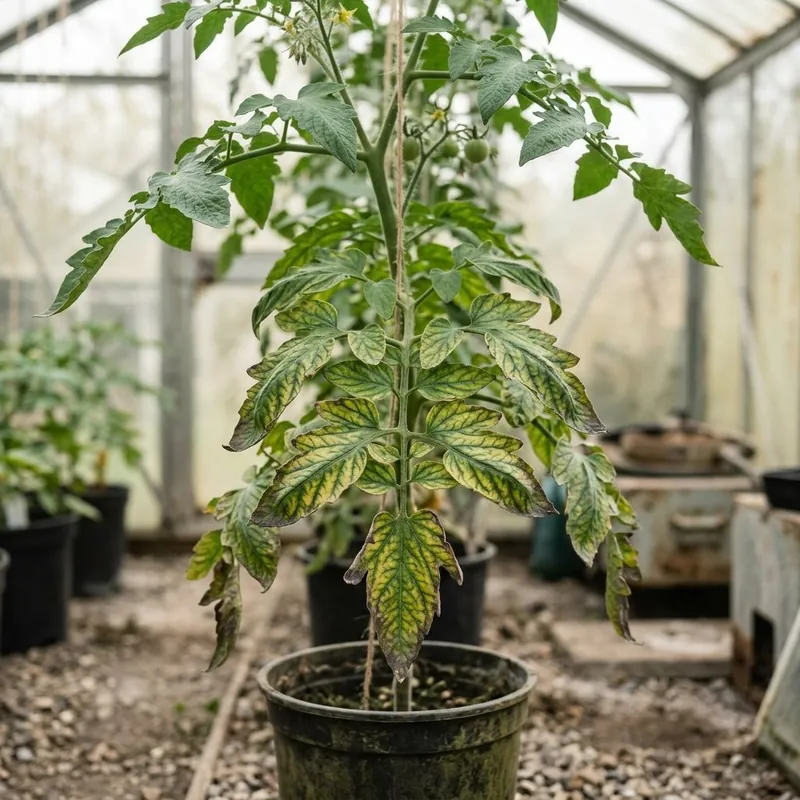
Short answer: Look at the lower leaves: yellow between green veins on the oldest leaves, often with reddish or purple tints, points to magnesium. The quickest fix is a foliar feed of Epsom salts (magnesium sulfate) on the leaves, given on a dull day. Then cut back on high-potassium fertilizer, which blocks magnesium uptake, and switch to a balanced fertilizer that lists magnesium.
What it looks like
- Yellowing between the veins on the oldest, lowest leaves first
- Veins staying green against the yellow
- Reddish brown or purple tints in the yellow areas
- Brown patches of dead tissue as it gets worse
- Older leaves dropping early
- Yellowing working its way up to the middle of the plant
- Tomatoes that have been fed often with high-potassium tomato fertilizer
Is it magnesium deficiency or something else?
| Could also be | How to tell |
|---|---|
| Natural leaf drop | An old leaf at the base yellows evenly, veins and all, while the rest of the plant stays green. Magnesium shows as yellow between green veins on several older leaves at once. |
| Iron deficiency | Iron shortage gives the same yellow between green veins, but on the newest leaves at the top of the plant. Magnesium starts at the bottom. |
| Nutrient deficiency | Nitrogen shortage also starts on the older leaves, but the whole leaf goes pale yellow, veins included, and the plant looks light green overall. |
Why it happens
Magnesium sits at the center of chlorophyll, the green pigment in leaves. When the roots can't find enough, the plant moves magnesium out of its old leaves into new growth, so the lower leaves yellow first.
In gardens, too much potassium is the most common cause. High-potash fertilizers, which include most tomato fertilizers, supply so much potassium that the plant takes it up in preference to magnesium. Light, sandy soils that drain fast also run short easily.
How to fix it
- Give magnesium as a foliar feed of Epsom salts. Epsom salts are magnesium sulfate. Dissolve them in water following the package directions, then spray the leaves or wet them with a watering can. Do it on a dull, overcast day, since sun on treated leaves can scorch them, and repeat a few times through summer if new leaves keep showing signs.
- Cut back on high-potash feed. If you have been giving tomato fertilizer at every watering, ease off. Too much potassium crowds out magnesium at the roots.
- Switch to a balanced feed that lists magnesium. Check the label for magnesium (Mg) among the nutrients, and feed only while the plant is growing.
- Judge it by the new growth. Leaves that are badly yellowed or brown may not turn green again. If new leaves and the middle of the plant stay green, the fix is working.
Watch out: Yellow lower leaves alone often just mean old leaves. Look for yellow between green veins on the older leaves before you treat.
How to prevent it
- Use high-potassium tomato fertilizer at the label rate or less, never more
- Choose fertilizers that list magnesium among their nutrients
- Work compost into light, sandy soils, which lose nutrients quickly
- Test your soil before adding magnesium, so you only treat a real shortage
Plants it often affects
- Tomato the classic case, especially on plants fed lots of tomato fertilizer
- Apple older leaves yellow between the veins, with brown patches, and drop early
- Grapevine yellowing with reddish brown tints between the veins on older leaves
- Rose lower leaves yellow between green veins and fall early
- Raspberry older leaves yellow between the veins and drop early
- Plum older leaves yellow and fall early, mostly on light, sandy soils
Questions people ask
Is Epsom salt good for tomatoes?
Only if they are short of magnesium. It does not prevent blossom end rot, and extra magnesium can even get in the way of the calcium the fruit needs. Check the leaves first: yellow between green veins on the older leaves is the sign to look for.
How can I tell magnesium deficiency from iron deficiency?
Look at where it starts. Magnesium shortage yellows the oldest, lowest leaves first, while iron shortage yellows the newest leaves at the tips. Both leave the veins green.
Why are the bottom leaves on my tomato plant turning yellow?
Often it is just age, as the lowest leaves get shaded and fade. Leaf diseases such as early blight also start low, but with brown spots. Yellow between green veins on several older leaves, with no spots, points to magnesium.

Not sure it's magnesium deficiency?
Take a photo in Liana and the health check names the problem and tells you what to do first. Liana also reminds you to check the soil, so watering mistakes don't start. Get Liana for iPhone.
Sources
- Royal Horticultural Society, Nutrient deficiencies
- South Dakota State University Extension, Monitoring and Correcting Magnesium Deficiency in High Tunnels