Lace bug damage: pale, mottled leaves on azaleas and rhododendrons
Lace bug damage starts as fine pale speckles on the tops of leaves that slowly merge until the leaf looks bleached. The insects sit underneath, next to dark, tarry spots of their droppings. Rhododendrons, azaleas and pieris (also called Japanese andromeda) suffer most, especially in full sun.
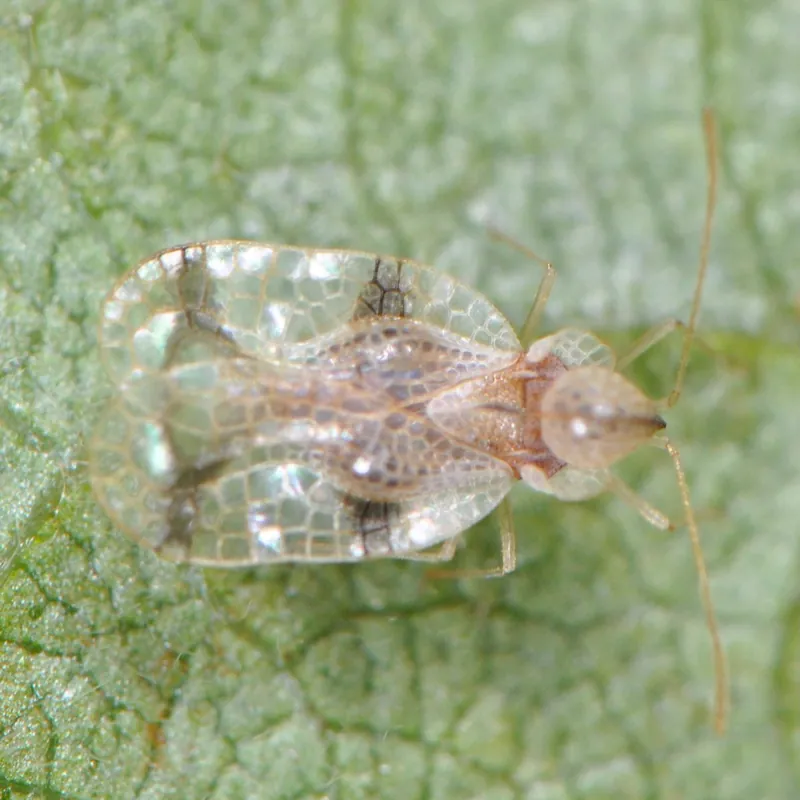
Short answer: Lace bugs are small, flat insects with see-through, lacy wings that feed on the undersides of leaves. The giveaway is a pale, mottled upper leaf with dark brown, tar-like spots underneath. Turn a leaf over to confirm, then hose the undersides with a strong spray of water.
What it looks like
- Tiny pale speckles on top of the leaves that merge into bleached, yellowish patches
- Dark brown or black, tar-like spots of droppings on the leaf undersides
- Small flat bugs with lacy, see-through wings, and spiny dark young ones, under the leaves
- Whitish cast skins stuck to the undersides
- Worse damage on shrubs growing in full sun
- Older leaves affected first, with the damage most obvious by mid to late summer
- Black sooty mold on heavily infested shrubs
Is it lace bugs or something else?
| Could also be | How to tell |
|---|---|
| Spider mites | Spider mites also speckle leaves pale, but they leave no dark, tarry spots underneath, and you may see fine webbing instead. |
| Iron deficiency | Iron-starved azaleas and rhododendrons turn yellow between green veins, mostly on new leaves, and the undersides stay clean. Lace bugs leave a speckled pattern with dark spots below. |
| Thrips | Thrips leave silvery streaks and tiny black specks on the upper side of leaves and on flowers. Lace bug spots are on the underside, along with the bugs themselves. |
Why it happens
Lace bugs suck sap from the undersides of leaves. Each feeding spot leaves a tiny pale fleck on the top, and over a season the flecks run together. The damage is mostly cosmetic, though heavy infestations can make leaves drop and slow growth a little.
Shrubs in hot, sunny spots are damaged the most, and stressed plants suffer more than healthy ones. Azaleas grown in partial shade have fewer problems.
Eggs spend the winter tucked into the leaves of evergreen shrubs and hatch in spring. Several generations follow each year, so numbers build through summer.
How to fix it
- Check the undersides and hose the bugs off. Turn leaves over, starting with older ones low on the shrub. If you find bugs, spray the undersides with a strong stream of water. It works best on the young ones in spring, before numbers build.
- Remove the worst mottled leaves. Speckled leaves won't turn green again. Pick or prune off the worst ones, and rake up fallen leaves under the shrub.
- Give rhododendrons and pieris some shade. These shrubs suffer most in full sun. If yours bakes in sun all day, plant something taller nearby for shade, or move it to a spot with partial shade in the dormant season.
- Use insecticidal soap or horticultural oil if they keep coming. Spray the leaf undersides thoroughly while the young are active, because these products only kill the bugs they touch. Repeat if you find more.
- Check again next summer. Eggs spend the winter inside the leaves, so look under the leaves again from late spring next year. Catching the first young bugs keeps the damage small.
Watch out: Pale, mottled leaves look like a nutrient problem. Turn a leaf over: brown spots and tiny bugs underneath mean lace bugs.
How to prevent it
- Plant rhododendrons, azaleas and pieris where they get some shade.
- Check leaf undersides in spring, when the young first hatch.
- Avoid broad-spectrum sprays, so lacewings, lady beetles and assassin bugs can keep lace bugs down.
- Rake up fallen leaves under the shrubs in fall.
Plants it often affects
- Rhododendron leaves turn pale and mottled with dark spots underneath
- Azalea worst in full sun; plants in partial shade suffer less
- Japanese pieris the andromeda lace bug can have several generations a year
- Sycamore its own lace bug pales the leaves; big trees rarely need treatment
- Photinia another common host; leaves speckle and bleach like azalea leaves
Questions people ask
Will leaves damaged by lace bugs turn green again?
No. Speckled, bleached leaves stay that way until they fall or you prune them off. New leaves come in clean if you control the bugs.
Do lace bugs kill azaleas?
Rarely. The damage is mostly cosmetic, though heavy infestations can cause some leaf drop and slower growth. Shrubs already stressed by hot sun or drought suffer the most.
When should I treat lace bugs?
In spring, when the young hatch and start feeding on the leaf undersides. Hose or spray the undersides then, and repeat if you find more. Treating late in summer won't fix leaves that are already speckled.

Not sure it's lace bugs?
Take a photo in Liana and the health check names the problem and tells you what to do first. Liana also reminds you to check the soil, so watering mistakes don't start. Get Liana for iPhone.