Leafhoppers on plants: how to spot them and when to act
Leafhoppers on plants are small, pale, wedge-shaped insects that live under the leaves and hop away when you disturb them. Their feeding leaves fine pale speckles on the leaves of roses, sage, mint and potatoes. The damage looks alarming, but established plants usually cope.
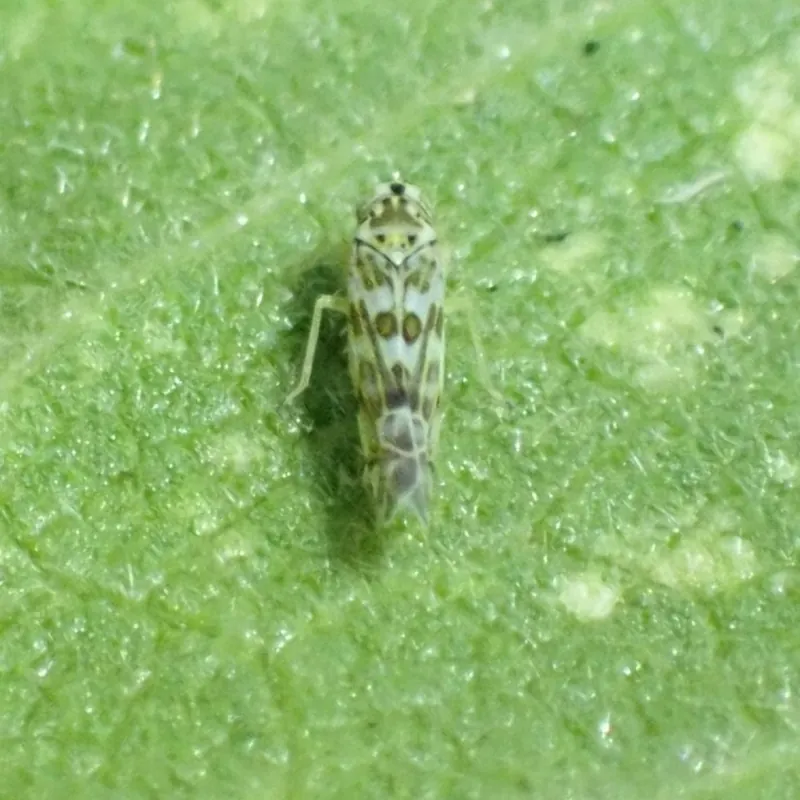
Short answer: Leafhoppers are tiny pale insects that jump or fly off when you touch the plant. Look for fine pale mottling on top of the leaves and white cast skins stuck to the undersides, with no webbing. Hose the undersides of the leaves, and leave light mottling alone, since it rarely harms established plants.
What it looks like
- Fine, pale speckling or mottling on the upper side of the leaves
- White cast skins stuck to the undersides of the leaves
- Small, pale, wedge-shaped insects that hop or fly off when disturbed
- Mottling that spreads until the leaf looks bleached
- No webbing under the leaves
- Now and then, leaves that brown and drop early in a heavy infestation
Is it leafhoppers or something else?
| Could also be | How to tell |
|---|---|
| Spider mites | Spider mites leave finer speckling and often fine webbing under the leaves. Leafhopper stippling is a little coarser, there's no webbing, and white cast skins give them away. |
| Thrips | Thrips leave silvery streaks with tiny black dots of droppings, and the insects are slender and wriggle rather than hop. Leafhoppers jump off the leaf when you touch it. |
| Lace bugs | Lace bugs also mottle leaves pale, but turn a leaf over and you'll see dark, tarry spots of droppings and flat bugs with lacy wings. Leafhoppers leave white skins and no dark spots. |
Why it happens
Leafhoppers feed by sucking the contents out of leaf cells, which leaves each spot pale. Many small feeding spots together make the speckled or bleached look.
Different leafhoppers favor different plants. Rose leafhopper feeds on roses and their relatives, while other kinds live on sage, rosemary, lavender, mint and potatoes. Numbers build up through the warm months, and young leafhoppers shed their skins under the leaves as they grow.
Birds, ladybugs, spiders and predatory insects eat them, so gardens sprayed with broad-spectrum insecticides tend to have more.
How to fix it
- Turn the leaves over. Check the undersides of speckled leaves for small pale insects that jump away and for white cast skins. Finding them confirms leafhoppers rather than mites.
- Hose the undersides of the leaves. Knock leafhoppers off with a strong spray of water aimed under the leaves, early in the day so the foliage dries quickly. For a heavy infestation, spray the young ones with soapy water or insecticidal soap, which works only on the insects it touches.
- Hang yellow sticky traps in a greenhouse. Under cover, hang yellow sticky traps among the plants. They catch adults as they fly and show you whether numbers are going up or down.
- Leave light mottling be. Light speckling rarely affects growth or flowering on established plants. Skip broad-spectrum sprays, which also kill the predators that keep leafhoppers down.
Watch out: The pale speckling looks like spider mites. Leafhoppers leave no webbing, and the white skins stuck under the leaves give them away.
How to prevent it
- Check the undersides of rose, sage and mint leaves when you look over the garden in warm weather.
- Avoid broad-spectrum insecticides so ladybugs, spiders and birds can keep numbers down.
- Clear fallen leaves and weeds around badly hit plants at the end of the season.
- In a greenhouse, keep a yellow sticky trap up to catch the first arrivals.
Plants it often affects
- Rose coarse pale mottling that can bleach whole leaves
- Sage fine pale speckles across the leaves
- Rosemary speckled, faded needles
- Lavender pale mottling on the leaves
- Mint speckled leaves, with insects hopping off when you brush the stems
- Potato pale speckling on the leaves
Questions people ask
Do leafhoppers harm plants?
Usually not much. Established roses and herbs can carry a lot of speckling and still grow and flower normally. Heavy numbers can brown leaves and make them drop early, which is when it's worth hosing them off.
How do I tell leafhoppers from spider mites?
Turn the leaf over. Leafhoppers leave white cast skins and no webbing, and the adults jump when touched. Spider mites are tiny dots that crawl slowly and often leave fine webbing.
Will speckled leaves turn green again?
No, the pale spots are dead cells and stay pale. New leaves grow in normally, so the plant looks better as the season moves on.

Not sure it's leafhoppers?
Take a photo in Liana and the health check names the problem and tells you what to do first. Liana also reminds you to check the soil, so watering mistakes don't start. Get Liana for iPhone.
Sources
- UC Statewide IPM Program, Roses: Insects and Mites
- Royal Horticultural Society, Rose leafhopper