Mold on houseplant soil: why it appears and what to do
Mold on houseplant soil (mould on the compost, in Britain) is a white, fluffy or cobweb-like growth across the surface of the pot. It feeds on dead matter in the potting mix and doesn't harm the plant. It does tell you the soil is staying damp and the air around the pot is still.
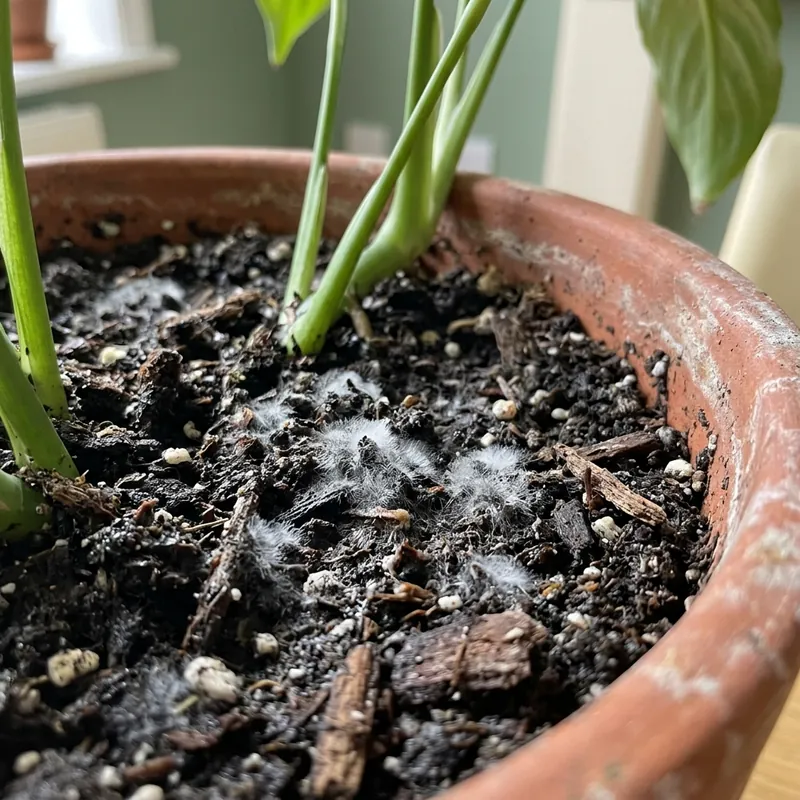
Short answer: White fuzz on top of potting soil is usually a harmless fungus living on dead organic matter. It shows the mix stays wet for too long. Scrape off the moldy layer, let the top inch or two dry before you water again, and move the pot somewhere brighter with more air.
What it looks like
- White, fluffy or cobweb-like growth on the surface of the potting mix
- Patches that spread while the soil stays wet and fade when it dries
- A musty smell from the pot
- Soil that still feels damp several days after watering
- Most often on pots in dim, still corners or pots that drain slowly
- A plant that looks healthy above the soil
Is it mold on houseplant soil or something else?
| Could also be | How to tell |
|---|---|
| Fertilizer salt crust | A hard white crust that crunches, often on the pot rim too, is salt from fertilizer or hard tap water. It won't wipe away like mold, and heavy buildup can burn roots and brown leaf tips. |
| Mushrooms in pots | Small yellow or pale mushrooms with caps and stems come from a similar harmless fungus in the mix. They point to the same damp conditions. |
| Root mealybugs | Root mealybugs leave cottony white patches on the root ball and inside the pot rim, below the surface. The plant slowly stalls and yellows, and you can see tiny insects in the wax. |
Why it happens
Potting mix is full of bark, peat and other dead plant matter, and molds that break it down are always in it. They grow out over the surface when the top stays wet, the light is low and the air doesn't move. Watering often, cool rooms that slow drying, heavy mix and pots without holes all help them along.
The mold itself does the plant no harm. The same wet conditions can, though, since roots sitting in soggy mix for long periods are at risk of rot. Treat the mold as a friendly warning about watering.
How to fix it
- Scrape off the moldy layer. Take the pot outside or to a sink and lift off the moldy top layer of mix with a spoon. Put it in the trash. If anyone at home is sensitive to mold, let someone else do this.
- Let the top inch or two dry before you water. Push a finger into the mix and wait until it feels dry at that depth. When you do water, water thoroughly, then empty the saucer.
- Give the pot more light and air. Move it to a brighter spot, away from crowded shelves and still corners. A room with some air movement dries the surface faster.
- Top up with fresh mix or grit. Fill the gap with fresh potting mix, or with a thin layer of grit or fine gravel, which dries quickly and gives mold less to feed on.
Watch out: A hard white crust that crunches is salt from fertilizer or hard tap water. It won't wipe away like mold and needs flushing out with plenty of water.
How to prevent it
- Check the soil before you water instead of watering on a schedule
- Use pots with drainage holes and a mix that drains well
- Expect pots to dry more slowly in winter, and check the soil before each watering
- Keep pots out of dim, still corners
Plants it often affects
- Christmas cactus often kept too wet in winter, so white fuzz appears on the mix
- Peace lily kept evenly moist, so the surface rarely dries
- Boston fern damp mix and humid air suit surface molds
- African violet small pots of peaty mix stay damp on a cool windowsill
Questions people ask
Is white mold on soil harmful to my plant?
Not directly. It is a fungus feeding on dead organic matter in the potting mix. The damp conditions it points to can lead to root rot if they go on, so change how you water.
Should I repot a plant with moldy soil?
Usually not. Scraping off the top layer and letting the mix dry more between waterings is enough. Repot into fresh mix if the mold keeps coming back or the mix smells sour and stays soggy for days.
Why does mold keep coming back on my plant's soil?
The fungus is already in the mix, so it returns whenever the surface stays wet. Watering less often, with more light and air, does more than scraping. A layer of grit on top also helps the surface dry out.

Not sure it's mold on houseplant soil?
Take a photo in Liana and the health check names the problem and tells you what to do first. Liana also reminds you to check the soil, so watering mistakes don't start. Get Liana for iPhone.
Sources
- Ask Extension (Cooperative Extension), Christmas cactus has mold