Manganese deficiency in plants: yellow leaves with green bands
Manganese deficiency in plants turns young and middle leaves pale yellow between the veins, while a broad band of green stays along each vein. It is common on alkaline, chalky or over-limed soil, and red maples and acid-loving shrubs show it often. As with iron, the soil usually holds manganese, but high pH locks it away from the roots.
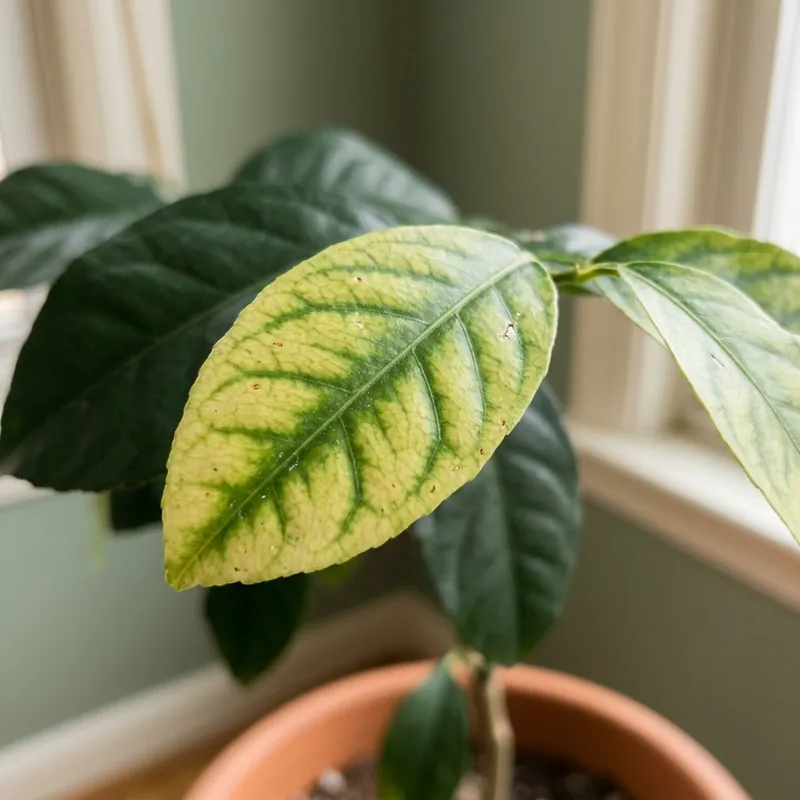
Short answer: Look for yellowing between the veins on young and middle leaves, with wide green bands along the veins and sometimes small brown specks. That pattern points to manganese, usually locked up by alkaline soil. Feed with a chelated trace element fertilizer that lists manganese, stop adding lime, and water potted plants with rainwater.
What it looks like
- Pale yellow areas between the veins on young and middle-aged leaves
- A broad band of green along each vein, wider than with iron shortage
- Small brown specks or spots in the yellow areas
- Leaves turning lighter green first, then yellow
- In bad cases, brown leaf edges, stunted new growth and early leaf drop
- Plants growing in alkaline or chalky soil, or soil that has been limed
Is it manganese deficiency or something else?
| Could also be | How to tell |
|---|---|
| Iron deficiency | Iron shortage turns the newest leaves almost white, with thin, sharp green veins. Manganese marks middle leaves too, with wider green bands and often brown specks. |
| Magnesium deficiency | Magnesium shortage also yellows the leaf between the veins, but it starts on the oldest, lowest leaves and often brings reddish purple blotches. |
| Nitrogen deficiency | Nitrogen shortage turns older leaves evenly pale, veins included, so there is no green network left on the leaf. |
Why it happens
Most soils contain manganese, but in alkaline soil it changes into a form that roots can't absorb. Chalky ground, heavy liming and hard tap water all raise the pH and bring on the shortage. The Morton Arboretum notes that iron and manganese are easiest for plants to take up in slightly acidic soil, and that chlorosis in maples is more often a lack of manganese than of iron.
Acid-loving plants such as rhododendrons, camellias and blueberries are the most vulnerable, especially in alkaline gardens or in pots filled with ordinary potting mix instead of mix made for acid-loving plants.
How to fix it
- Use a chelated trace element fertilizer that lists manganese. Chelated nutrients stay in a form plants can use even where the soil is alkaline. Check that manganese is on the label and follow the directions. Leaf sprays act quickest but wear off, so expect to repeat them.
- Stop adding lime. Lime raises the pH and locks manganese away. Leave it off beds where the plants show this yellowing, and keep wood ash away from them too.
- Water pots with rainwater. Hard tap water carries lime that slowly raises the pH of potting mix. Collect rainwater for potted acid lovers, and repot them into fresh mix made for acid-loving plants when they need it.
- Mulch beds with leaf mold or compost. A layer of leaf mold or garden compost over the root area keeps roots cool and moist and slowly improves the soil they grow in. Keep it a few inches away from trunks and stems.
Watch out: Manganese deficiency looks like iron deficiency. Iron turns the newest leaves almost white with thin, sharp green veins. Manganese marks middle leaves too, with wider green bands and brown specks.
How to prevent it
- Test the soil pH before planting red maples, rhododendrons, camellias or blueberries
- Choose plants that suit alkaline soil if your ground is chalky
- Grow acid lovers in containers of mix made for acid-loving plants where the garden soil is alkaline
- Lime only when a soil test says the soil needs it
- Water potted acid lovers with rainwater where tap water is hard
Plants it often affects
- Red maple pale leaves with green veins on high-pH soil, often from manganese
- Rhododendron yellow between the veins, with brown leaf edges in bad cases
- Camellia yellowing leaves in alkaline soil or ordinary potting mix
- Blueberry pale leaves with green veins when the soil isn't acidic enough
Questions people ask
How do I know if it's manganese or iron?
Look at where it starts and how wide the green is. Iron shows first on the newest leaves, which go almost white with thin green veins. Manganese also affects middle leaves, leaves broader green bands along the veins and often adds small brown specks.
Can I just add manganese to the soil?
In alkaline soil, plain manganese gets locked up just like the manganese already there. A chelated trace element fertilizer works better, and lowering the pH or growing in acidic mix fixes the cause.
Will the yellow leaves turn green again?
Lightly affected leaves can green up after treatment, but badly yellowed or specked leaves often stay pale. Judge the result by the new growth.

Not sure it's manganese deficiency?
Take a photo in Liana and the health check names the problem and tells you what to do first. Liana also reminds you to check the soil, so watering mistakes don't start. Get Liana for iPhone.
Sources
- Royal Horticultural Society, Nutrient deficiencies
- The Morton Arboretum, Chlorosis