Nitrogen deficiency in plants: signs and how to fix it gently
Nitrogen deficiency in plants shows up as older, lower leaves turning evenly pale green to yellow, veins included, while new growth stays small and slow. Nitrogen is the nutrient plants use most for leafy growth, and it washes out of soil easily. It is common in potted plants that haven't been fed and in vegetable beds on poor soil.
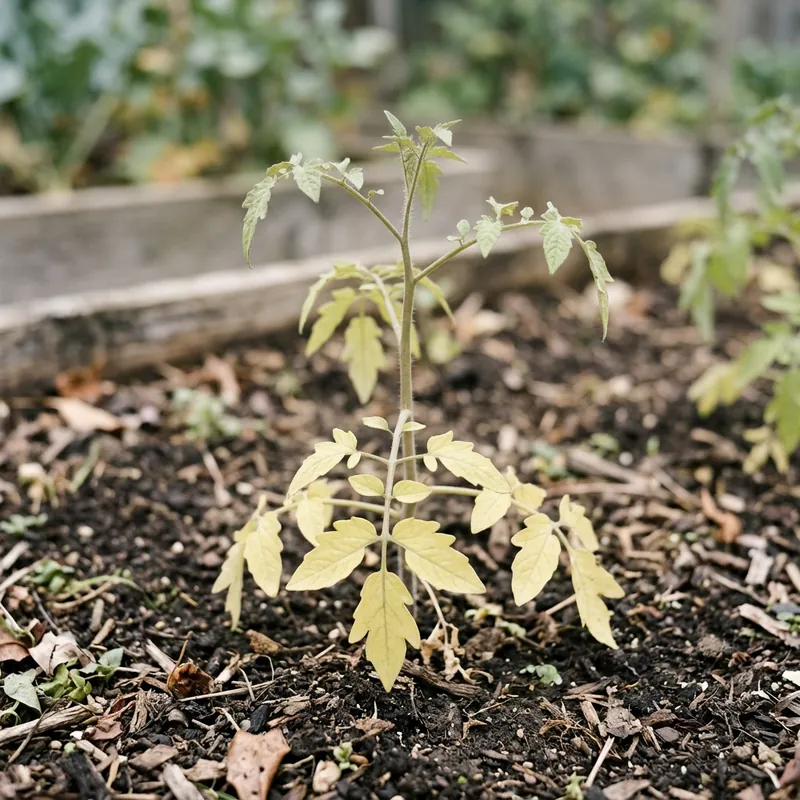
Short answer: A plant short of nitrogen turns pale all over, starting with the oldest leaves at the bottom, and the yellow covers the veins too. Growth slows and new leaves come in small. During the growing season, feed with a balanced fertilizer at half strength, a little and often, and dig compost into vegetable beds.
What it looks like
- Older, lower leaves turning evenly pale green to yellow, veins included
- The rest of the plant a lighter green than usual
- Small new leaves and slow, spindly growth
- Yellowing that starts at the bottom and moves up the plant
- Sometimes pink or reddish tints on the leaves
- Plants in old potting mix that haven't been fed for months
Is it nitrogen deficiency or something else?
| Could also be | How to tell |
|---|---|
| Overwatering | Soggy roots can't take up nitrogen, so an overwatered plant yellows the same way. Check the soil: if it is wet a couple of inches down, fix the watering before you feed. |
| Magnesium deficiency | Magnesium shortage also starts on older leaves, but the yellow sits between the veins while the veins stay green. Nitrogen shortage yellows the whole leaf evenly. |
| Natural leaf drop | A healthy plant sheds one or two of its oldest leaves now and then while the rest stays deep green and growing. Nitrogen shortage pales many leaves and slows the whole plant. |
Why it happens
Nitrogen dissolves easily in water, so rain and watering wash it out of the soil and out of the bottom of pots. Potting mix can run short within a few months, and garden soil often loses nitrogen over winter just as spring growth starts.
Plants can move nitrogen around inside themselves. When the roots can't find enough, the plant pulls it from its oldest leaves to feed new growth, which is why the lower leaves yellow first.
Wood chips or sawdust dug into the soil make things worse. As they rot, the microbes breaking them down take up nitrogen from the soil, leaving less for the plants.
How to fix it
- Feed with a balanced fertilizer at half strength. In the growing season, use a balanced fertilizer mixed at half the strength the label suggests. Water it into soil that is already slightly moist, never bone dry.
- Feed a little and often. Several small feeds work better than one big one. Too much at once can burn the roots.
- Dig compost or rotted manure into vegetable beds. Work garden compost or well-rotted manure into beds before planting, or spread it on top as a mulch. It releases nitrogen slowly and improves the soil.
- Leave pea and bean roots in the soil. At the end of the season, cut peas and beans off at ground level and leave the roots in place. Their root nodules hold bacteria that fix nitrogen from the air, and it goes back into the soil as the roots break down.
Watch out: Wood chips or sawdust dug into the soil lock up nitrogen as they rot. Spread them on top as a mulch instead.
How to prevent it
- Feed potted plants lightly during the growing season and not in winter
- Repot houseplants into fresh potting mix every couple of years
- Mulch vegetable beds with compost or rotted manure each year
- Keep wood chips and sawdust on the surface, never dug in
- Follow heavy feeders like corn and cabbage with peas or beans the next year
Plants it often affects
- Corn a heavy feeder; lower leaves turn pale yellow when soil runs short
- Cabbage outer leaves pale and heads stay small
- Lettuce pale, slow heads on tired soil
- Tomato lower leaves yellow and plants look thin and pale
- Pothos older leaves yellow when left in old, unfed potting mix
Questions people ask
How do I know if my plant needs nitrogen?
Look at the oldest leaves. If they are turning pale yellow evenly, veins included, while the rest of the plant is light green and growing slowly, nitrogen is the likely cause. Check that the soil isn't soggy first, since overwatering looks very similar.
How fast do plants recover from nitrogen deficiency?
New leaves usually come in greener once the plant is fed, but leaves that have already turned yellow rarely green up again. Judge the fix by the new growth.
Can too much nitrogen hurt plants?
Yes. Too much fertilizer burns roots and leaves brown tips, and excess nitrogen gives very dark green leaves and stunted growth. Feed at half strength and let the plant show you it needs more.

Not sure it's nitrogen deficiency?
Take a photo in Liana and the health check names the problem and tells you what to do first. Liana also reminds you to check the soil, so watering mistakes don't start. Get Liana for iPhone.
Sources
- Royal Horticultural Society, Nutrient deficiencies
- University of Arizona Cooperative Extension, Guide to Symptoms of Plant Nutrient Deficiencies