Root mealybugs: how to find them and clean the roots
Root mealybugs are small white insects that live in the potting mix and feed on roots, out of sight. You usually notice the plant first: it stops growing, yellows and wilts even when the soil is moist. Tip it out and you'll see cottony white patches on the root ball.
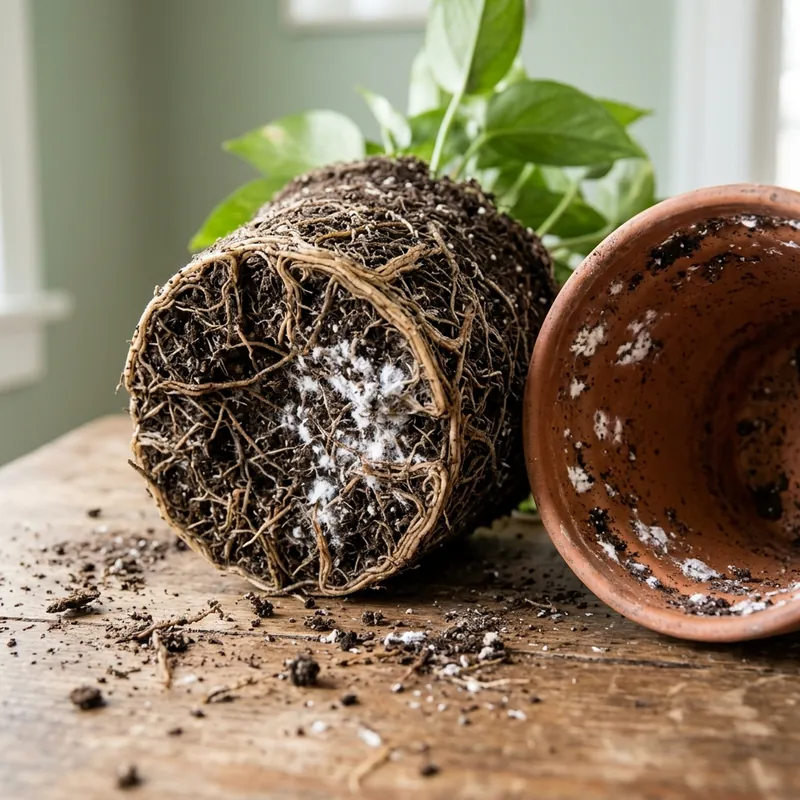
Short answer: Root mealybugs are tiny, slow-moving white insects that feed on roots in pots. The giveaway is white, cottony patches on the outside of the root ball, inside the pot rim or around the drainage holes. Isolate the plant, wash all the old soil off the roots and repot it into fresh potting mix and a clean pot.
What it looks like
- White, cottony patches on the root ball and inside the rim of the pot
- Small white fluffy masses around the drainage holes
- Tiny, oval, white insects that move slowly when you disturb the soil
- A plant that stalls and stops putting out new growth
- Yellowing leaves, and wilting even though the soil is moist
- Fewer flowers than usual on flowering plants
Is it root mealybugs or something else?
| Could also be | How to tell |
|---|---|
| Perlite | Perlite is hard, gritty and white all the way through. Root mealybugs are soft, smear when you press them and leave waxy fluff behind. |
| Springtails | Springtails are tiny white or gray insects that jump when you water and live on the soil surface. Root mealybugs move slowly, sit on the roots in waxy fluff and don't jump. |
| Root rot | Root rot also makes a plant wilt in moist soil, but the roots are brown, soft and smelly. With root mealybugs the roots may look fairly normal apart from the white, waxy patches. |
Why it happens
Root mealybugs almost always arrive on a new plant, hidden in its root ball. Because they live underground, they can build up for months before the plant shows any sign.
They spread from pot to pot. When you water, they can crawl out of the drainage holes and into nearby pots, especially when plants stand close together or share a tray.
Their feeding damages the fine root hairs, so the plant can't take up enough water and food. That's why it yellows, stalls and wilts even when the soil isn't dry.
How to fix it
- Isolate the plant and tip it out. Move the plant away from your others today. Slide it out of its pot over a sheet of newspaper and look at the outside of the root ball and the inside of the pot for white, cottony patches.
- Wash all the old soil off the roots. Hold the root ball under lukewarm running water and work the old potting mix out with your fingers until the roots are bare. Rinse away any white fluff you can see. Throw the old soil in the trash.
- Repot into fresh mix and a clean pot. Use fresh potting mix and a new pot, or scrub the old one with hot soapy water first. Wash the saucer too. Water lightly, then wait until the top of the soil is dry before watering again.
- Check nearby plants and every new one. Tip out the plants that stood near it and look at their roots and drainage holes. Make a habit of checking the root ball of every new plant before it joins the others.
- Let a badly infested plant go. Root infestations are hard to clear. If the plant is easy to replace and the roots are covered, throwing it out with its soil is often the most practical choice.
Watch out: White specks on the root ball are easy to mistake for perlite. Perlite is hard and gritty, while root mealybugs smear when pressed and leave waxy fluff.
How to prevent it
- Slide new plants out of their pots and look at the root ball before you bring them home or put them with others.
- Keep new plants apart from your collection for a few weeks.
- Don't let pots share a tray or saucer of standing water.
- Use fresh potting mix and clean pots when you repot.
Plants it often affects
- African violet one of the most common hosts, slowly stalling and yellowing
- Hibiscus leaves yellow and drop while the roots carry white patches
- Kentia palm slow decline in pots, with fluff around the drainage holes
- Chrysanthemum potted plants stall and wilt in moist soil
Questions people ask
What are the white fluffy things in my plant's soil?
If they sit on the roots or the inside of the pot and smear when you press them, they're likely root mealybugs. Hard, gritty white bits are perlite, and tiny white insects that jump on the surface are springtails. Mold on the surface looks fuzzy and has no insects in it.
Can I save a plant with root mealybugs?
Often, yes, if you catch it early. Wash every bit of old soil off the roots, repot into fresh mix and a clean pot, and check again in a few weeks. Heavily infested plants that are easy to replace are usually better thrown out.
How did my houseplant get root mealybugs?
Most come in on a new plant, hidden in the root ball. From there they crawl out of the drainage holes into nearby pots when you water. Checking roots before a new plant joins the others stops most of them.

Not sure it's root mealybugs?
Take a photo in Liana and the health check names the problem and tells you what to do first. Liana also reminds you to check the soil, so watering mistakes don't start. Get Liana for iPhone.
Sources
- University of Wisconsin-Madison Extension, Mealybugs
- NC State Extension, Root Mealybugs