Peach leaf curl: how to spot it and prevent it next spring
Peach leaf curl is a fungal disease that puckers the new spring leaves of peaches, nectarines and almonds into thick red or pink blisters. The leaves turn powdery white, then fall. The tree grows a fresh set of leaves, but attacks year after year weaken it.
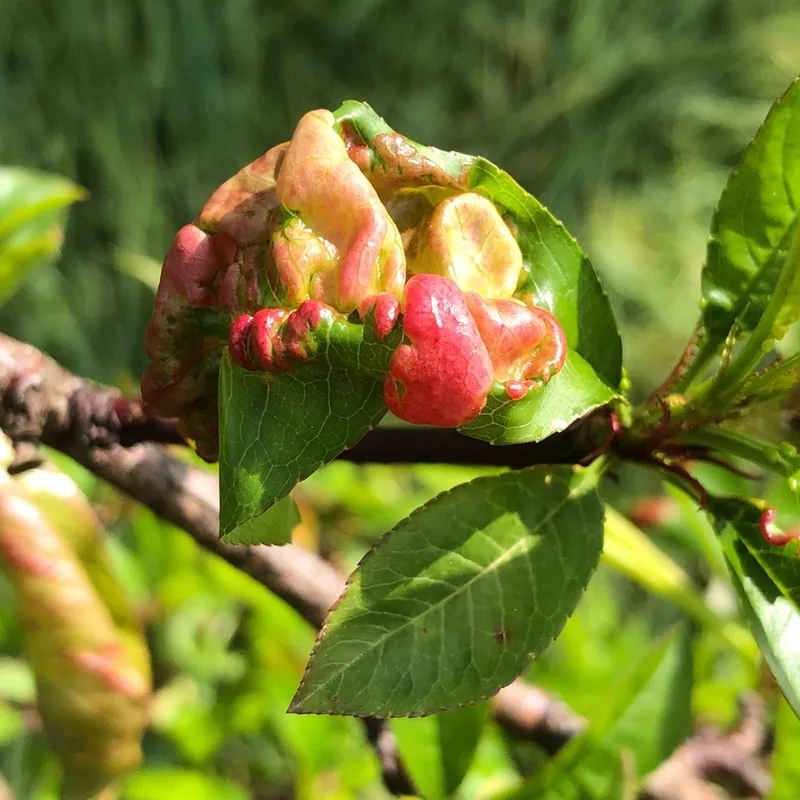
Short answer: Peach leaf curl is a fungus that infects peach and nectarine buds as they open in cool, wet spring weather. Affected leaves thicken, pucker and turn red, then go powdery white and drop. Pick off blistered leaves before they turn white, water deeply in dry spells to help regrowth, and keep the buds dry next spring.
What it looks like
- New spring leaves that thicken, pucker and curl, turning red, pink or yellowish
- A pale, powdery white or grayish bloom on the blisters as spores form
- Blistered leaves that turn yellow or brown and fall early
- Shoot tips that are swollen, stunted or die back
- A second set of normal, flat leaves later in spring
- Occasionally, raised reddish patches on young fruit
Is it peach leaf curl or something else?
| Could also be | How to tell |
|---|---|
| Aphids | Aphids also curl peach leaves, but you'll find the small insects and sticky honeydew inside the curl. Leaf curl blisters are thick and red with no insects. |
| Powdery mildew | Powdery mildew is a thin white dust on otherwise normal leaves, often later in the season. Leaf curl first makes the leaf swell and blister in spring, and the white bloom only comes after. |
Why it happens
The fungus lives on the bark and around the buds through summer and winter. In spring, rain and splashing water carry its spores onto the buds just as they open, and the young leaves get infected before you see anything.
Infection needs cool, wet weather with the buds staying wet for many hours, and the worst years follow two or more wet days in a row. Symptoms show about two weeks after the leaves come out. Once the weather turns warm and dry, the disease stops.
A tree that loses its first leaves has to spend energy growing new ones. That means less growth and less fruit, and bare branches can get sunburned. Attacks year after year can lead to a steady decline.
How to fix it
- Pick off blistered leaves early. Remove blistered leaves before they turn white with spores, and bag them for the trash. This cuts the amount of fungus left on the tree for next year.
- Water deeply and mulch to help regrowth. In dry spells, check the soil and give a slow, deep soak when it is dry. A layer of mulch over the root zone keeps the soil moist while the tree puts out its second set of leaves.
- Thin the fruit on badly hit trees. If the tree lost most of its leaves, thin the young fruit so it doesn't carry more than its new leaves can support.
- Shelter the tree from rain next spring. From midwinter until late spring, keep rain off the buds. For a fan-trained or small tree, fix a clear plastic sheet over the top and front, leaving the ends open so pollinating insects can get in.
- Choose a resistant variety for a new tree. Some peaches resist leaf curl, such as Frost, Indian Free and Muir, and Redhaven tolerates it. Ask your local nursery which resistant varieties suit your area.
Watch out: By the time leaves curl, the infection happened weeks earlier, in cold, wet weather as the buds opened. Preventing it means keeping the buds dry next year.
How to prevent it
- Keep rain and sprinkler water off the buds from midwinter until the leaves are fully open
- Train peaches against a sunny wall or fence, where a rain shelter is easy to fit
- Plant resistant or tolerant varieties
- Remove blistered leaves before the white spore bloom appears
- Water deeply in dry spells so a tree that loses leaves can regrow strongly
Plants it often affects
- Peach the main host; red, puckered leaves every cool, wet spring
- Nectarine as prone as peach, with the same red blisters
- Almond new leaves curl and blister in wet springs
- Flowering peach ornamental peaches get it too
Questions people ask
Can I treat peach leaf curl once the leaves have curled?
Not really. The infection already happened weeks earlier, when the buds opened. Pick off blistered leaves, water the tree in dry spells and focus on keeping the buds dry next spring.
Is the fruit safe to eat?
The fruit is rarely affected, so peaches from a tree with leaf curl are fine to eat. The bigger cost is a smaller crop, because the tree spends its energy on new leaves.
Will peach leaf curl kill my tree?
One bad spring won't. The tree grows a new set of leaves once the weather warms. When it happens year after year, though, growth and fruiting drop and the tree can decline.

Not sure it's peach leaf curl?
Take a photo in Liana and the health check names the problem and tells you what to do first. Liana also reminds you to check the soil, so watering mistakes don't start. Get Liana for iPhone.
Sources
- University of California IPM, Peach Leaf Curl
- Royal Horticultural Society, Peach leaf curl