Plant dormancy: when leaves die back to rest
Plant dormancy is a natural rest. Alocasias, caladiums, cyclamen, tulips and many perennials let all their leaves yellow and die back for a season, while the bulb, tuber or roots stay alive underground. It looks alarming the first time, but it is harmless, and new shoots come back when the rest is over.
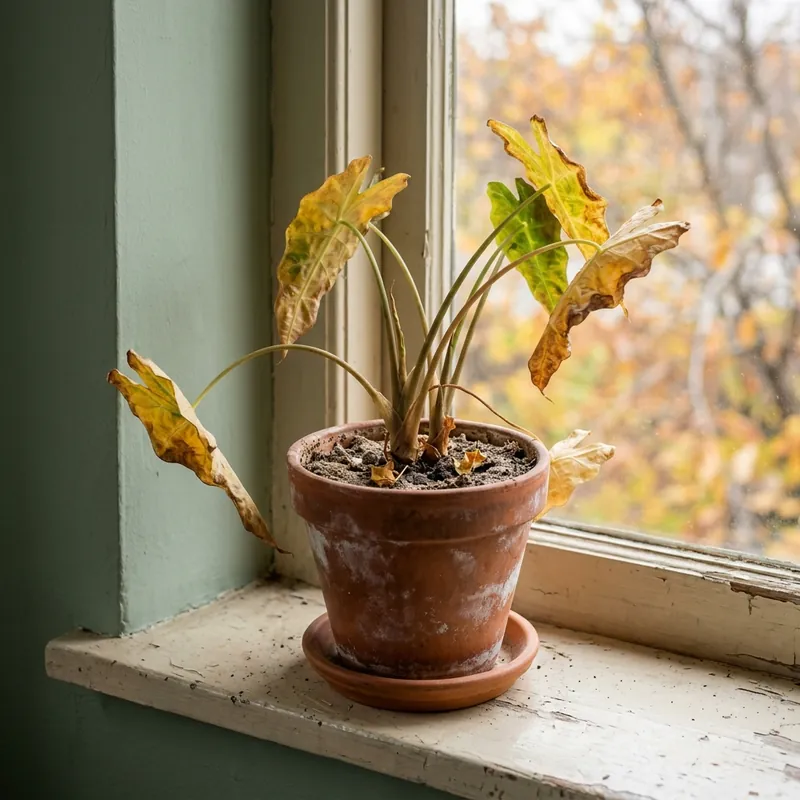
Short answer: If a plant that grows from a bulb, tuber or rhizome yellows and dies back after flowering or as the season turns, and its base still feels firm, it is going dormant. Leave the fading leaves on until they come away easily, water much less, and start watering normally again only when new shoots appear.
What it looks like
- Leaves yellowing one after another until none are left
- Dieback that follows flowering, or comes as days shorten and cool
- No new leaves for weeks, though the plant was healthy before
- A bulb, tuber or base that still feels firm when pressed
- No bad smell and no soft, dark tissue at the base
- Fading leaves that pull away easily once they are fully yellow
Is it plant dormancy or something else?
| Could also be | How to tell |
|---|---|
| Overwatering | An overwatered plant yellows in soggy soil, often with limp stems and a sour smell. A dormant plant dies back in a regular way and its bulb or base stays firm. |
| Root rot | With root rot, the bulb or base turns soft and mushy and the roots are black. A resting bulb is firm and dry, with pale, healthy roots or none at all. |
| Natural leaf drop | Most plants shed a few old, low leaves now and then while new ones keep coming. In dormancy all the leaves fade and no new growth appears for a while. |
Why it happens
Plants that store food in bulbs, tubers, corms or rhizomes evolved to wait out a hard season underground. Cyclamen come from places with dry, hot summers, so they flower in winter or spring and then rest. Iowa State University Extension describes the leaves yellowing and dying after flowering, with a rest of six to eight weeks in late spring and early summer.
Caladiums and many alocasias rest as days shorten and temperatures drop. Penn State Extension notes that caladium leaves fade to yellow and collapse as the weather cools. Tulips and many garden perennials die back above ground after flowering or in autumn and regrow the next spring.
How to fix it
- Leave fading leaves on until they come away easily. Yellowing leaves send their stored food back to the bulb or roots. Wait until each leaf is fully yellow or brown and lifts off with a gentle tug, then remove it.
- Water much less. With no leaves, the plant uses almost no water. Give just enough to stop the roots or bulb drying out completely, and let the mix stay nearly dry between those small drinks.
- Press the bulb or base gently. A firm bulb, tuber or base means the plant is alive and resting. If it feels soft, mushy or smells bad, it has rotted, and you need to cut away the soft part or replace the plant.
- Water normally again once new shoots appear. New shoots mean the rest is over. Move the plant back to good light, and go back to watering whenever the top of the soil feels dry.
Watch out: Watering a resting plant to perk it up rots the bulb or roots. Wait for new shoots before you water normally.
How to prevent it
- Learn which of your plants rest each year so dieback doesn't come as a surprise
- Cut back watering gradually as leaves start to fade
- Keep caladium tubers warm while they rest, since cold can kill them
- Keep resting cyclamen in a cool, shaded spot
- Label pots of resting plants so nobody waters them by mistake
Plants it often affects
- Alocasia often drops its leaves in winter and regrows from the rhizome
- Caladium leaves yellow and collapse as days shorten and cool
- Florist's cyclamen leaves yellow after flowering and the tuber rests in summer
- Tulip foliage dies back after flowering while the bulb stores food
Questions people ask
How do I know if my alocasia is dormant or dying?
Check the base. If the rhizome or corm at soil level is firm and the soil isn't soggy, it is resting and should send up new leaves later. If it is soft, dark or smells bad, it has rotted.
Should I cut off yellow leaves on a dormant plant?
Wait until they are fully yellow or brown and come away easily. Until then they are still returning food to the bulb or roots.
How long does dormancy last?
It depends on the plant. Cyclamen usually rest for six to eight weeks, and caladiums and many bulbs rest through the cold season. New shoots tell you it is over.

Not sure it's plant dormancy?
Take a photo in Liana and the health check names the problem and tells you what to do first. Liana also reminds you to check the soil, so watering mistakes don't start. Get Liana for iPhone.
Sources
- Iowa State University Extension and Outreach, All About Cyclamen
- Penn State Extension, Caladiums for the Home Garden