Plant galls: odd lumps that rarely do harm
Plant galls are lumps, balls or pimples on leaves, buds and stems, made when a tiny wasp, midge or other insect lays its eggs in the plant. They can look alarming, yet nearly all of them leave the plant healthy. Oak apples on oak twigs and the mossy, reddish tufts on roses are two of the most common.
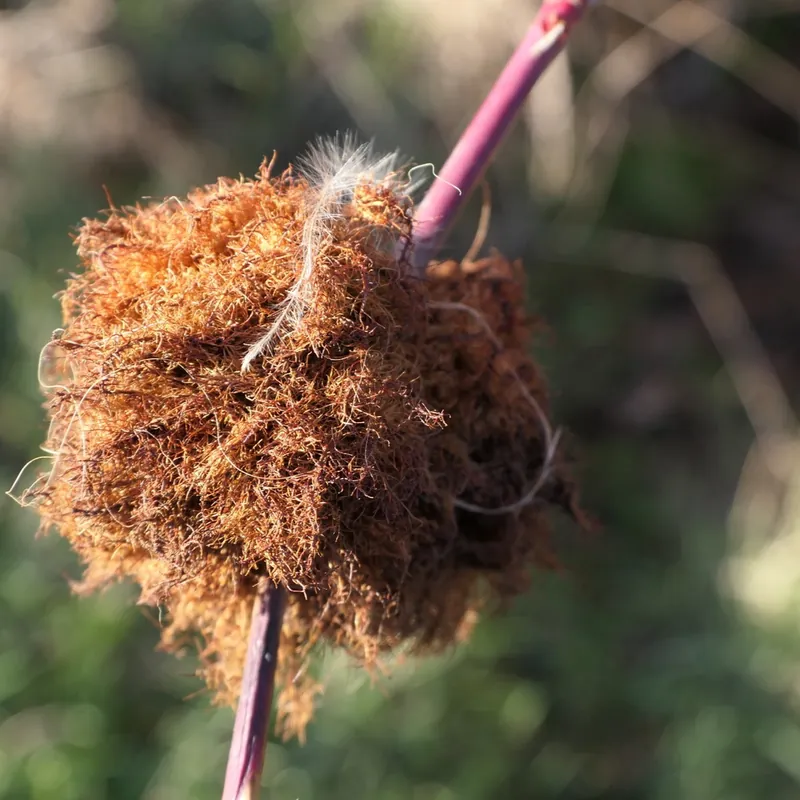
Short answer: A gall is a swelling the plant grows around a young insect, usually a tiny gall wasp or midge, which feeds safely inside. Nearly all galls are harmless and need no treatment. Leave them, or cut off the ones you dislike in winter. Check any lump at soil level or on the roots, which may be crown gall instead.
What it looks like
- Round, apple-like balls on oak twigs, spongy inside, up to golf ball size
- Small flat discs or buttons on the undersides of oak leaves
- A fuzzy, moss-like ball, reddish pink to yellow, on rose stems or leaves
- Hard, woody swellings on twigs, sometimes with horn-like points
- Pimples, blisters or pouches on leaves that otherwise look healthy
- A plant that keeps growing normally around the galls
Is it plant galls or something else?
| Could also be | How to tell |
|---|---|
| Crown gall | Crown gall forms rough, rounded lumps at the base of the stem or on the roots of roses, fruit trees and euonymus. It is caused by a soil bacterium and can stunt the plant, so a lump in that spot deserves a closer look. |
| Gall mites | Gall mites make felty patches, tiny pimples or nail-shaped galls on the leaves of linden, maple, walnut and other trees. Most are just as harmless, but the makers are mites too small to see. |
| Leaf spot | Leaf spot is flat: brown or black patches that lie in the leaf and spread outward. Galls are raised growths you can feel between your fingers. |
Why it happens
A gall starts when a female insect lays an egg in a bud, leaf or twig. As the young larva feeds, it gives off chemicals that make the plant grow extra tissue around it. The plant ends up building a snug home for the larva, which eats and grows inside until it leaves as an adult.
Most galls on garden plants are made by gall wasps, especially on oaks, which host many different kinds. Midges, aphids and mites make others. Each kind of gall belongs to one maker, so the shape and its place on the plant tell you who made it.
Because the insect is sealed inside, there is nothing on the surface for a spray to reach. Galls are part of the wildlife an oak supports, and birds and other insects feed on the larvae. A few gall wasps that attack acorns can cut the acorn crop in some years without threatening the tree.
How to fix it
- Leave them on the plant. Galls don't affect the plant's health, so doing nothing is the simplest choice. Leaves with galls keep working, and the plant carries on growing.
- Cut off unsightly galls in winter if you like. If a gall bothers you on a rose or small tree, snip it off with clean pruners while the plant is dormant and put it in the trash. Cutting out heavily galled twigs can also lower the number of gall insects nearby.
- Check lumps at the base or on roots. Look at any swelling where the stem meets the soil, and at the roots when you repot. Rough, rounded lumps there may be crown gall, which is a different problem.
- Prune out horned or gouty galls on oaks. Hard, woody swellings on oak twigs, some with horn-like points, are the one kind of wasp gall that can harm a tree when they build up. Cut out galled twigs in late spring, while the wasps are still developing inside.
Watch out: Galls look like a disease, so people spray or strip the leaves. Sprays can't reach the insect sealed inside, and the plant copes well with galls.
How to prevent it
- Accept a few galls as normal on oaks and roses; their numbers rise and fall from year to year
- Prune out heavily galled twigs in winter if one plant gets many every year
- Look at the base of new plants before you buy them, and pass on any with lumps at the soil line
Plants it often affects
- Oak oak apples on twigs and small button galls under the leaves
- Red oak round, thin-shelled oak apple galls on the leaves and twigs
- White oak tiny jumping oak galls under the leaves, which drop in summer
- Rose mossy rose gall, a springy, reddish ball of tangled threads
Questions people ask
Do galls hurt the tree?
Almost never. Most galls are harmless and the tree grows on as usual. The exception on oaks is horned and gouty oak galls, hard woody swellings on twigs that can damage a tree if they build up over the years. Prune those out when you see them.
What is inside an oak apple?
A spongy core around a single larva of a tiny gall wasp. When it has grown, the adult wasp chews its way out, leaving a small hole in the empty gall.
Can I spray galls?
Spraying doesn't help. The insect is sealed inside the plant's own tissue, and even strong insecticides rarely work on galls. Pruning out galled twigs is the only practical step, and only if you want to.

Not sure it's plant galls?
Take a photo in Liana and the health check names the problem and tells you what to do first. Liana also reminds you to check the soil, so watering mistakes don't start. Get Liana for iPhone.
Sources
- Virginia Cooperative Extension, Galls Made by Wasps
- Royal Horticultural Society, Oak gall wasps