Potassium deficiency in plants: signs and how to fix it
Potassium deficiency in plants makes older leaves turn yellow at the edges, then brown and crisp as if scorched. Potassium, also called potash, is what plants need most for flowers, fruit and overall toughness, so a shortage means fewer, smaller blooms and fruit. It is most common on light, sandy soil and in containers.
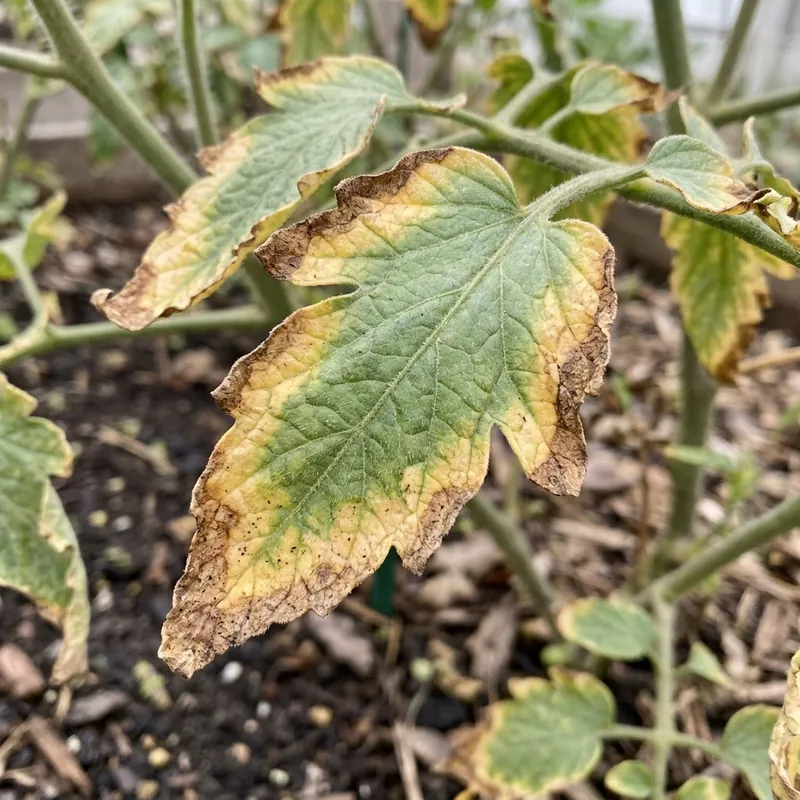
Short answer: A plant short of potassium shows yellow, then brown, scorched edges on its older leaves, while flowering and fruiting drop off. Tomatoes may ripen unevenly. Switch to a high potash feed, such as a tomato fertilizer, and use it through flowering and fruiting at the strength on the label.
What it looks like
- Older leaves turning yellow at the edges, then brown and crisp
- Browning that moves in from the leaf edges toward the center
- Yellow or purplish red tints on mature leaves
- Older leaves that curl, wilt or drop early
- Few, small flowers and fruit
- Tomatoes that ripen unevenly, with blotchy patches that stay green or yellow
Is it potassium deficiency or something else?
| Could also be | How to tell |
|---|---|
| Magnesium deficiency | Magnesium shortage yellows older leaves between the veins while the veins stay green, sometimes with reddish blotches, and the edges stay alive. Potassium shortage scorches the edges brown first. |
| Leaf scorch | Leaf scorch from wind, sun or drought browns the edges of leaves all over the plant, often after a hot, dry spell. Potassium shortage starts on the older leaves and comes with poor flowering. |
| Fertilizer burn | Too much fertilizer also browns leaf tips and edges, but often with a white crust on the soil and wilting in damp soil. Think back to how much and how often you have been feeding. |
Why it happens
Potassium is easily washed out of light, sandy or chalky soil, which is why those gardens run short most often. Clay soils hold on to it much better. Plants in pots and planters also run low, since every watering carries some out of the drainage holes.
Plants can move potassium from old leaves to new growth. When supplies are short, they strip it from the oldest leaves first, so those show the damage while the top of the plant still looks fine.
Hungry crops that flower and fruit heavily, such as tomatoes, use a lot of potassium.
How to fix it
- Switch to a high potash feed. Use a fertilizer that is higher in potassium than nitrogen, such as a liquid tomato fertilizer. Mix it at the strength on the label.
- Feed through flowering and fruiting. Keep feeding during the growing season while the plant flowers and sets fruit, when it needs potassium most. Stop when the plant stops growing in fall.
- Mulch sandy soil with compost each spring. Spread a layer of garden compost over sandy beds every spring. It slowly releases potassium and helps the soil hold on to nutrients.
Watch out: Too much high potash feed blocks magnesium, and older leaves then yellow between the veins. Feed at the strength on the label.
How to prevent it
- Use a high potash feed for tomatoes, peppers and other fruiting plants once they start to flower
- Mulch light, sandy soil with compost every spring
- Feed container plants during the growing season, since watering washes nutrients out
- Stick to the label strength so you don't cause a magnesium shortage
Plants it often affects
- Tomato scorched older leaves and blotchy, uneven ripening
- Palm yellow or orange flecks on the oldest fronds
- Apple fruit trees on sandy soil get scorched leaf edges
- Citrus a fruit tree that runs short in sandy soil and containers
Questions people ask
What does potassium deficiency look like?
The older leaves turn yellow at the edges, then brown and crisp, as if burned along the rim. The plant flowers and fruits poorly, and on tomatoes the fruit may ripen unevenly.
Is tomato fertilizer high in potassium?
Usually, yes. Tomato fertilizers are made with more potash than nitrogen to support flowers and fruit, which makes them a handy fix for potassium shortage on many plants.
Will damaged leaves recover?
Leaves that have already scorched won't turn green again. Once you start feeding, new leaves should come in healthy, and flowering and fruiting improve over the season.

Not sure it's potassium deficiency?
Take a photo in Liana and the health check names the problem and tells you what to do first. Liana also reminds you to check the soil, so watering mistakes don't start. Get Liana for iPhone.
Sources
- Royal Horticultural Society, Nutrient deficiencies
- University of California IPM, Potassium Deficiency