Root-knot nematodes: how to spot the galls and clear the soil
Root-knot nematodes are microscopic worms in the soil that make roots swell into bead-like lumps. The damaged roots can't take up water and nutrients well, so the plant stays small, yellows and wilts on warm days. Tomatoes, cucumbers, carrots and many houseplants are common victims.
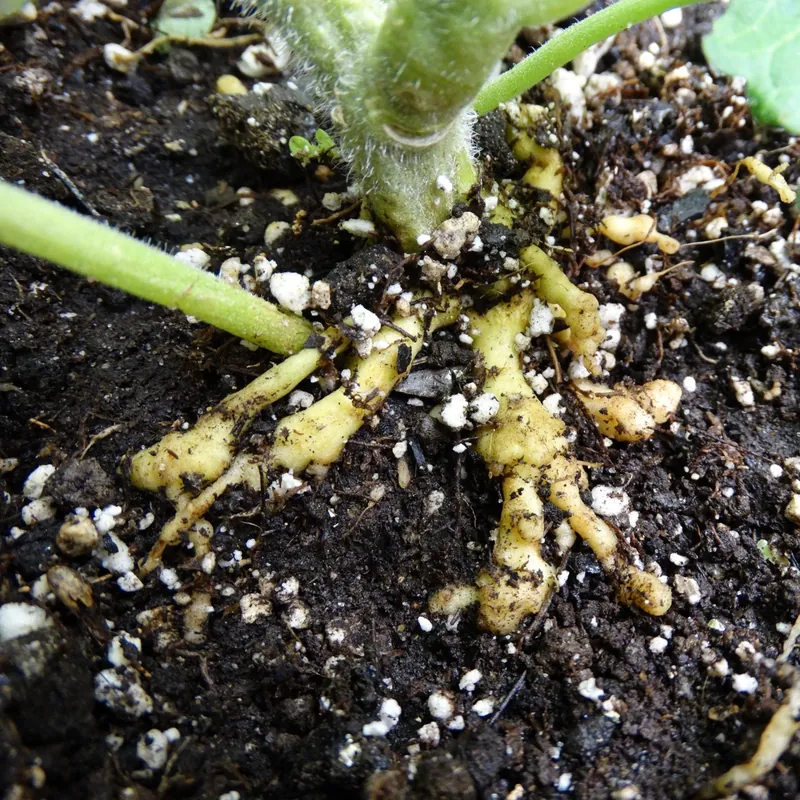
Short answer: Root-knot nematodes are tiny soil worms you can't see, but you can see what they do: round or knobbly swellings that are part of the root itself. Above ground, plants grow slowly, turn yellow and wilt in the heat of the day even when the soil is moist. Lift a struggling plant and look at its roots first.
What it looks like
- Knobbly, bead-like swellings along the roots that won't rub off
- Plants that wilt in the hottest part of the day even though the soil is moist
- Slow, stunted growth compared with neighboring plants
- Yellowing leaves
- Fewer and smaller fruits
- Lumpy, misshapen carrots and other root crops
Is it root-knot nematodes or something else?
| Could also be | How to tell |
|---|---|
| Nitrogen nodules on peas and beans | Peas, beans and other legumes carry small round nodules full of helpful bacteria. They sit on the side of the root and rub off easily. Root-knot galls are swellings of the root itself and won't come off. |
| Clubroot | Clubroot swells the roots of cabbages and other brassicas into large, club-shaped masses. Root-knot galls are usually smaller and strung along the roots like beads, on a much wider range of plants. |
| Crown gall | Crown gall makes rough, crumbly lumps, mostly at the stem base of roses, fruit trees and shrubs. Root-knot galls are smoother and scattered along the fine roots of vegetables and other soft plants. |
Why it happens
Root-knot nematodes live in the soil and push into young roots to feed. The root swells around them into a gall, and the galled roots struggle to move water and nutrients up to the plant. Galls can also crack, letting rot organisms in.
They do the most damage in warm, sandy soil that's watered often. Many vegetables, fruit trees and ornamentals can host them, so numbers build up quickly where the same crops grow year after year.
They move with infested soil, plants, tools and runoff water. Houseplants usually get them from garden soil or from plants that were already infested.
How to fix it
- Lift the plant and check the roots. Dig up or tip out a plant that's struggling and shake off the soil. Look for knobbly swellings that are part of the root. Check a few plants, since damage is often patchy.
- Throw out affected plants with their soil. Put galled plants and their roots in the trash, along with the soil from a pot. Don't add them to the compost pile, which can carry the nematodes back into the garden.
- Pull out roots right after harvest. At the end of the season, lift annual vegetables with their roots as soon as you've picked the last crop. Roots left in the ground keep feeding and breeding the nematodes.
- Rotate crops and choose resistant tomatoes. Grow something different in an infested bed for a year or more. Next time you plant tomatoes, choose varieties marked with an N (often VFN) on the label, which resist root-knot nematodes.
- Grow a solid bed of French marigolds. Sow French marigolds thickly across the bed and let them grow for a full season before you replant. Weed the bed well so other plants don't keep the nematodes fed. Avoid signet marigolds, which host the nematodes.
- Solarize the bed in hot weather. In the hottest part of summer, moisten the soil and cover it with clear plastic for 4 to 6 weeks. The heat cuts nematode numbers in the top layer of soil, though it works less well in cool coastal areas.
Watch out: Swellings on pea and bean roots that rub off easily are helpful nitrogen nodules. Root-knot galls are part of the root and won't come off.
How to prevent it
- Rotate vegetable families around the garden instead of growing them in the same bed every year.
- Choose nematode-resistant tomato varieties if you've had root-knot before.
- Use fresh potting mix for houseplants and containers, never garden soil.
- Clean soil off tools and boots after working in an infested bed.
- Pull out spent vegetable roots as soon as the harvest is over.
Plants it often affects
- Tomato stunted plants that wilt in the afternoon, with beaded roots
- Cucumber vines stay small and yield poorly in warm, sandy beds
- Carrot roots come up lumpy and misshapen
- Pepper slow growth and yellowing, with galls on the fine roots
- Squash vines wilt on hot days even with moist soil
- Rose reduced growth on infested ground
Questions people ask
Do marigolds really get rid of root-knot nematodes?
French marigolds can reduce them, but only when grown as a dense bed for a full season with weeds kept out. A few marigolds dotted between tomatoes won't do much. Signet marigolds should be avoided, since nematodes can feed on them.
Can I plant tomatoes in the same spot next year?
It's better to rotate. Leave the bed to a crop the nematodes don't favor for a year or more, or grow resistant tomatoes marked N or VFN. Resistant plants may still show a few galls, but they usually keep cropping.
Can houseplants get root-knot nematodes?
Yes, usually from garden soil or a plant that was already infested. Throw out the plant and its soil if the roots are covered in galls, and scrub the pot before reusing it. Always pot houseplants in fresh potting mix.

Not sure it's root-knot nematodes?
Take a photo in Liana and the health check names the problem and tells you what to do first. Liana also reminds you to check the soil, so watering mistakes don't start. Get Liana for iPhone.
Sources
- UC Statewide IPM Program, Nematodes