Rose rosette disease: how to spot it and protect your other roses
Rose rosette disease is a virus that makes new rose shoots grow thick, red and crowded with soft thorns, bunching into tight clusters called witches' brooms. Flowers come out deformed or not at all. Tiny mites spread it, mainly in North America, and there is no cure.
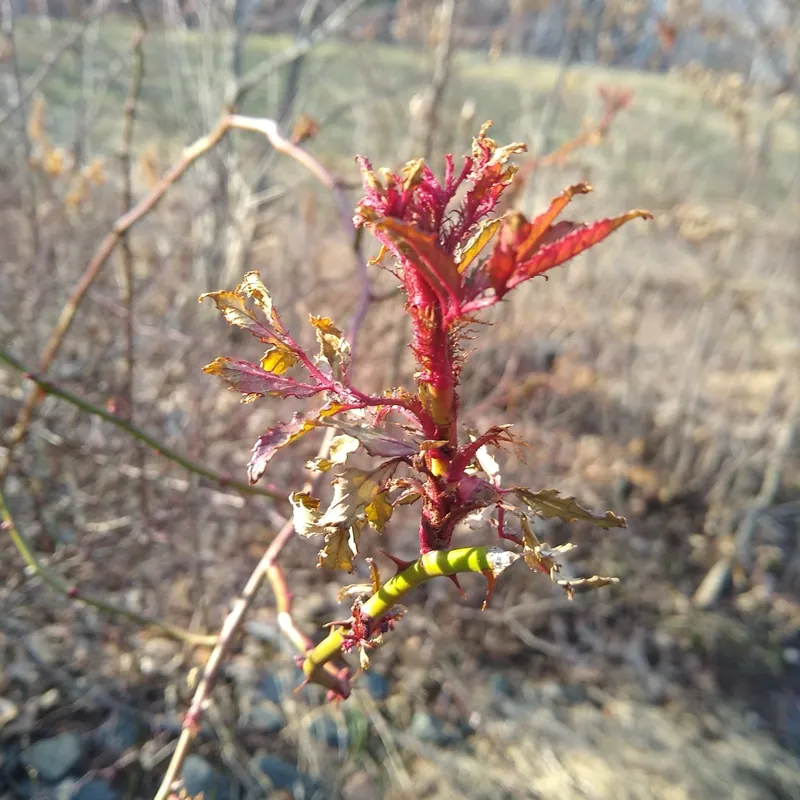
Short answer: Rose rosette is a virus spread by microscopic mites that drift on the wind. The giveaway is new shoots that stay bright red, thicken, sprout masses of soft thorns and bunch into brooms. There is no cure: dig out the whole rose, roots and all, and bag it before you move it.
What it looks like
- New shoots that stay bright red as they grow, instead of turning green
- Thick stems packed with far more thorns than normal, often soft and red
- Short, crowded shoots bunched into witches' brooms
- Small, twisted or narrow leaves on the affected shoots
- Flower buds that are deformed, discolored or missing
- Symptoms on one cane at first, then spreading through the plant
- A rose that slowly declines and flowers less
Is it rose rosette or something else?
| Could also be | How to tell |
|---|---|
| Normal red new growth | Many roses push out red shoots in spring that turn green as they grow. Rosette shoots stay red, thicken, sprout masses of thorns and bunch together. |
| Weedkiller damage | Weedkiller drift, especially from the season before, can make bunched, narrow, distorted leaves. Those shoots usually lack the deep red color and the mass of extra thorns. |
| Powdery mildew | Powdery mildew can twist and redden young rose leaves, but they are coated in a white, powdery film that rubs off. Rosette shoots are clean, thick and very thorny. |
Why it happens
Rose rosette is caused by a virus carried by a microscopic, wingless mite. The mites feed on new shoots and can drift long distances on air currents, landing on roses well away from the source.
Wild multiflora rose, an invasive weed in much of the US, is a major source of both the virus and the mites. All garden roses can be infected, including popular shrub roses grown in mass plantings, where the disease jumps easily from plant to plant.
Symptoms can take weeks or months to show after infection. By the time they appear, the virus has usually moved down into the main stems and roots, which is why pruning out the bad shoots rarely saves the plant.
How to fix it
- Dig out the whole rose today, roots and all. Pruning won't help, because the virus is already in the roots. Dig out the root ball along with the top growth.
- Bag it before you move it. Cover the plant with a large plastic bag, or cut it into a bag where it stands, before carrying it anywhere. That keeps the mites from dropping onto other roses.
- Throw it away or burn it. Put the bagged plant in the trash, or burn it where that's allowed. Never compost or chip it. Clean your tools and gloves afterward.
- Remove regrowth from old roots before replanting. Watch the spot for shoots coming up from roots left behind and dig them out. Only plant a new rose there once nothing has come back.
Watch out: Many roses grow red new shoots in spring. Rosette shoots stay red, thicken, sprout masses of thorns and bunch together.
How to prevent it
- Remove wild multiflora rose from your property where you can
- Space roses apart so mites can't move easily from bush to bush
- Buy roses from reputable nurseries and check new shoots before planting
- Look over your roses every few weeks during the growing season
- Remove any rose with symptoms as soon as you are sure
Plants it often affects
- Shrub roses mass plantings suffer severe losses as it spreads bush to bush
- Multiflora rose the wild host that keeps the virus and mites going
- Hybrid tea rose can be infected like every cultivated rose
- Climbing rose no garden rose is known to be immune
Questions people ask
Can you cure rose rosette disease?
No. There is no spray or treatment that cures it. Removing the whole plant, roots included, is the only way to stop it spreading to your other roses.
Can I just cut off the infected canes?
Only in rare cases where you catch a single cane very early, and even then the virus has often already reached the roots. If symptoms return on new growth, remove the whole plant.
How long should I wait before planting a new rose in the same spot?
Wait until no shoots come up from old roots left behind, and dig out any that do. Regrowth from old roots can still carry the virus, so a new rose should only go in once the old plant is completely gone.

Not sure it's rose rosette?
Take a photo in Liana and the health check names the problem and tells you what to do first. Liana also reminds you to check the soil, so watering mistakes don't start. Get Liana for iPhone.
Sources
- Purdue University, Purdue Landscape Report, Rose Rosette
- University of Delaware Cooperative Extension, Rose Rosette Disease