Shot hole disease: why leaves look peppered with holes
Shot hole disease leaves neat, round holes in leaves, as if they had been hit by shot. Small brown or reddish spots form first, then drop out. It is common on cherry laurel, cherries, plums, peaches and apricots, and often a sign that the plant is under stress.
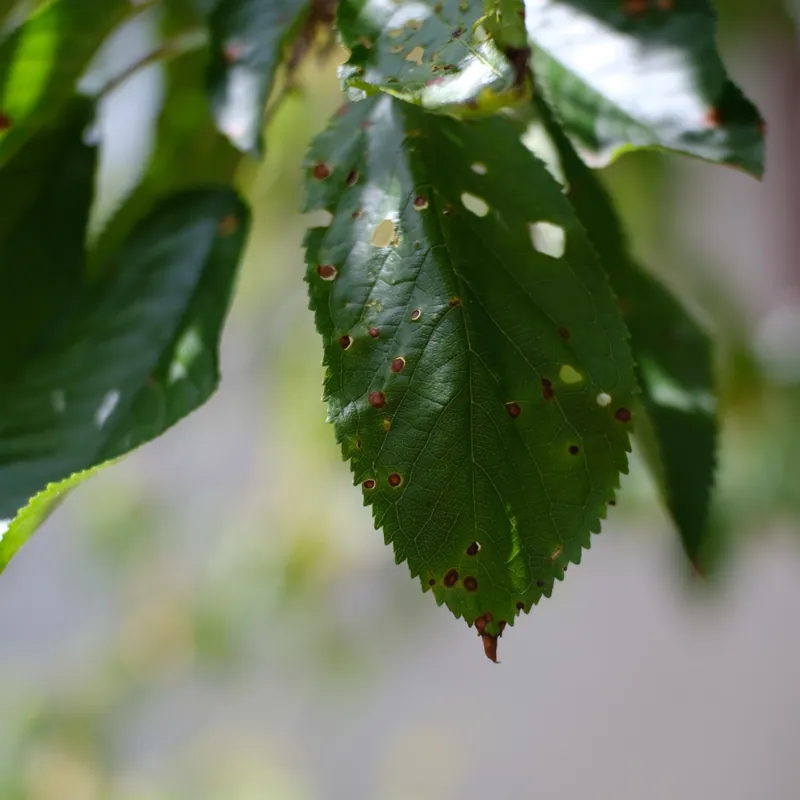
Short answer: Shot hole is a set of symptoms on cherries, plums, laurel and other Prunus: small red, purple or brown spots that fall out and leave round holes about 1/8 inch across. Fungi, bacteria, drought or frost can all start it. Check the bark of cherries and plums for sunken, oozing patches, and rake up fallen leaves to cut next year's spores.
What it looks like
- Small purplish, reddish or brown spots on young leaves in spring
- Round holes, about 1/8 inch across, where the spots have fallen out
- Spots on young leaves with a light green or yellow ring around them
- Leaves on cherries turning yellow and dropping early in bad years
- On cherry laurel, holed leaves that stay on until new growth hides them
- On apricots and peaches, rough, scabby spots on the fruit and small cankers on twigs
Is it shot hole or something else?
| Could also be | How to tell |
|---|---|
| Bacterial canker | Bacterial canker makes the same holes in cherry and plum leaves, along with sunken bark patches oozing amber gum and branches dying back. If you find those, treat it as canker. |
| Caterpillars | Caterpillars and other chewing insects make ragged holes of all sizes, often from the edge, and leave droppings. Shot holes are small and round and start as colored spots. |
| Leafcutter bees | Leafcutter bees cut smooth half circles from the edges of leaves. Shot holes sit inside the leaf, away from the edge. |
Why it happens
The holes are the plant defending itself. When a fungus, bacterium or injury kills a small patch of leaf, the plant seals that area off, and the dead patch dries and falls away. On cherries and cherry laurel the usual causes are bacterial leaf spot and the fungus behind cherry leaf spot, while on apricots and peaches it is often the shot hole fungus, also called Coryneum blight.
Warm, wet springs favor these infections, since the spores travel in splashing water and young leaves are the most at risk. Infection carries on onto new leaves while the rain lasts. Plants already stressed by drought or frost show it more, and bacterial canker on cherries and plums makes the same holes.
How to fix it
- Check the bark of cherries and plums. Look along the branches and trunk for sunken, dark patches oozing amber gum. Those point to bacterial canker, which needs the cankered branches cut out to healthy wood in summer, in dry weather.
- Rake up and throw out fallen leaves. Gather fallen leaves in fall and put them in the trash. That removes much of the fungus and bacteria that would infect next spring's leaves.
- Water deeply in long dry spells. In a drought, give the plant a slow, deep soak when the soil is dry a few inches down. A plant that isn't short of water copes with infections better.
- Trim badly holed laurel in summer. On cherry laurel, cut out the worst holed shoots in dry summer weather, when the cuts dry quickly. New leaves fill in behind them.
- Prune infected twigs on apricots and peaches. After the leaves fall, look for spotted buds and small twig cankers and prune them out, since the shot hole fungus spends the winter there.
Watch out: The holes are the plant sealing off damage from fungus, bacteria, drought or frost. Holed leaves stay holed, so judge the plant by its new leaves.
How to prevent it
- Keep sprinklers off the leaves and water the soil at the base
- Space and prune plants so their leaves dry quickly after rain
- Clear up fallen leaves every fall
- Choose flowering cherries with good resistance, such as 'First Lady' or 'Dream Catcher'
Plants it often affects
- Cherry laurel also called English laurel; holed leaves stay on and new growth hides them
- Cherry spots in spring, then yellow leaves dropping early in wet years
- Apricot the most susceptible to the shot hole fungus, with spotted fruit too
- Peach holed leaves, scabby fruit spots and small twig cankers
- Almond one of the hosts of the shot hole fungus, with spotted leaves and buds
- Flowering cherry Japanese flowering cherries can be hit hard in wet springs
Questions people ask
Will shot hole kill my cherry laurel?
Rarely. Most trees and shrubs recover without treatment. The holed leaves stay damaged, but new growth comes in clean once the weather dries.
Should I spray for shot hole?
Sprays can't repair leaves that already have holes. Raking up leaves, pruning out infected twigs and keeping foliage dry are usually enough when the disease is mild.
What causes holes in cherry laurel leaves?
Usually shot hole, where bacteria or fungi kill small patches of leaf that then fall out. Drought and frost damage can do the same. If the holes are ragged or along the edges, look for insects instead.

Not sure it's shot hole?
Take a photo in Liana and the health check names the problem and tells you what to do first. Liana also reminds you to check the soil, so watering mistakes don't start. Get Liana for iPhone.
Sources
- University of Maryland Extension, Cherry Shot Hole Disease
- University of California IPM, Shot Hole, or Coryneum Blight