Stink bugs in the garden: how to spot them and protect your crops
Stink bugs in the garden (called shield bugs in Britain) are flat, shield-shaped bugs, green or brown, that pierce fruit, pods and seeds to feed. Tomatoes, beans and apples get pale, cloudy spots or dimples, and the bugs give off a sharp smell when handled. In most gardens the damage is minor.
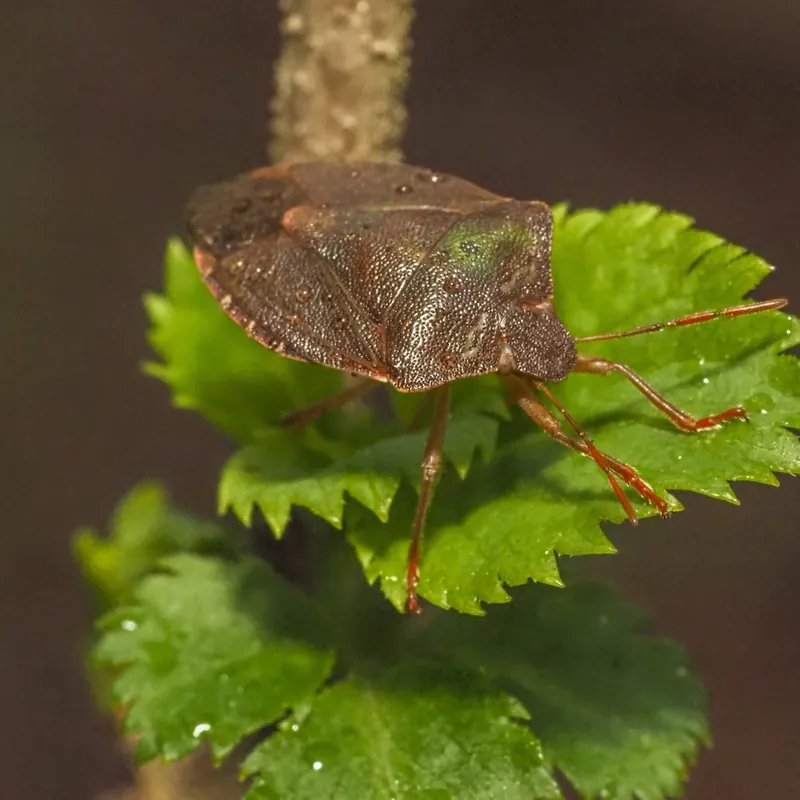
Short answer: Stink bugs are shield-shaped green or brown bugs that suck juice from ripening fruit and pods. On tomatoes, look for pale, cloudy patches under the skin that turn hard and yellowish as the fruit ripens. Pick the bugs off into soapy water wearing gloves, and only take more steps if many gather on your crops.
What it looks like
- Flat, shield-shaped green or brown bugs on fruit, pods and seed heads
- Pale, cloudy patches just under the skin of tomatoes, turning hard and yellow as they ripen
- Dimples, pits or sunken spots on tomatoes, peppers and tree fruit
- Bean pods that are misshapen, shriveled or covered in small warty bumps
- Neat clusters of barrel-shaped eggs on the undersides of leaves
- Round, brightly marked young bugs grouped together on leaves
- A strong, unpleasant smell when you handle or crush the bugs
Is it stink bugs and shield bugs or something else?
| Could also be | How to tell |
|---|---|
| Squash bugs | Squash bugs are longer, narrower and gray-brown, and they feed on squash and pumpkin vines, which yellow and wilt. Stink bugs are broader, shield-shaped and feed mostly on fruit and pods. |
| Sunscald | Sunscald makes a pale or papery patch on the side of a tomato facing the sun, with no pinpricks. Stink bug spots are cloudy and scattered around the fruit, often with tiny feeding marks at the center. |
| Leaf-footed bugs | Leaf-footed bugs cause the same cloudy spots on tomatoes, but they're longer and slimmer, with flattened, leaf-like hind legs. Treat them the same way. |
Why it happens
Stink bugs push needle-like mouthparts into fruit, pods and seeds and suck out the juice. The emptied cells fill with air and show as pale, cloudy spots, and the area around each feeding point stops developing properly.
Adults spend the winter in leaf litter, plant debris and weedy areas, then move into gardens as crops ripen. Weedy edges and nearby woods mean more of them, and in some areas they keep arriving from the surrounding countryside all season.
Females lay their eggs in tidy clusters under the leaves, so one cluster can bring a group of young bugs onto a single plant.
How to fix it
- Pick off bugs into soapy water. Wearing gloves, pick the adults and young bugs off by hand, or knock them into a container of soapy water held under the plant. Drowning them avoids the smell you get from crushing.
- Check leaf undersides for egg clusters. Look under leaves for neat groups of small barrel-shaped eggs, light green or whitish at first. Scrape them into soapy water or remove the piece of leaf they're on.
- Net ripening crops where bugs are many. If many bugs keep arriving, cover ripening tomatoes, beans or fruit with fine netting or row cover. Make sure no bugs are trapped inside when you put it on.
- Cut away damaged patches. Damaged fruit is safe to eat. Cut out the hard, pale patches; the rest of the fruit is fine, though it can be less tasty fresh and is good for cooking.
- Clear weeds around the garden. Pull weeds along the edges and inside the beds, especially in spring and late summer. They give stink bugs food and shelter close to your crops.
Watch out: Most stink bugs feed lightly and do little harm. Only act when many gather on ripening tomatoes, beans or fruit.
How to prevent it
- Keep weeds down around vegetable beds, where stink bugs feed before moving to crops.
- Clear plant debris at the end of the season, since adults spend the winter in it.
- Get to know the eggs and young bugs, which are easier to deal with than adults.
- Grow early-ripening or compact tomato varieties if stink bugs are a problem every year.
Plants it often affects
- Tomato pale cloudy spots under the skin that turn hard and yellow
- Bean warty, misshapen or shriveled pods
- Pepper pale or sunken spots on the fruit, less often than tomatoes
- Apple dimples and sunken spots that spoil the fruit
- Eggplant occasional spotting on the fruit
Questions people ask
Can you eat tomatoes with stink bug damage?
Yes. The cloudy spots are safe to eat, though they're hard and less tasty. Cut them out and use the rest of the fruit, ideally in cooking.
What do stink bug eggs look like?
They're small and barrel-shaped, laid side by side in a neat cluster on the underside of a leaf. They start out light green or whitish and darken as they get close to hatching.
Should I spray for stink bugs?
In most home gardens, no. New bugs keep flying in from the surrounding area, so sprays help only briefly, and they harm helpful insects too. Hand-picking, removing egg clusters and netting are usually enough.

Not sure it's stink bugs and shield bugs?
Take a photo in Liana and the health check names the problem and tells you what to do first. Liana also reminds you to check the soil, so watering mistakes don't start. Get Liana for iPhone.
Sources
- Utah State University Extension, Stink Bugs
- University of Maryland Extension, Brown Marmorated Stink Bug: Frequently Asked Questions