Tomato leaf mold: how to spot it and dry the air out
Tomato leaf mold is a fungal disease that makes pale yellow patches on the upper side of tomato leaves, with an olive brown velvet underneath. British gardeners know it as tomato leaf mould. It is mostly a problem in greenhouses and high tunnels, where the air stays warm, humid and still.
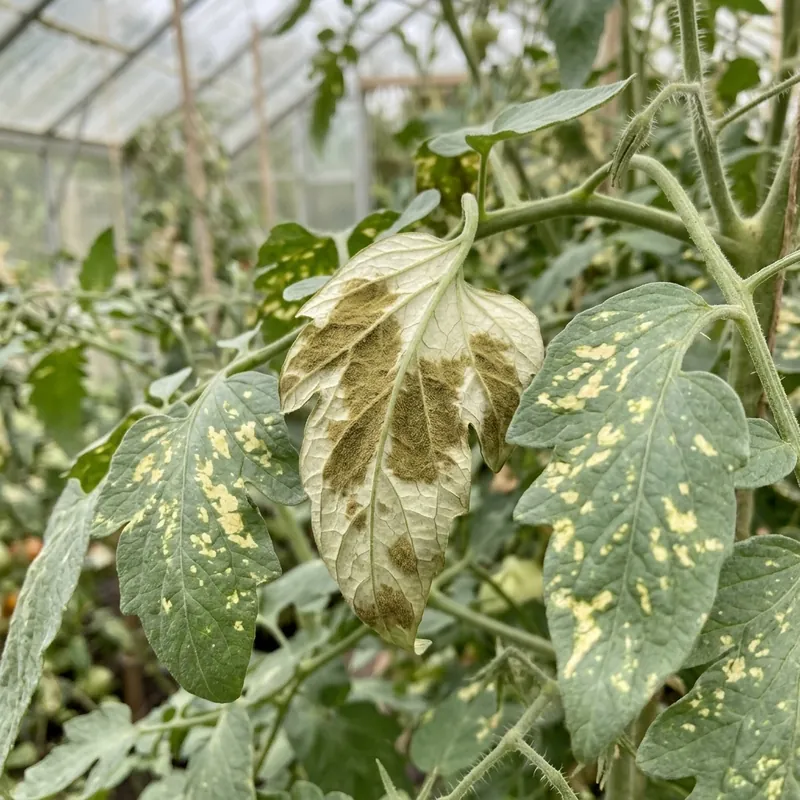
Short answer: Tomato leaf mold is a fungus that thrives in humid, stuffy greenhouses. The giveaway is yellow blotches on top of the lower leaves and an olive green to brown velvety coating directly underneath. Open vents and doors today to bring the humidity down, then pick off the affected lower leaves and throw them away.
What it looks like
- Pale green to yellow patches on the upper side of the leaves
- Olive green to brown velvety mold on the underside, right below each patch
- Lower, older leaves affected first, with the disease moving up the plant
- Leaves that turn brown, wither and hang on the plant or drop
- Plants under glass or plastic, in warm, damp, still air
- Weak plants and a smaller harvest after heavy leaf loss
Is it tomato leaf mold or something else?
| Could also be | How to tell |
|---|---|
| Gray mold | Gray mold is a fluffy, gray, powdery fuzz that can cover any part of the plant, including stems and fruit. Leaf mold is a flat olive brown velvet on the leaf underside below a yellow patch. |
| Magnesium deficiency | Magnesium shortage yellows older leaves between the veins too, but turn a leaf over and there is no mold underneath. |
| Early blight | Early blight makes dark brown spots with rings like a target on the lowest leaves, mostly outdoors. Leaf mold patches are pale yellow on top with velvet below and no rings. |
Why it happens
Tomato leaf mold is caused by a fungus that loves high humidity. Its spores need humidity above about 85 percent to get going, and it does best in mild to warm temperatures. That is why stuffy greenhouses and high tunnels see far more of it than open gardens.
Wet leaves make it worse, especially when plants are watered in the evening and stay damp overnight. Crowded plants and dead air pockets keep the leaves from drying.
The spores spread on air currents, hands, tools and clothing. They tolerate dry conditions and survive on plant debris and on the greenhouse frame, so the disease often returns in the same structure the following year.
How to fix it
- Open vents and doors today. Lowering the humidity is the fastest way to slow the fungus. Ventilate on every mild day, and run a fan if you have one to move still air.
- Remove the affected lower leaves. Pick off spotted leaves and put them straight in a bag for the trash. Once the first fruit has set, taking off a few more lower leaves lets air move under the plants.
- Water the soil in the morning and space plants for airflow. Water at the base so the leaves stay dry, and do it early so any splashes dry by night. Give plants room and stake or trellis them so air reaches every leaf.
- Clean up thoroughly after harvest. Pull out all plants and fallen leaves at the end of the season. Wash down the greenhouse frame, glazing and benches with a household disinfectant so spores don't wait for next year.
Watch out: Many varieties now resist leaf mold. If it comes back every year, choose a resistant one, since the spores linger in the greenhouse.
How to prevent it
- Ventilate greenhouses and high tunnels well, even on cool days
- Water the soil, not the leaves, and do it in the morning
- Space and stake plants, and remove some lower leaves after fruit set
- Clear all debris and clean the structure at the end of the season
- Grow varieties sold as resistant to leaf mold where it keeps returning
Plants it often affects
- Greenhouse tomatoes the main target; lower leaves yellow and grow velvet underneath
- High tunnel tomatoes common where sides stay closed and air is humid
- Cherry tomatoes get it in the same humid, still conditions
- Outdoor tomatoes uncommon, but possible in long spells of cool, damp weather
Questions people ask
Can you eat tomatoes from a plant with leaf mold?
Yes. The fungus mainly attacks the leaves, and healthy-looking fruit is fine to eat. Heavy leaf loss can mean fewer and smaller tomatoes, which is why it is worth acting early.
What humidity causes tomato leaf mold?
It takes off when the relative humidity stays above about 85 percent. Keeping the air moving and opening vents brings humidity down quickly in a greenhouse.
Does tomato leaf mold happen outdoors?
Rarely. It is mostly a greenhouse and high tunnel disease. Outdoor tomatoes can get it during long stretches of cool, damp weather when the leaves stay wet.

Not sure it's tomato leaf mold?
Take a photo in Liana and the health check names the problem and tells you what to do first. Liana also reminds you to check the soil, so watering mistakes don't start. Get Liana for iPhone.
Sources
- Royal Horticultural Society, Tomato leaf mould
- UConn Integrated Pest Management, Tomato Leaf Mold