Tomato spotted wilt virus: how to recognize it and stop the spread
Tomato spotted wilt virus causes bronze, brown or yellow rings and spots on leaves, and pale rings or blotches on fruit. It infects tomatoes, peppers and tomatillos, along with flowers such as dahlias, zinnias and impatiens. Tiny insects called thrips carry it from plant to plant, and there is no cure.
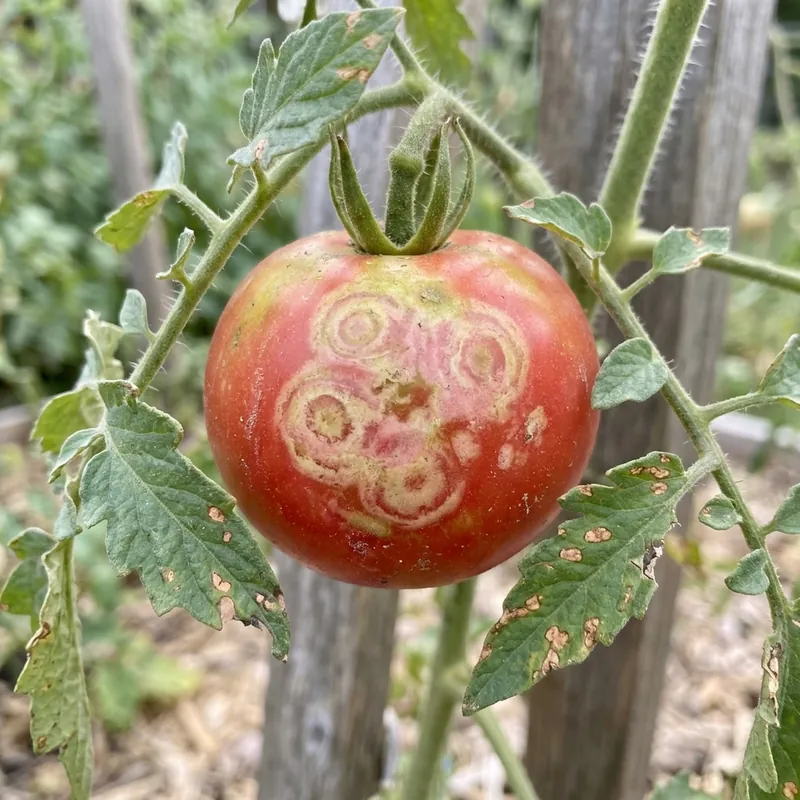
Short answer: Tomato spotted wilt is a virus spread by thrips. The giveaway is bronzed leaves with small brown spots or rings, and fruit marked with pale or yellow rings and blotchy, uneven color. There is no cure: pull up and throw away infected plants today, then work on keeping thrips and weeds down.
What it looks like
- Bronze or purplish tints on young leaves, often with small dark brown spots
- Brown or yellow rings and spots on the leaves
- Pale green or yellow rings on green tomatoes, and blotchy red and yellow color on ripe ones
- Ring spots or a patchy, calico pattern on pepper fruit
- Leaves that roll upward on a stunted plant
- Dark brown streaks on stems and leaf stalks
- Young plants that wilt and die from the top down
Is it tomato spotted wilt or something else?
| Could also be | How to tell |
|---|---|
| Mosaic virus | Mosaic viruses make a light and dark green mottle on the leaves, often with puckering. Spotted wilt shows distinct brown or bronze rings and spots, and ring patterns on the fruit. |
| Early blight | Early blight starts on the oldest, lowest leaves with brown target-like spots that grow large. Spotted wilt tends to show on younger leaves at the top, with small spots, bronzing and stunting. |
| Thrips feeding damage | Thrips feeding alone leaves silvery streaks and tiny black dots on leaves. If brown rings, bronzing or marked fruit follow, the thrips have passed on the virus. |
Why it happens
Tomato spotted wilt is spread by thrips, tiny slender insects that feed in flowers and young leaves. Thrips can only pick up the virus while they are young, by feeding on an infected plant. As adults they carry it for the rest of their lives and pass it on wherever they feed.
Weeds carry both the virus and the thrips between seasons, often without showing any symptoms. In spring, thrips move from those weeds onto garden plants. New transplants and bedding plants can also arrive already infected, before any symptoms show.
Symptoms usually appear 7 to 10 days after an infected thrips feeds. The virus doesn't live in the soil, so you can plant in the same spot again, though thrips can still reach new plants there.
How to fix it
- Pull up and throw away infected plants today. There is no cure, and a sick plant feeds the next generation of virus-carrying thrips. Bag it and put it in the trash, not the compost.
- Hang blue sticky traps and rinse plants. Blue sticky traps catch adult thrips and show you how many are around. Rinse leaves and flowers with a strong spray of water to knock thrips off.
- Clear weeds around the garden. Weeds carry the virus and the thrips from one season to the next. Keep beds and edges weeded, especially before you plant in spring.
- Choose resistant varieties next time. Look for tomato and pepper varieties sold as resistant to spotted wilt. Resistance to other diseases, such as Fusarium or Verticillium wilt, doesn't protect against this virus.
Watch out: New bedding plants often bring infected thrips with them. Check them for silvery streaks and keep them apart from your plants for two weeks.
How to prevent it
- Buy healthy transplants and inspect them for thrips and silvery streaks
- Keep new plants apart from your garden for two weeks
- Weed beds and edges, since weeds carry the virus between seasons
- Grow tomato and pepper varieties resistant to spotted wilt where it has struck before
- Remove any plant with symptoms as soon as you see it
Plants it often affects
- Tomato bronzed leaves, stunting and ring-marked fruit
- Pepper ring spots and calico patterns on fruit, yellow rings on leaves
- Tomatillo commonly infected, and no resistant varieties are known
- Dahlia rings and spots on the leaves of infected plants
- Zinnia a garden flower that can carry the virus
- Impatiens rings and dead spots, often on bedding plants
Questions people ask
Can tomatoes recover from spotted wilt virus?
No. Once a plant has the virus it stays infected, and no spray treats it. Plants infected early, before fruit set, rarely produce anything worth keeping, so remove them to protect the rest.
Can I eat tomatoes from a plant with spotted wilt?
The virus does not harm people, so marked fruit is safe to eat. It just looks blotchy and may ripen unevenly. Still remove the plant, because it keeps spreading the virus through thrips.
Can I plant tomatoes in the same spot next year?
Yes. The virus doesn't survive in the soil. What matters is keeping weeds and thrips down nearby and starting with healthy, resistant plants.

Not sure it's tomato spotted wilt?
Take a photo in Liana and the health check names the problem and tells you what to do first. Liana also reminds you to check the soil, so watering mistakes don't start. Get Liana for iPhone.
Sources
- Utah State University Extension, Tomato Spotted Wilt Virus of Tomato & Pepper
- NC State Extension, Tomato Spotted Wilt Virus: What Gardeners Need to Know