Whiteflies on plants: how to spot and get rid of them
Whiteflies on plants look like tiny white moths, and they rise in a little cloud when you touch the leaves. They feed on sap from the undersides of leaves and leave a sticky film behind. Clearing them takes a few weeks of steady treatment.
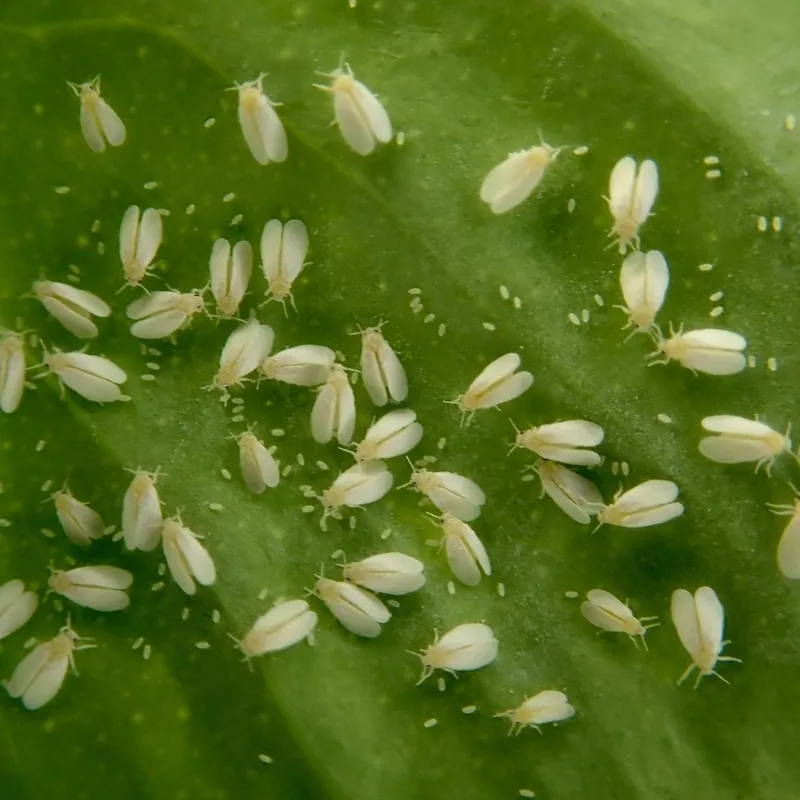
Short answer: Whiteflies are tiny sap-sucking insects with white, waxy wings that live on the undersides of leaves. The giveaway is a cloud of them flying up when you brush the plant, often with sticky leaves below. Hang yellow sticky traps just above the plant today, then rinse or wipe the leaf undersides to remove eggs and young.
What it looks like
- A cloud of tiny white insects flying up when you brush or water the plant
- Flat, pale, oval specks that don't move, stuck to the undersides of leaves (the young)
- Sticky, shiny residue on leaves and on surfaces below the plant
- Black sooty mold growing on the sticky film
- Leaves turning yellow, drying out and dropping
- Ants visiting the plant for the sticky honeydew
Is it whitefly or something else?
| Could also be | How to tell |
|---|---|
| Aphids | Aphids are soft, pear-shaped insects in green, black or other colors that cluster on shoot tips and buds. Most of them stay put when you touch the plant, while whiteflies take off in a white cloud. |
| Fungus gnats | Fungus gnats are small dark flies that walk on the soil and fly up from the pot. Whiteflies are white and come off the undersides of the leaves. |
| Mealybugs | Mealybugs are covered in white cottony wax but they crawl, they don't fly, and they tuck into leaf joints and stems. Both leave sticky honeydew. |
Why it happens
Whiteflies lay their eggs on the undersides of leaves. The young that hatch are flat and barely move, and they do most of the feeding. They pass through several stages before winged adults emerge and move on to the next leaves.
They breed fast in warm weather and can keep going all year in greenhouses, sunrooms and warm rooms. Hot, dusty conditions suit them, and ants that feed on their honeydew drive off the insects that would eat them.
They usually arrive on a new plant, or fly in from nearby vegetables and bedding plants in summer.
How to fix it
- Hang yellow sticky traps today. Hang a yellow sticky trap just above the plant, where the adults fly up. Traps catch adults and show you how many there are, but they won't clear the problem alone, so carry on with the next steps.
- Wipe or rinse the leaf undersides. Turn the leaves over and rinse them with a firm spray of water, or wipe them with a soft damp cloth. This removes eggs and the flat young that the traps can't catch. Prune off a leaf or two that is badly covered.
- Spray the undersides with soapy water every few days. Spray mild soapy water or insecticidal soap onto the leaf undersides, where the whiteflies live. It only works on the insects it touches, so cover every leaf. Skip it when the plant is dry and wilting or in strong heat.
- Keep going for three weeks. Eggs and young survive each treatment and keep hatching. Repeat the rinsing and spraying every few days for three weeks, and watch the sticky trap: fewer new catches means it's working.
- In a warm greenhouse, release Encarsia. Encarsia is a tiny parasitic wasp that lays its eggs in whitefly young. It's sold for release in greenhouses and isn't recommended outdoors. Young it has parasitized are left with a small round exit hole once the new wasp leaves.
Watch out: One spray never clears whiteflies. Eggs and young survive it, so keep treating every few days for three weeks.
How to prevent it
- Check the undersides of leaves on new plants before you bring them home or into the greenhouse.
- Keep a yellow sticky trap near plants that often get whiteflies, so you notice the first few adults.
- Look under the leaves of tomatoes, peppers and other favorites when you water them.
- Remove badly infested plants after harvest so whiteflies don't move on to the next crop.
Plants it often affects
- Tomato a favorite in greenhouses and gardens; look under the lower leaves
- Pepper clouds of adults rise from the leaves in warm weather
- Eggplant sticky leaves and yellowing under heavy numbers
- Fuchsia often hit in greenhouses and on patios in summer
- Hibiscus young cling to the leaf undersides, with honeydew on the leaves below
Questions people ask
Do yellow sticky traps get rid of whiteflies?
Not on their own. They catch adults and tell you how bad things are, but the eggs and young stay on the leaves. Use traps alongside rinsing and soapy sprays on the leaf undersides.
Why do whiteflies keep coming back?
Each treatment kills the adults and young it touches, but eggs survive and hatch a few days later. Treating every few days for three weeks catches each new batch before it can lay more eggs.
Are whiteflies harmful to plants?
A few do little harm. Large numbers suck enough sap to yellow and drop leaves, and the honeydew they leave grows black sooty mold. Some kinds also spread plant viruses, so it's worth acting early.

Not sure it's whitefly?
Take a photo in Liana and the health check names the problem and tells you what to do first. Liana also reminds you to check the soil, so watering mistakes don't start. Get Liana for iPhone.
Sources
- UC Statewide IPM Program, Whiteflies